The Big Picture
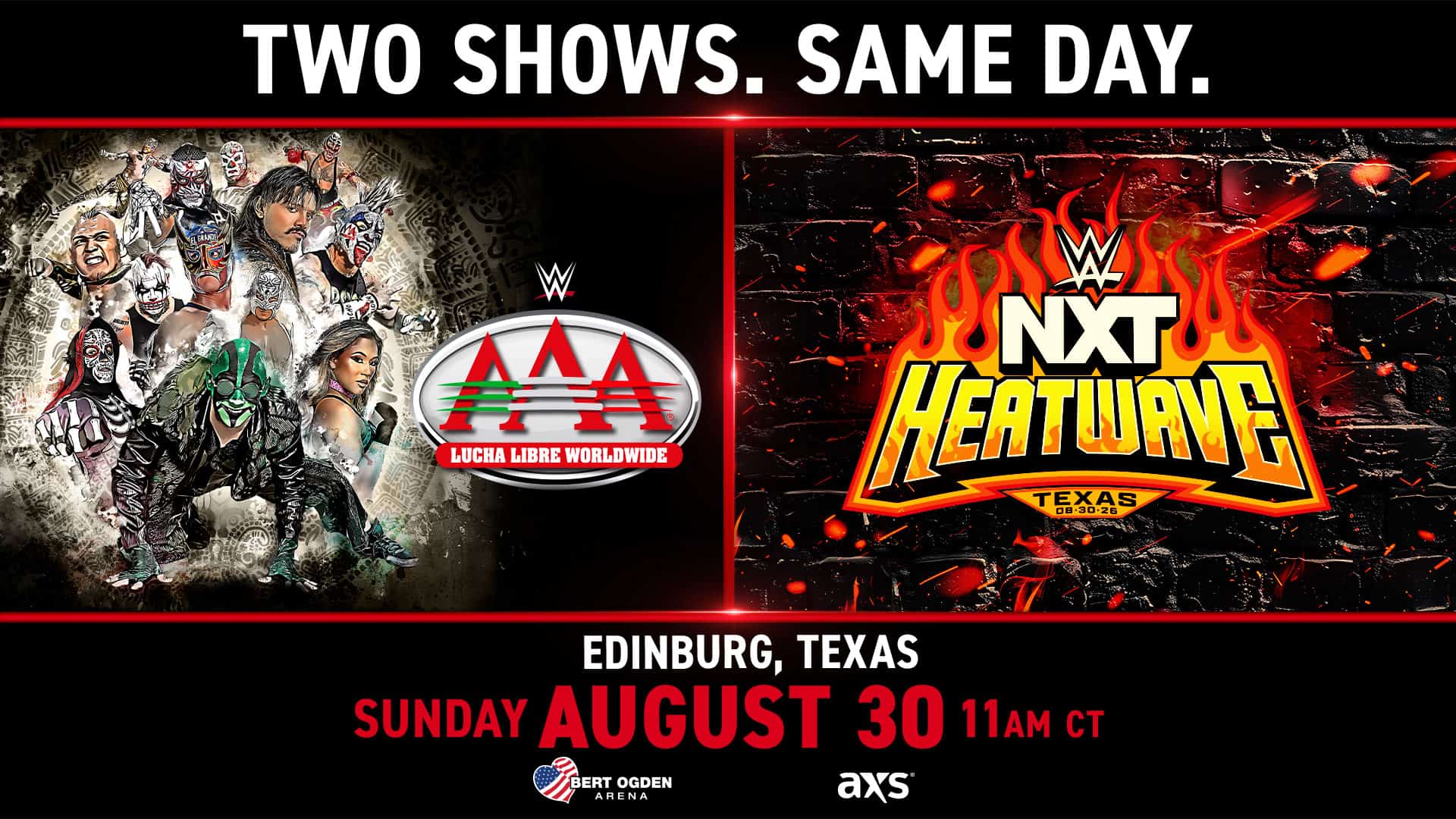
WWE NXT and Lucha Libre AAA are loading up for a massive single-admission doubleheader at the Bert Ogden Arena in Edinburg, Texas, on Sunday, August 30. While the promotional alliance represents a significant business move, the scheduling poses an immediate physical danger to the rosters.
The double-billing features a late-morning AAA show immediately followed by NXT Heatwave in the afternoon. Wrestling in South Texas in late August means preparing for extreme heat and high humidity, conditions that historically trigger severe cramping, muscle tears, and structural injuries.
According to the official WWE announcement, the AAA card kicks off at 11:00 AM local time, showcasing high-flying stars like El Hijo del Vikingo, Psycho Clown, and Omos. Immediately after, NXT Heatwave will air live on The CW, headlined by NXT Champion Tony D’Angelo and NXT Women’s Champion Kendal Grey.
For the athletes, this rapid-fire pacing leaves zero margin for error. Fatigue kills form. Conditioning coaches and medical staffs from both promotions will be under pressure to monitor hydration and fatigue levels. One mistimed bump due to exhaustion could derail major summer booking plans for both companies.
The Texas Heat and the Lucha Libre Toll
Edinburg, Texas, in late August is a physiological furnace, with outdoor temperatures routinely exceeding 100 degrees Fahrenheit. While the Bert Ogden Arena is a modern, air-conditioned facility, the ambient temperature inside a packed building under heavy television lighting rises rapidly.
For the high-flying luchadores of AAA, these conditions are a recipe for acute physical distress. The lucha libre style relies on rapid acceleration, explosive leaps, and high-impact landings. When dehydration sets in, muscle elasticity plummets, leaving joints vulnerable to catastrophic failure.
This physical toll is a major concern for El Hijo del Vikingo, who has spent the last few years recovering from severe joint issues. Vikingo underwent surgery in 2024 to repair a ruptured patellar tendon and torn meniscus, and recently suffered a shoulder subluxation scare in May 2026.
Performing high-risk maneuvers like his signature 630 senton under intense physical fatigue increases the risk of re-injury. The numbers do not lie. Heavyweight performers carry more mass, which puts additional shear stress on their knees and ankles during landing sequences in hot environments.
Curiously, the official press materials still list the legendary La Parka among the scheduled performers. Given that the iconic luchador passed away in 2020 following complications from a tragic in-ring neck injury, the inclusion points to a glaring lack of editorial oversight.
AAA has a history of questionable promotional decisions, and this marketing error does not inspire confidence in their administrative preparation. That is a mistake. Fans and media analysts are already raising questions about the operational coordination between the two organizations. If the promotional office is overlooking such basic details, medical personnel must be twice as vigilant about wrestler safety protocols.
NXT's Developmental Risk Profile
The second half of the doubleheader introduces a different set of physical challenges for the young NXT roster. Performers like Kendal Grey, Zaria, Myles Borne, and The Vanity Project are exceptional athletes, but they lack the ring-conditioning of seasoned veterans.
Developmental wrestlers are still refining their bump-taking mechanics under high-stress conditions. When cardiovascular fatigue peaks, cognitive function declines. A wrestler who is mentally exhausted is far more likely to mistime a catch or slip on a rope run.
A major focus will be on NXT Champion Tony D’Angelo, who is coming off a grueling physical stretch. At the NXT Great American Bash on June 28, D’Angelo worked a highly physical match against Naraku while selling a storyline eye burn.
While that injury was part of the ongoing television narrative, the physical strain of working main-event matches is entirely real. Expecting developmental talent to follow a high-octane lucha libre show in a warm arena is a massive gamble. The risk is real. The danger of concussion or neck injury increases exponentially when athletes are performing complex sequences on a canvas that has already been worn down by a previous show.
Historical Precedents of Hot Arena Hazards
Wrestling history is filled with warnings about the dangers of running shows in extreme heat or utilizing multi-show formats. During WCW's Bash at the Beach 1995, held outdoors in the Florida summer heat, several performers suffered from severe heat exhaustion.
The match quality suffered dramatically as wrestlers struggled to breathe, leading to sloppy exchanges and dangerous drops. Similarly, multi-match tournaments like the King of the Ring in the 1990s routinely saw top stars like Bret Hart suffer cracked ribs and severe muscle strains due to back-to-back performances. The physical stress of wrestling twice in a short window is vastly different from a standard single-match taping.
To prevent a medical emergency on August 30, the joint medical team must implement strict safety measures. The following protocols will be critical to protecting the athletes during the doubleheader:
- Mandatory pre-match urine specific gravity testing to ensure all performers are fully hydrated before entering the ring.
- Active cooling stations equipped with ice baths, cold towels, and intravenous fluids in the backstage area.
- Frequent cleaning of the ring canvas to remove sweat and moisture, preventing dangerous slips during high-risk aerial spots.
- Pre-event cardiovascular screenings for all talent scheduled to perform on both cards.
If these protocols are not strictly enforced, the event could easily turn into an injury disaster. A single torn ligament or fractured bone can sideline a talent for six to nine months. With NXT transitioning to a new television home, the brand cannot afford to lose its top stars to preventable physical blowouts.
Strategic and Business Implications
From a business standpoint, TKO Group Holdings is using this doubleheader as a direct counterprogramming tactic. The August 30 date puts the Texas show in direct competition with AEW’s All In event in London.
Running a massive show in the United States while AEW dominates the European market is a classic promotional battle tactic. However, using the physical well-being of the NXT and AAA rosters as ammunition in a promotional war is a high-risk strategy. A major injury to a top star like Tony D’Angelo or Zaria would instantly derail the positive momentum NXT has built.
The corporate partners at Fillip, the Mexican holding company that owns AAA, also have a lot riding on this show, as the PWInsider article notes. AAA needs a flawless broadcast on YouTube to show U.S. sponsors they can deliver a clean, professional product.
If the opening card is marred by injury delays or sloppy matches caused by heat exhaustion, it will damage the brand's international reputation. The strategic alliance between WWE and AAA has immense potential, but only if both companies prioritize athlete safety over competitive counterprogramming. Edinburg will be the ultimate test of whether these two giants can run a safe, coordinated double-header under the summer sun.