The Punjabi Playboy is spilling all the backstage tea
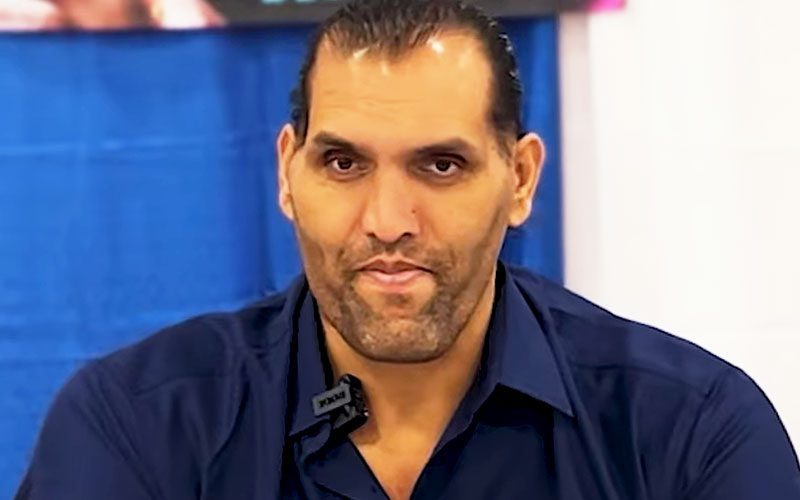
Pull up a barstool, grab a cold one, and let's talk about the absolute madness that went down on the internet today. The Great Khali, WWE’s former World Heavyweight Champion and 2021 Hall of Famer, just went on Chris Van Vliet's podcast and dropped enough pipebombs to make 2011 CM Punk look like a company man. If you thought wrestling forums were quiet in July 2026, you haven't seen the absolute meltdown happening over these claims.
According to Ringside News, Khali’s knees are officially cooked. He told Van Vliet that walking and climbing stairs are painful, though he can still train without issues. He is currently planning to get knee replacement surgery, starting with one knee first, which explains why he has not wrestled a match since 2018.
However, the real internet firestorm started when he discussed how WWE transitioned him from a feared monster into a kiss-cam hosting comedy act. Khali claims the creative shift was a deliberate punishment. He said that after three years with the company, he told management he wanted to leave, leading to what Ringside News highlighted as an intentional character assassination.
Instead of letting him go gracefully, he claims they tried to destroy the aura of his character. The internet is currently locked in a three-way civil war over whether WWE was actually trying to sabotage their biggest international attraction. Some believe the company was just trying to hide his massive physical limitations.
Vince said Great Gandhi or Great Khali. I said I can choose Gandhi, but Gandhi is a peaceful guy.
The vindicated fans vs the reality checkers
The first group of fans online are the conspiracy theorists who feel completely vindicated. For years, these enthusiasts argued that Vince McMahon had a habit of burying guys on their way out. To them, forcing a 7-foot-1 monster who debuted by absolutely destroying The Undertaker in 2006 to do comedy was pure corporate pettiness.
They point to the movie Get Smart as the catalyst for the heat. Khali's agent got him the role, WWE gave permission, and then tried to retract it at the last minute. Khali wanted to balance Hollywood and wrestling, but the office wanted him exclusive. In their eyes, McMahon could not stand the idea of Khali finding success outside the company and decided to make him a joke.
Then you have the skeptics who are begging everyone to look at the tape. They argue that by 2010, Khali could barely move his legs. His knees were so shot that his signature move was literally just standing in the corner and chopping people.
Expecting a guy who could not walk to have 20-minute classics with Batista was a recipe for disaster. The comedy run, in their view, was the only way to keep a beloved giant on television without exposing his physical decay. It kept him employed and spared the fans from having to watch him struggle to get through basic matches.
Finally, we have the contrarians who argue that the comedy run actually saved his legacy. They believe that if WWE had kept booking him as a serious monster, the fans would have turned on him even faster than they did. The Punjabi Playboy character made him approachable and beloved by kids.
According to F4W Online, Khali noted that no matter how much the office tried to trash his character, his massive fanbase in India understood what was happening and never stopped supporting him. The comedy gimmick kept him in the public eye long enough to secure his Hall of Fame ring in 2021. He didn't need to be a main event threat anymore to be a legend.
Peaceful protests and heavy chops
The interview got even weirder when Khali revealed the original name Vince McMahon pitched to him when he signed in 2006. McMahon gave him a choice between The Great Khali and The Great Gandhi, as WrestleTalk reported. Yes, they wanted to name a giant monster wrestler after the world's most famous peaceful civil rights leader.
Khali had to explain to McMahon that Mahatma Gandhi was a man of peace, which probably wouldn't fit a guy whose job was to chop opponents in the head. We were one choice away from Gandhi competing in a Punjabi Prison match against Batista at No Mercy 2007. That is a sentence that makes absolutely no sense in any reality.
Khali also shared some rare praise for his peers during the podcast. He named John Cena and Triple H as his favorite opponents because, as WrestleTalk detailed, they never complained about his stiffness. He noted that they never complained about how hard he hit them in the ring, unlike some smaller wrestlers who complained about his heavy hands.
That is a massive compliment, considering Khali’s chops looked like they could collapse a lung. It also shows the difference between the top-tier veterans who were willing to do business and the midcard guys who hated working with a giant who was stiff in the ring.
John Cena never complained, Triple H never complained, other guys, some small complaints.
If you look back at his debut, Vince McMahon’s instructions were simple: go out there and kill The Undertaker hard. Khali followed those instructions to the letter, dropping the Phenom with a single massive chop that left the arena in shock. For a guy who started with that level of dominance, it is easy to see why he felt insulted when he was later booked to dance.
Who actually has the right take here?
Let's cut through the noise and look at the facts. Did WWE try to kill the Great Khali's character? Absolutely. Anyone who watched television during that era knows that Vince McMahon has a history of using comedy to punish talent who don't conform to his wishes or try to leave.
The Tooth Fairy segment with The Rock was embarrassing, and the constant dancing was a clear attempt to strip away his monster aura. Khali himself admitted in the interview that the Tooth Fairy segment was bad and felt like WWE was actively trying to kill his character. It is a classic WWE tactic that we have seen play out with dozens of wrestlers over the last three decades.
But the skeptics also have a point that we cannot ignore. Khali’s body was breaking down rapidly. He was a physical marvel, but his mobility was virtually non-existent toward the end of his active run.
He could not work standard matches anymore, and the Punjabi Playboy gimmick allowed him to remain a television presence without having to take bumps. The real tragedy here is not that WWE turned him into a comedy act, but that they did it out of pettiness rather than a genuine desire to protect his health.
If you want to read more about his potential return, Wrestling News reports that Khali is not ruling out a one-day return, perhaps for a Royal Rumble entry, once he finally gets his knee surgery done. But a full-time return is never happening, and honestly, that is for the best. We should remember him for that absolute shocker of a debut in 2006, rather than the sad comedy run that followed.
The sports bar verdict is clear. WWE was petty, Khali’s knees were shot, and both things can be true at the same time.