The Immediate Timeline
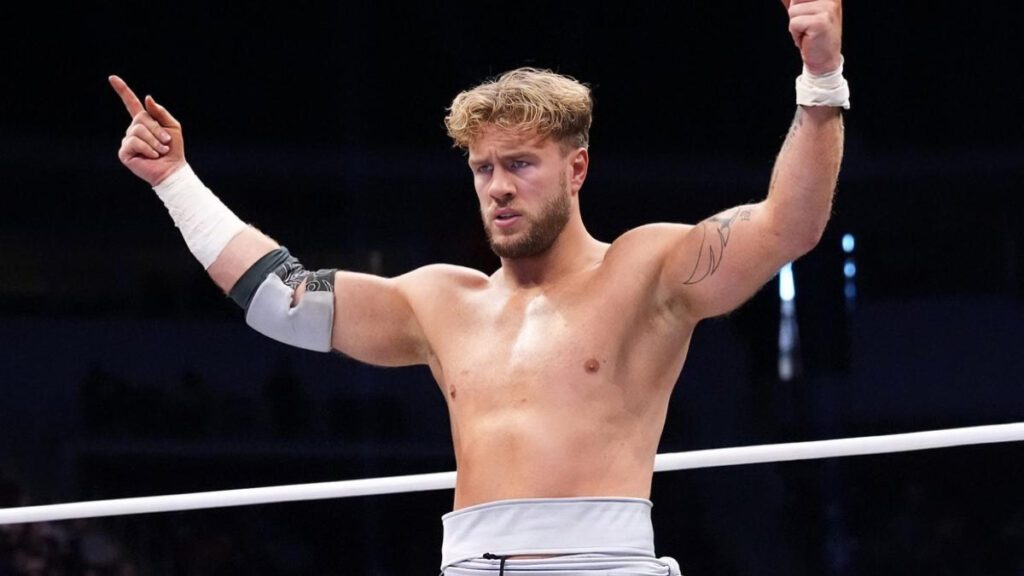
Will Ospreay is officially cleared for in-ring competition. After a frustrating injury layoff, the British star is stepping back into the spotlight. The timeline is incredibly aggressive. Ospreay will face Jon Moxley at AEW Dynasty on March 30, 2026, as PWTorch recently confirmed. Just days later, he is booked to make his return to New Japan Pro-Wrestling.
While the exact medical specifics of the injury have remained undisclosed by both AEW and Ospreay's camp, the length of the layoff points to severe wear-and-tear. He is no longer officially out of action. His status has shifted to active. But clearance is a binary status on paper and a massive gray area in reality. Being medically cleared simply means a doctor believes a wrestler's structural integrity can withstand a match.
It does not mean the wrestler is pain-free. It certainly does not mean they possess match fitness. Ospreay's return is a massive boost for an AEW roster that has missed his star power. But rushing him back into a high-stakes pay-per-view match is a serious gamble. The medical reality of an injury comeback in professional wrestling is brutal. The body forgets how to absorb impact. Ospreay is diving straight into the deep end against one of the most physically punishing opponents available.
The Mechanics of Ospreay’s Offense
To understand the risk, you have to look at how Ospreay works inside the ropes. He is not a grounded technical wrestler who can hide a lingering injury through clever submission work or stall tactics. His entire moveset is built on explosive kinetic energy, sudden deceleration, and high-impact collisions. He relies on his body functioning at absolute peak athletic capacity.
Take the Hidden Blade. The move requires extreme rotational torque. Ospreay throws his entire body weight into the strike. That force transfers into the opponent, but the reciprocal force goes straight back into Ospreay’s own shoulder, elbow, and upper back. If he is recovering from any upper body trauma, repeatedly executing that move is going to cause immediate flare-ups in the affected joints.
The Stormbreaker is even more demanding. Lifting a 240-pound opponent requires pristine lower-back stability and bilateral shoulder strength. Any weakness in his core will cause his mechanics to break down mid-lift. When mechanics break down in professional wrestling, people get dropped on their heads.
His aerial offense presents a completely different set of medical challenges. The OsCutter demands a massive vertical leap and an aggressive arch of the spine. Taking that bump flat on his back repeatedly sends shockwaves through his cervical spine. Ospreay has a documented history of neck trauma. When you miss significant time, the muscles surrounding the spine that act as shock absorbers lose their tone. This leaves the vertebrae vulnerable to acute trauma.
The Jon Moxley Problem
If you were designing a safe return match for a high-flyer, you would pick an opponent who works a smooth, predictable, running-the-ropes style. You do not pick Jon Moxley. Moxley works a grinding, brawling style. He targets limbs. He throws stiff forearms. He drags opponents to the mat and applies heavy torque to their joints.
Moxley does not jump well for his opponents, meaning Ospreay will have to provide the majority of the lifting power for his own offense. This is where AEW's booking warrants heavy criticism. Throwing Ospreay into a match with Moxley at Dynasty just days after being cleared is reckless. It makes great television, but it is a medical liability.
A proper protocol would involve a six-man tag team match on Dynamite or Collision. That allows Ospreay to get his timing back, take a few controlled bumps, and tag out when he gets winded. Instead, he is scheduled for a high-intensity singles bout against a relentless brawler. If Ospreay hesitates on the top rope, Moxley will capitalize.
Ring rust is real. It manifests in split-second delays. A delayed jump means catching the ropes. A delayed bump means landing on an elbow instead of a flat back. These are the micro-errors that lead to secondary injuries.
The NJPW Return and Travel Fatigue
Beyond Dynasty, the recent Ringside News report confirms Ospreay is heading back to New Japan Pro-Wrestling. This will be his first NJPW match in over two years. While the Japanese audience will welcome him back as a conquering hero, the logistics of this trip are a medical nightmare.
Trans-pacific travel is brutal on a healthy body. For a wrestler coming off an injury layoff, it is significantly worse. Sitting in a pressurized cabin for 14 hours causes blood to pool in the lower extremities. It creates joint stiffness. The change in time zones completely disrupts the circadian rhythm, which in turn disrupts the body's natural production of human growth hormone. That chemical is literally the fuel needed to repair tissue damage.
When Ospreay lands in Japan, he will be stepping into a ring with noticeably stiffer boards than the ones used by AEW. The NJPW strong style requires taking heavier strikes to the neck and chest. You are combining travel fatigue, a heavier bumping surface, and an opponent roster that hits harder than anyone else in the world. This is a recipe for a torn muscle.
Historical Context and Roster Impact
Ospreay has spent over a decade pushing the physical limits of professional wrestling. He spent his early twenties working an incredibly dangerous junior heavyweight style. He has suffered concussions, neck sprains, and knee issues. While he wisely bulked up to a heavyweight frame to better absorb punishment, the increased mass also means his joints carry more load every time he lands a 450 splash.
We have seen this trajectory before. AJ Styles had to fundamentally change his style to survive in his forties, grounding his offense to protect a deteriorating back. Rey Mysterio needed multiple knee surgeries and stem cell treatments just to walk without pain. Ospreay is entering a phase of his career where every bump carries a heavier tax.
His absence forced AEW to adjust. They leaned heavily on the current world title program, creating outside noise like the MJF and Nic Nemeth social media feud to maintain momentum. We saw Swerve Strickland and Kenny Omega step up to carry the television main events. But AEW's roster depth shouldn't be an excuse to rush their biggest international asset back before he is completely ready.
The Verdict
Will Ospreay is back, but he is entering a highly dangerous stretch of matches. The Dynasty main event on March 30 will be a massive test of his conditioning. The NJPW return immediately following that will test his endurance and travel recovery.
If he tries to wrestle the exact same match he did prior to his injury, this comeback will likely result in another stint on the injured list. AEW's medical team needs to be on high alert. If Ospreay shows any signs of structural weakness against Moxley, they need to communicate with the referee and alter the match on the fly. You cannot let a generational talent break his body for one pay-per-view payout.
Read Next
- Moxley is exactly the reality check Will Ospreay needs at AEW Dynasty
- Will Ospreay's NJPW return is set but the timeline is a massive risk
- Will Ospreay returning to NJPW is exactly the shake-up wrestling needs
- NJPW Sakura Genesis card proves Gedo is running out of ideas
- ⚡ AEW Dynasty 2026 — Full Coverage Hub
- 🎲 AEW Double or Nothing 2026 — Full Coverage Hub