Why WWE's reliance on Brock Lesnar for the Intuit Dome Raw is a mistake
The Box Office Panic and the LA Debut
WWE has a predictable reflex when they need to make a splash in a new market or venue. On July 27, 2026, Monday Night Raw will broadcast from the newly minted Intuit Dome in Los Angeles, California. To ensure the 18,000-seat arena looks packed on television, the promotion has pulled its favorite lever.
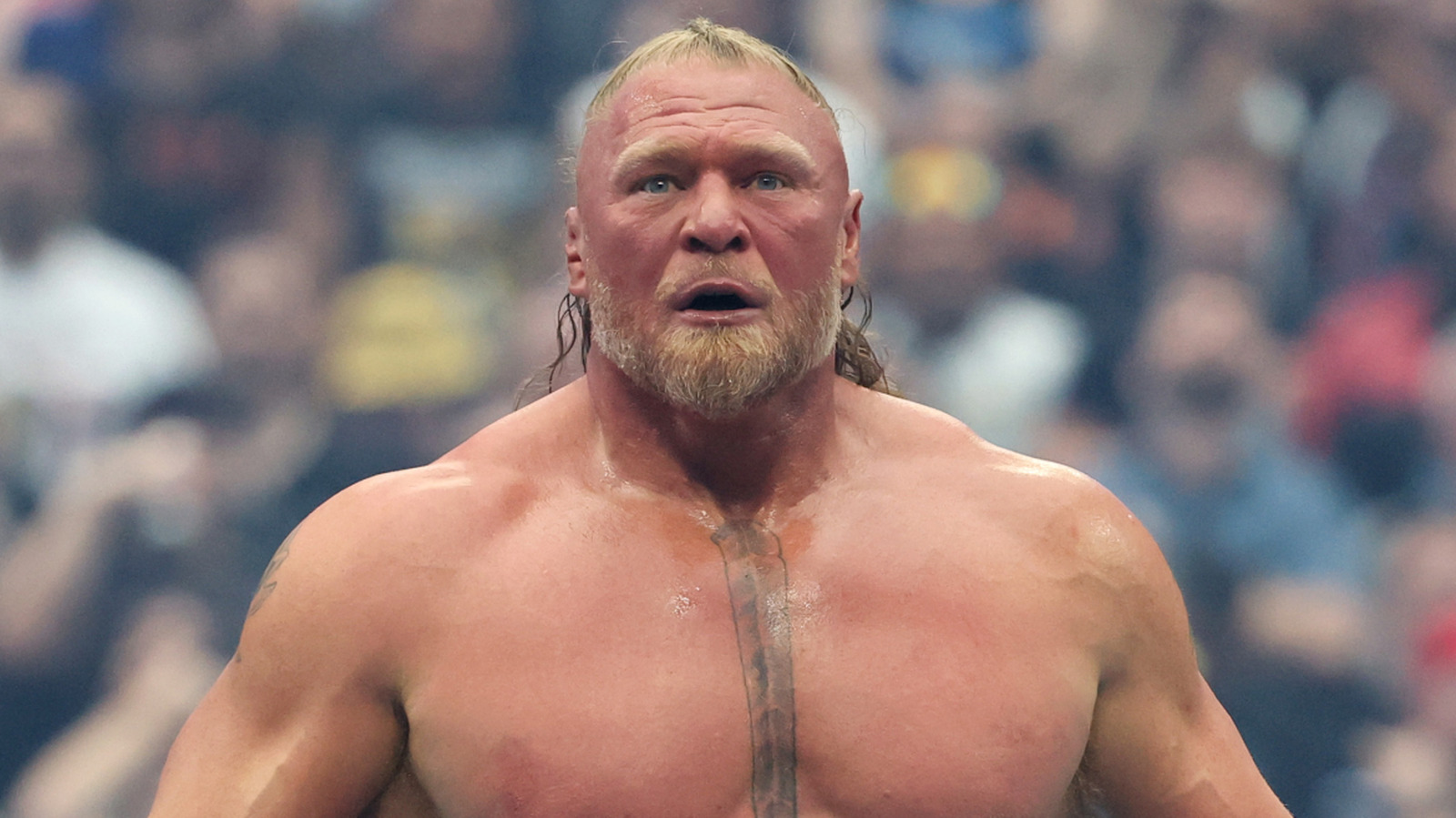
Brock Lesnar is officially advertised to return. This is not a creative decision born out of long-term narrative planning. It is a commercial transaction designed to boost ticket sales in a highly competitive market.
The Intuit Dome represents a massive investment in Southern California sports and entertainment. Selling out Steve Ballmer's new playground requires more than just standard television matches. WWE needs an attraction that commands casual attention, and Lesnar is their ultimate break-glass-in-case-of-emergency option.
Yet, this decision highlights a persistent structural flaw in WWE's booking strategy. The company remains reliant on part-time resources to solve full-time booking challenges. When the lights go down in LA, the immediate pop will mask a deeper creative deficit.
Running a major television broadcast in a new arena is always a logistical gamble. The local market is already saturated with wrestling events, making the debut night at the Dome a critical test of WWE's drawing power. Relying on a star from the past to secure this gate is a short-term win but a long-term concession.
It suggests that the current active roster, despite their relentless touring schedules, cannot carry a landmark show on their own. This reliance on Lesnar creates a cycle where full-time talent is never given the opportunity to establish themselves as genuine arena-level draws in primary markets. The message sent to the locker room and the audience is that the present is merely a placeholder for the past.
The Statistical Shrinkage of the Beast
To understand the mechanical impact of Lesnar's returns, we must examine the numbers. Over the last five years, Lesnar's active ring time has undergone a severe contraction. He has transitioned from a dominant athlete into a high-impact sprinter who maximizes his pay-per-minute ratio.
If we exclude his extended match against Cody Rhodes at SummerSlam 2023, his recent singles match lengths tell a stark story. The average time he spends in active competition now sits at a mere 7 minutes and 42 seconds. This is not professional wrestling in the traditional sense; it is a blitzkrieg of high-yield spots designed to get in and get out.
During these brief matches, his offensive variety is almost non-existent. In his WrestleMania 39 encounter against Omos, which lasted only 295 seconds, Lesnar executed exactly three German suplexes and one F5. The match was simple, low-risk, and highly formulaic.
This formula protects his aging body but does nothing to elevate the work rate of the brand. It tells the audience that the regular roster's hard-fought clinics are secondary to a sub-five-minute exhibition. The physical reality of his presentation is that of a specialized tool, not a dynamic competitor.
Consider his matches against Bobby Lashley in recent years. Their bout at Crown Jewel 2022 lasted 6 minutes and 24 seconds, ending in a fluky pinfall. Their Elimination Chamber 2023 encounter was even shorter, ending in a disqualification at 4 minutes and 45 seconds.
These are not satisfying athletic contests. Instead, they are expensive teases that leave the audience shortchanged.
The lack of physical exertion is not the only issue. The psychological structure of these matches is incredibly limited. Opponents are subjected to a barrage of suplexes, recover almost instantly for their own signature moves, and then succumb to a single finisher.
There is no pacing, no heat building, and no dramatic tension in this layout. The entire narrative is compressed to the point of irrelevance.
The Formulaic Deconstruction of Suplex City
Modern professional wrestling relies on transition phases to tell stories. A babyface builds sympathy through a hope spot, a heel establishes control through heat, and the climax is reached via structured near-falls. Lesnar's current style completely bypasses this classical architecture.
Instead, we are treated to a move-spam meta that mirrors a video game. The German suplex has become his primary offensive output, but inflation has ruined its value. At SummerSlam 2014, the sixteen suplexes he delivered to John Cena felt like a demolition.
Today, the repetition feels like a performer going through the motions. The move has lost its impact through overexposure.
Compare this to historical powerhouses like Vader in WCW. Vader's bouts against Sting or Cactus Jack had intense physical realism, but they also featured structured dramatic pacing. Vader sold for his opponents, allowing their offense to register and creating the illusion of genuine danger.
Lesnar's current presentation offers no such depth. His opponents either look completely helpless or are forced to execute their biggest moves immediately to make the match competitive. This lack of selling from both sides ruins the dramatic integrity of the contest.
It also limits his opponents' ability to showcase their storytelling skills. A match with Lesnar is a rigid script where deviation is impossible. The young star is reduced to a prop in a pre-planned exhibition, rather than an active partner in a creative endeavor.
The crowd reacts to the initial impact, but the long-term emotional investment is minimal. Once the novelty of the suplexes wears off, the audience is left with a shallow experience. It is a spectacle that lacks the narrative substance required to sustain interest over the course of a multi-month program.
Roster Bottlenecks on the Road to SummerSlam
The timing of this return is particularly problematic. Late July is the peak of the build for SummerSlam, WWE's second-biggest event of the year. The writing team should be refining the core feuds that will carry their marquee matches.
Instead, the creative focus must now pivot to accommodate Lesnar. Full-time stars like Gunther, Damian Priest, Seth Rollins, and Drew McIntyre have logged hundreds of hours on the road this year. They have worked the house shows, done the media appearances, and taken the bumps to build their storylines.
Yet, the moment Lesnar's music hits, those efforts are pushed to the periphery. A fifteen-minute segment dedicated to a Lesnar promo or a brief brawl means a full-time feud loses valuable television real estate. The mid-card championship programs are compressed into five-minute backstage segments to make room.
This is the opportunity cost that booking teams rarely account for. When you dedicate prime television time to a part-time attraction, you are actively stalling the development of the next generation. The active roster is forced to play supporting roles in their own stories.
Furthermore, Lesnar's presence creates a booking bottleneck at the top of the card. If he is placed in a major match at SummerSlam, it occupies a spot that could have been used to elevate a rising talent. A wrestler like LA Knight or Bron Breakker is forced to wait in line while the veteran takes the spotlight.
This is not a theoretical concern. In 2020, across three major pay-per-view matches, Lesnar wrestled for a combined total of under 15 minutes. Yet, he held the WWE Championship for a significant portion of that year, locking the title away from a hungry locker room.
Repeating this pattern in 2026 is a step backward for the product. It indicates a team unable to break its worst habits.
Building the Future or Renting the Past?
If WWE is determined to use Lesnar, they must alter the structure of his integration. He should not exist as a self-contained attraction that operates in a creative vacuum. Instead, his presence must be used as a physical hurdle for the next generation of stars.
A simple ticket spike at the Intuit Dome is not enough to justify the disruption. The creative team must use his drawing power to validate a younger wrestler. This does not mean Lesnar has to lose clean in five minutes, but it does mean he must engage in actual competitive stories.
A physical program with a powerhouse like Bron Breakker or Oba Femi could establish a new star overnight. Imagine a match where Lesnar is forced to wrestle a real ten-minute contest, selling the offense of a younger opponent. That is how you use a legend to build the future of the company.
Unfortunately, the history of his booking suggests we will get the status quo. We will likely see a quick confrontation, a couple of suplexes, and a match announced for SummerSlam that will last less than ten minutes. This approach is lazy booking that prioritizes short-term metrics over long-term roster health.
The Intuit Dome show will sell out, and the executive suite will celebrate the gate receipts. But when Raw moves to the next town, the champions will still be struggling to feel like genuine main-eventers. The Beast will have taken his check and returned to his farm, leaving the full-time roster to rebuild the momentum his return disrupted.
It is time for WWE to stop relying on the nostalgia safety net. The talent on the current roster is more than capable of headlining major arena shows if given the creative backing. Relying on Lesnar is an admission of creative defeat, wrapped in a glossy promotional package.
Cold Steel 36 Inch Foam Championship Belt
Affordable championship gold for the living room champion.
Frequently Asked Questions
When is WWE Monday Night Raw coming to the Intuit Dome?
Why is Brock Lesnar returning for the Intuit Dome Raw show?
What is the capacity of the Intuit Dome for WWE Raw?
How long are Brock Lesnar's recent matches on average?
What moves did Brock Lesnar use against Omos at WrestleMania 39?
More Coverage
From Cardio to Claymore: Three Essentials Every Wrestling Fan Needs
38 minutes agoOn This Day in Wrestling: July 08
41 minutes ago
Top 10: Top Moments
55 minutes ago
Royce Keys has big WWE plans but creative needs to step up
2 hours ago
Top 10: Top Moments
4 hours ago
Why WWE and AEW must address their rising summer injury crisis
5 hours agoMore Analysis
Brock Lesnar just ruined everyone's SummerSlam fantasy booking
1 month, 2 weeks ago
Brock Lesnar’s return reveals WWE’s reliance on historical gravity
1 month, 1 week ago
Why WWE is refusing to let the main event move past the Shield
4 days, 17 hours ago
Brock Lesnar's shock WWE return rewrites the entire summer roadmap
1 month, 2 weeks ago
The Brock Lesnar win in Turin exposes a repetitive creative cycle
1 month, 1 week ago