
Why PWInsider is suddenly reviewing Philippine online casinos
The Manila Connection on a Wrestling Feed
Open any wrestling news site on a Tuesday morning and the pattern repeats. You expect to find the latest updates on Rhea Ripley's shoulder injury or Damian Priest's contract status. Instead, you are confronted with an article titled Ways to Find a Legitimate Online Casino in the Philippines.
The article, logged under ID 209458 on PWInsider, reads like a dry regulatory manual. It outlines licensing requirements, security certificates, and payment options for offshore gamblers.
This is not a technical glitch. It is the survival strategy of a niche media industry in decay.
Legacy wrestling portals, established in the late nineties, now rely on programmatic ad networks and sponsored content to pay their hosting bills. The result is a bizarre juxtaposition where detailed breakdowns of Triple H's creative decisions sit right next to guides on Manila-regulated slots. This mismatch is a stark reminder of the financial precarity that underpins online wrestling reporting.
But the Manila connection highlights a deeper, more systemic tension. Pro wrestling has spent years chasing the mainstream respectability of major league sports. As sports gambling became a multi-billion-dollar industry in the United States, WWE executives saw a new revenue stream.
The corporate office wanted to turn scripted drama into a regulated betting market. To understand why that effort failed, we have to look at the very guidelines published in that out-of-place casino article.
The Business of Digital Clutter
Wrestling journalism has always operated in a gray market. In the print era, newsletters like the Wrestling Observer relied on direct mail subscriptions to maintain independence. The digital transition in the early 2000s changed the incentives.
Outlets like PWInsider, WrestleZone, and Lordsofpain built high-traffic platforms but struggled to attract premium advertisers who viewed wrestling as low-brow entertainment. This monetization ceiling forced a heavy reliance on intrusive ad networks.
A typical visit to these sites today is a test of user endurance. Auto-play videos consume half the screen while pop-ups redirect the browser to sketchy software downloads.
The inclusion of sponsored articles about Philippine gambling is simply the next step in this monetization race to the bottom. For a site like PWInsider, which has kept the same basic layout for over twenty years, these articles provide steady revenue from search engine optimization agencies. These agencies pay to place backlinks on high-authority domains to manipulate search rankings.
This commercial desperation creates a credibility gap. Readers must navigate a minefield of clickbait and sponsored filler to find actual news.
The irony is that while these sites serve guides on how to spot casino scams, they often fail to police their own promotional spaces. The user is left to do their own quality control, separating real scoops from corporate public relations and raw advertising.
The Ernst and Young Gambit
While wrestling media chased casino cash, WWE corporate was attempting a far grander gambling play. In early 2023, reports revealed that WWE was in talks with state gaming regulators in Colorado and Michigan. The goal was to legalize betting on scripted matches.
To convince skeptical gaming commissioners, WWE proposed using the accounting firm Ernst and Young to secure match results. This was modeled directly on how the firm handles voting for the Academy Awards.
The proposal was a logistical nightmare from the start. Under the plan, WWE would finalize creative decisions months in advance. Wrestlers would not know the finish of their matches until hours before stepping into the ring.
This was designed to prevent leaks to bookmakers. But the plan ignored how professional wrestling actually works. The late-stage change is not an anomaly in wrestling; it is a fundamental creative tool.
Consider the historic main event of WrestleMania XL, where Cody Rhodes ended Roman Reigns' 1,316-day championship run. The buildup involved complex negotiations, physical limitations, and real-time crowd reactions. If WWE had locked in that finish six months prior under regulatory lock and key, they would have lost the flexibility to adapt.
When Dwayne "The Rock" Johnson returned in early 2024, the creative path had to pivot weekly. A rigid, audited script would have made that historic story impossible to tell.
The Regulatory Roadblock
State regulators were not impressed by the accounting firm's pedigree. The Colorado Division of Gaming quickly issued a public rejection, stating that its rules strictly prohibit wagering on events with predetermined outcomes.
The Michigan Gaming Control Board followed suit, clarifying that they had not held direct discussions with WWE. Any proposal would need to come from a licensed sportsbook operator, not the promotion itself. The regulators saw the inherent flaw that WWE chose to ignore: you cannot regulate a drama as a sport.
This brings us back to the guidelines in the PWInsider article. The text notes that legitimate gaming platforms must be licensed by the Philippine Amusement and Gaming Corporation, known as PAGCOR. This agency ensures that the games are run with random number generators that cannot be manipulated by the house.
A slot machine must be mathematically fair. A WWE match, by definition, is manipulated by the house for maximum emotional impact.
If a bookmaker takes bets on a match, the house is not relying on probability. They are relying on the whim of a 70-year-old executive or a creative committee. The risk of insider trading is absolute.
Wrestlers, referees, road agents, and writing assistants all know the finish. In a regulated market, this would trigger immediate fraud investigations. The contrast is clear: legitimate casinos use strict security to prevent manipulation, while wrestling relies on manipulation to exist.
SSL, KYC, and the Trust Deficit
The PWInsider casino guide stresses the importance of security protocols. It advises players to look for SSL encryption, verified by the padlock icon in the browser address bar, and mandatory Know Your Customer identity checks. These protocols are designed to prevent fraud and protect player funds.
In the digital gambling world, security is a technical requirement. In the wrestling world, security is a shell game of secrets.
When WWE pitched sportsbooks on accepting wagers, they promised a secure pipeline of information. But the wrestling industry has a history of creative leaks. Dirt sheets make their living publishing leaked scripts and match finishes.
Even with Ernst and Young holding the envelopes, the circle of people required to execute a wrestling match is too large to secure. A referee needs to know the finish to count the three-fold pin.
The television director needs to know the finish to cue the pyro. The opponent needs to know the finish to take the pin.
A single leaked text message could crash a betting market. If a sportsbook offered odds on Gunther defending his Intercontinental Championship, and a script leaked showing a title change, the market would be ruined instantly.
Unlike a roulette wheel in a regulated Manila casino, which relies on physics, wrestling relies on human silence. History shows that human silence is a poor bet in sports entertainment.
The Mirage of the Unrealistic Bonus
The casino guide warns readers to avoid promotions that offer unrealistic bonuses. These are often lures used by unlicensed sites to lock up player deposits. In wrestling booking, the equivalent is the empty promise of a major payoff.
The Vince McMahon era was defined by these booking teases. Factions were created and destroyed on a whim, often leaving talented performers stranded without direction.
The formation of The Judgment Day in 2022 is a clear example. When Edge pitched the group to McMahon, it was envisioned as a dark, gothic force.
McMahon quickly grew bored, replaced Edge with Finn Balor, and left Rhea Ripley and Damian Priest to navigate a directionless mid-card. It was only after Triple H took creative control that the group found its footing. This shift required patient, long-term booking, not the quick-fix television booking that McMahon favored.
This structural volatility is why gambling on wrestling is a bad fit for fans and sportsbooks alike. A bookmaker cannot price the risk of a promoter changing their mind five minutes before a match.
We saw this at WrestleMania 31, when Seth Rollins cashed in his Money in the Bank briefcase mid-match. The decision was reportedly finalized while the match was already in progress. No regulatory body can govern that level of instability.
The Illusion of Legitimacy
The search for legitimacy takes different forms. For PWInsider, it means publishing offshore casino guides to keep the servers running. For WWE, it meant trying to turn their scripted drama into a regulated sports betting market.
Both efforts reveal a fundamental truth about the modern wrestling industry: the chase for mainstream corporate acceptance often compromises the core product.
Wrestling does not need the validation of sports gaming commissions. Its strength lies in its ability to pivot, to surprise, and to tell stories that sports cannot replicate.
Trying to force those stories into a regulatory box for the sake of sportsbooks would destroy the magic of the performance. Meanwhile, fans will have to tolerate the ad-choked pages and casino spam of the media outlets that cover them. It is the price we pay for a sport that refuses to grow up.
WWE Encyclopedia of Sports Entertainment (4th Edition)
The definitive history of the ring, updated for the modern era.
Frequently Asked Questions
Why do wrestling news sites publish sponsored casino articles?
How did early wrestling newsletters fund their operations?
What is the article ID of the PWInsider Philippine casino guide?
Why did WWE executives try to enter the regulated betting market?
How do SEO agencies use legacy wrestling websites?
More Coverage
Rey Fenix defending his AAA title on WWE TV is dividing fans
an hour ago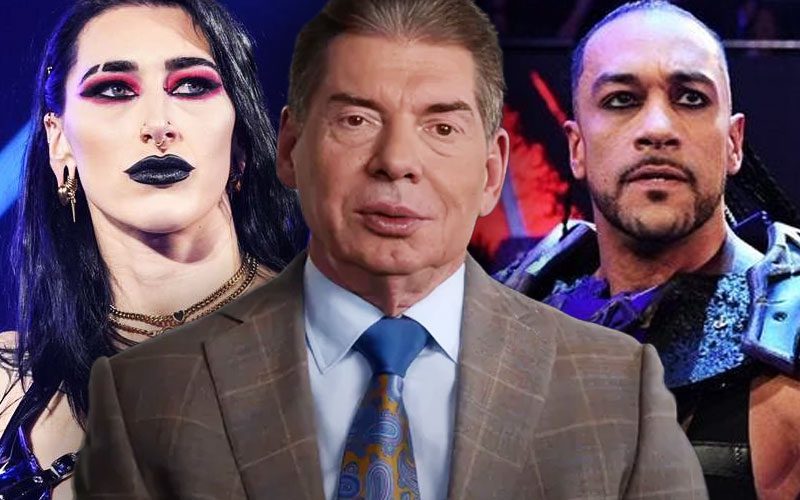
Adam Copeland saw what Vince McMahon missed in Rhea Ripley and Damian Priest
an hour ago
Vince McMahon was dead wrong about Rhea Ripley and Damian Priest
an hour ago
WWE's buyout of AAA is turning into a beautiful booking disaster
an hour ago
Marty Jannetty confirms right leg amputation after sepsis battle
an hour ago
Matt Hardy talks Slammiversary battle scars and Mike Santana's WWE rumors
an hour agoMore Analysis
Will Ospreay wants one more match with Ricochet and fans are split
an hour ago
Rey Fenix defending his AAA title on WWE TV is dividing fans
an hour ago
Adam Copeland saw what Vince McMahon missed in Rhea Ripley and Damian Priest
an hour ago
Vince McMahon was dead wrong about Rhea Ripley and Damian Priest
an hour ago
WWE's buyout of AAA is turning into a beautiful booking disaster
an hour ago