The Confession at the Pizza Table
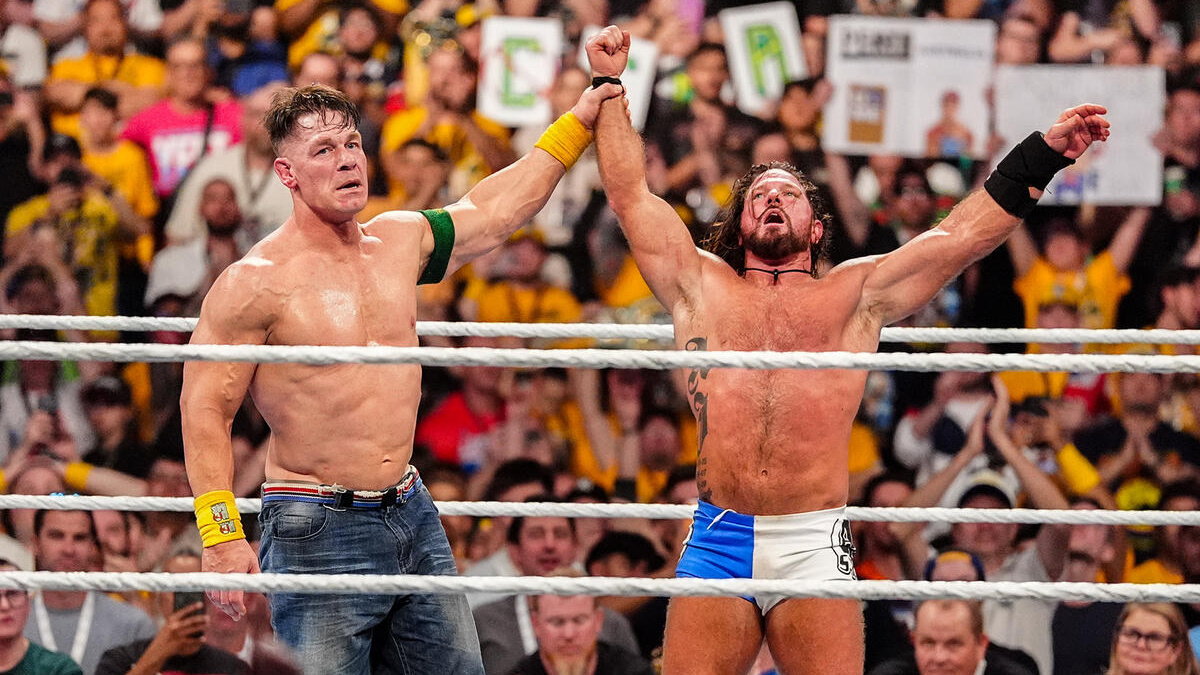
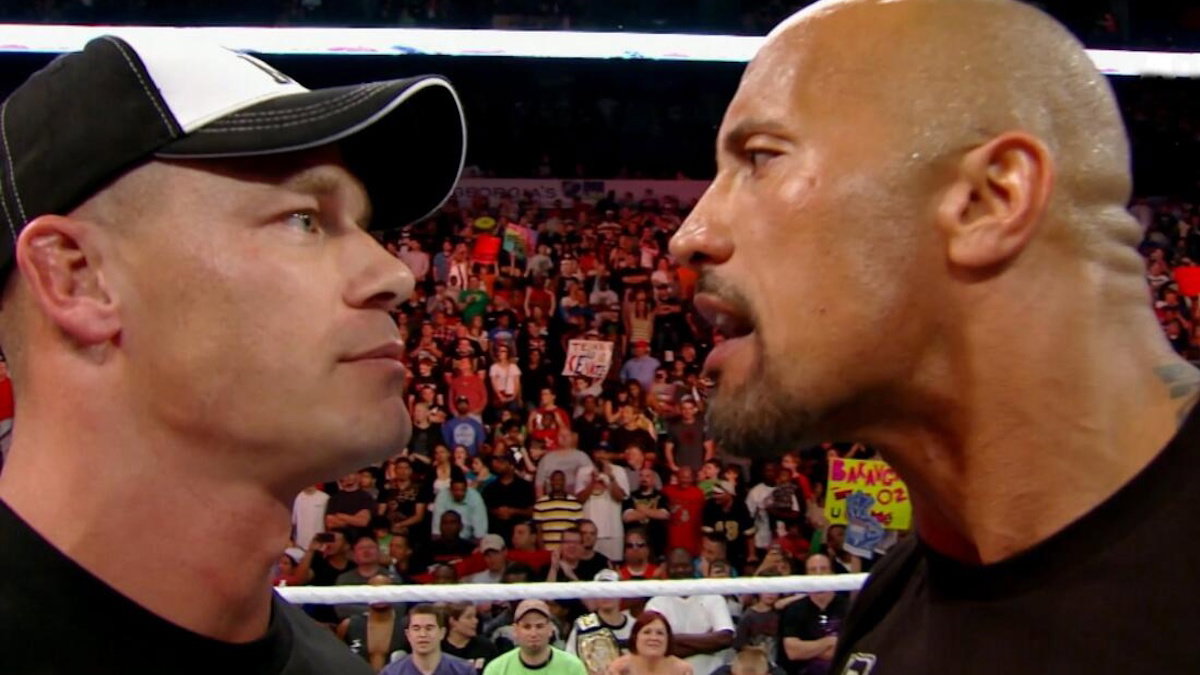
The division between performance and reality in professional wrestling has always been a thin sheet of glass. Last week, while sitting at a table for the digital series *Slice Joint*, John Cena shattered whatever remained of that illusion regarding his legendary rivalry with Dwayne 'The Rock' Johnson. Cena admitted that his years of public verbal attacks on Johnson's Hollywood career were born from a complete lack of wisdom.
Cena called himself a hypocrite. He acknowledged that his younger self simply did not understand the business of building a crossover brand. As reported by WrestleTalk, Cena admitted he lacked the maturity to 'open my ears and shut my mouth' while Johnson was away.
Cena explained that he was too laser-focused on WWE at the time. He did not see the larger picture. He failed to realize that Johnson's massive success in Hollywood was actually elevating the perception of all professional wrestlers, making it easier for people like Cena to follow in his footsteps.
How the Trust Broke on Live Television
To understand why Cena is still apologizing in 2026, we have to look back at the build-up to WrestleMania XXVIII. Cena was the undisputed locker room leader, working a grueling schedule of house shows and television tapings. Johnson was a Hollywood star who returned for select premium events.
Cena exploited this contrast on television, turning the locker room's resentment into promo material. The promos were not standard WWE scripts. They were targeted, personal strikes designed to expose professional vulnerabilities.
The tension reached its peak during the February 27, 2012 episode of RAW in Portland, Oregon. Cena went off-script to mock Johnson for writing promo notes on his wrist, a public outing that broke the unwritten rules of the locker room.
Cena pointedly told the live crowd that he did not need notes written on his wrist to cut a promo. The camera zoomed in on Johnson’s wrist, exposing the scribbled bullet points. Johnson was visibly flustered, struggling to regain his composure for the rest of the segment.
Cena now acknowledges that this stunt was a violation of professional trust between peers. It was a shot designed to humiliate, not to build a match. That backstage friction directly influenced the pacing and execution of their first match at WrestleMania XXVIII.
The Mechanical Flaws of the Miami Showdown
Held in Miami on April 1, 2012, the match carried a massive 'Once in a Lifetime' billing. The atmosphere inside Sun Life Stadium was electric, drawing a crowd of 78,363 fans. But beneath the spectacle, the in-ring work was sluggish and mechanically flawed.
The match went on for 30 minutes and 34 seconds. That length exposed Johnson's ring rust and Cena's limitations in structuring long-form matches. They relied heavily on rest holds.
A four-minute chinlock sequence in the middle of the match killed the arena's momentum. The lack of natural timing between the two was obvious, with several transitions feeling forced and stiff. There were flashes of athleticism, such as Johnson hitting a diving crossbody from the top rope as a nod to his early Rocky Maivia days.
Cena worked a highly aggressive style, stalling for time and playing the heel to the hostile Miami crowd. He focused his offense on Johnson’s ribs, grinding the match to a halt. The physical chemistry was not there, replaced instead by a tense, cautious dance.
The finish, however, was a masterclass in storytelling. Cena, blinded by his own arrogance, attempted to hit Johnson's signature People's Elbow. As he rebounded off the ropes, Johnson bounced up and delivered a sudden, vicious Rock Bottom for the pinfall.
It was a clean, decisive victory that left Cena sitting on the entrance ramp in disbelief. WWE's top star was forced to eat his own words. The narrative demanded a rematch, which took place the following year at WrestleMania 29.
The Finisher Fest of East Rutherford
On April 7, 2013, the two squared off again in East Rutherford, New Jersey, in front of 80,676 spectators. This time, the WWE Championship was on the line. The match abandoned the slow pacing of the first encounter in favor of a rapid-fire trade of finishing moves.
It was a match structure that fans quickly labeled a 'finisher fest.' The two traded multiple Rock Bottoms, Attitude Adjustments, and STF submissions with little transition in between. By the tenth minute, the crowd was actively booing the repetitive kick-outs, rejecting the lazy layout of the match.
It felt like a corporate exhibition rather than a blood feud. Cena ultimately won the match, securing his 11th WWE Championship after hitting a final Attitude Adjustment.
The post-match display featured a prolonged handshake and hug, an image designed to send the fans home happy. But we now know that behind those smiles was a pair of athletes who could barely stand to look at each other. The reconciliation was purely for the cameras.
Why In-Ring Chemistry is a Myth
Cena's recent comments on *Slice Joint* shed light on why those matches lacked a certain spark. He explained that 'chemistry is really just a bonus' and that 'authenticity is the most critical metric for a performer.' He went on to warn that if a performer is 'unauthentic, the audience can see through bullshit.'
This explains why their matches, despite breaking box office records, are rarely ranked among WWE's greatest work. At WrestleMania XXVIII, the authenticity lay in the real hatred. The audience could feel the genuine dislike, which carried a match that was otherwise average.
By WrestleMania 29, that raw edge had been polished away into a corporate product. The handshake felt fake because it was, and the crowd reacted accordingly. We see this same issue in modern WWE.
Performers who rely on choreographed sequences and clean moves often fail to connect because their characters lack authenticity. Cena pointed this out during his 2023 program with Austin Theory, telling him that fans can see through the BS if you do not believe in your character. Authenticity cannot be booked; it must be felt.
The Long-Term Verdict on the Crossover Era
Cena's Hollywood transition has been vastly different from Johnson's. In his *Slice Joint* interview, Cena noted that while Johnson went straight from arenas to starring in *The Mummy*, Cena had to 'inch along' through bad movies and bit parts. This slow grind has given Cena a humility that Johnson has never shown.
It also makes Cena's transition feel far more earned. We must also look at their respective returns to WWE. When Johnson returned in 2024 as the 'Final Boss,' it was a highly controlled, corporate affair.
He was a board member of TKO Group Holdings, wielding real-life executive power. His presence felt massive, but it was also detached from the daily grind of the roster. Cena's retirement tour, by contrast, is a celebration of the work itself.
This brings us to the ultimate prediction. In the long run, history will look far more favorably on Cena's legacy than Johnson's. Cena's willingness to admit his hypocrisy and apologize for his past behavior has endeared him to the hardcore audience.
When fans look back at the 2012-2013 era, they will see Cena as the worker who stayed, and Johnson as the star who dropped in. That is a distinction that no amount of Hollywood star power can erase.
Read Next