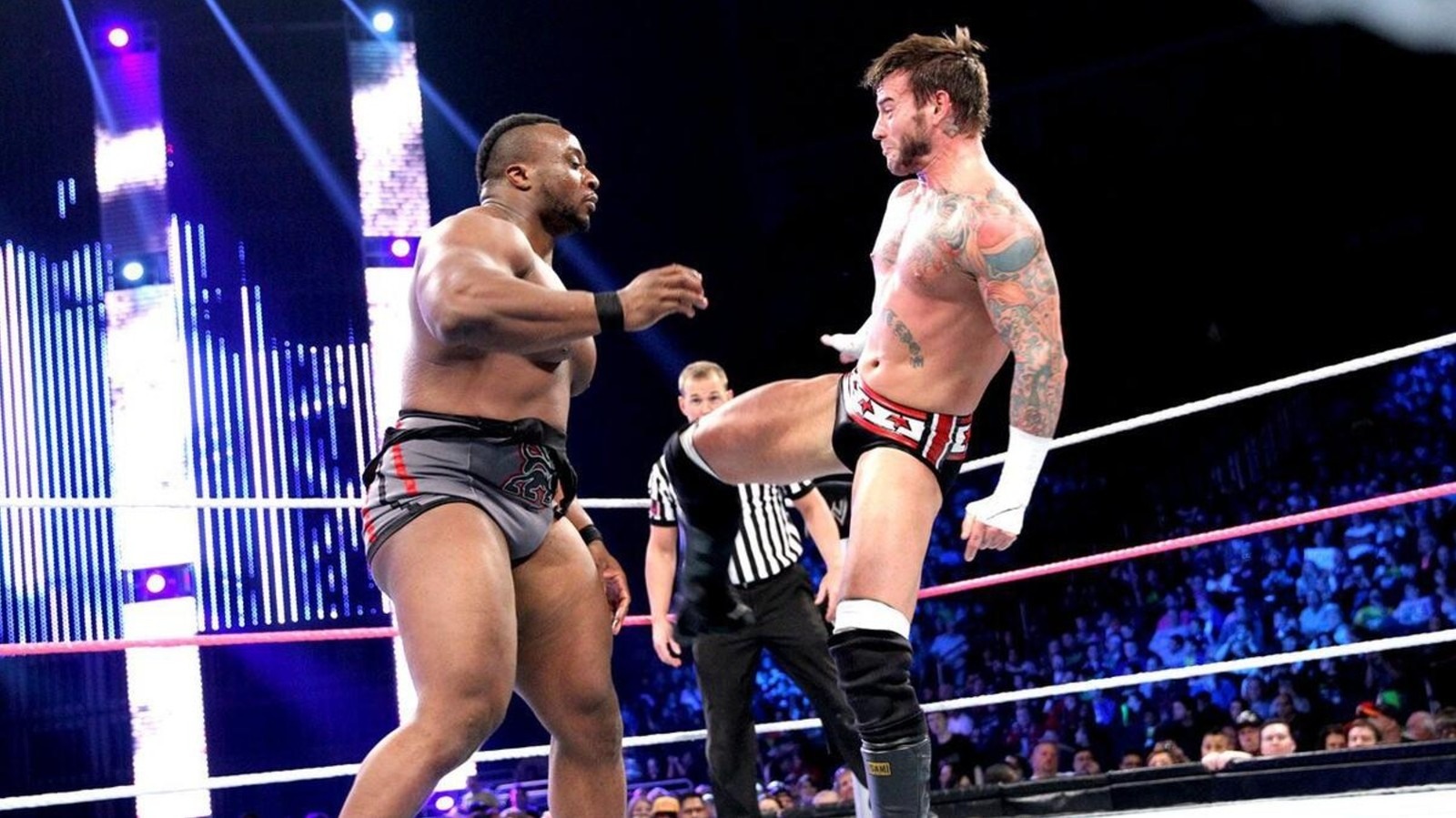
A 37-day television exile is usually a death sentence for a WWE call-up. In the autumn of 2013, Big E (then Big E Langston) was staring directly into that developmental abyss. He had transitioned from a promising run as NXT Champion into a stagnant role as AJ Lee's mute muscle.
Between August 23 and September 30 of that year, he did not appear on primary television. No Raw. No SmackDown. Instead, he logged miles on the house show loop, losing night after night to Dolph Ziggler.
Behind the scenes, the writing was on the wall. Talent relegated to secondary taped shows like Superstars and Main Event were historically prime candidates for release. Big E knew his position was highly precarious.
Then came September 30, 2013. CM Punk, then the top babyface on Raw, requested a singles match with him. It was a career-saving match that Big E only learned about through AJ Lee, as Punk chose not to take credit.
The SmackDown-Only Trap and the 2013 Numbers
To understand the gravity of Big E's position, one must look at his match statistics from 2013. He wrestled a total of 136 matches that year. His win rate stood at a mediocre 42.6%.
More concerning than the losses was where those matches took place. The vast majority of his work occurred in dark matches or non-televised events. When he did make TV, he was stuck in the SmackDown-only rotation.
In the pre-brand-split era of 2013, SmackDown was taped on Tuesdays and edited heavily. Raw was the undisputed flagship. Being locked out of Raw meant you did not exist to the writing team.
If a powerhouse wrestler is not on Raw, their character is dead in the water. Big E was stuck working taped Main Event matches against R-Truth and Superstars tapings against Zack Ryder. He was checking the lineup sheets weekly and finding his name blank.
The promotion had no creative direction for him after his bodyguard role ended. The standard WWE blueprint for muscular talent who stall is a quiet demotion back to Florida or a pink slip. Big E was on the fast track to both.
The House Show Grind
While his television time evaporated, his physical workload did not. Throughout September 2013, Big E wrestled 15 house show matches. He lost every single one of them.
This is the hidden grind of the professional wrestling undercard. A talent is expected to work a full schedule, take bumps, and lose cleanly, all while their career is actively stalling. It is an exhausting way to slide out of the company.
Without a program on Raw, the live events became a holding pen. He was simply a body to occupy space on the card. That is until the locker room's most influential voice intervened.
Deconstructing the Six-Minute Turning Point
When CM Punk requested a match with Big E on the September 30 episode of Raw, it was not a squash. The match lasted exactly 5 minutes and 56 seconds. For a floundering powerhouse, those six minutes were gold.
The match structure is worth studying. A lazy veteran would have demanded a quick, dominant victory to protect their spot. Punk did the opposite. He gave Big E significant offensive windows.
Big E was allowed to showcase his physical tools. He hit a massive overhead belly-to-belly suplex that sent Punk across the ring. He followed it with a running body block that looked devastating.
By taking these high-impact moves cleanly, Punk established Big E as a credible threat. He sold Big E's power like a main-event level star would. Even when Punk won with the GTS, Big E looked like a monster.
This is the tactical art of the match layout. A wrestler can lose a match and still gain massive momentum if the pacing and offense are distributed correctly. Punk understood this, and he put his own body on the line to prove it.
As Big E later detailed on Wrestling Inc, he went to thank Punk afterward. Punk's response was simple: "Talented people deserve an opportunity."
The 31-Day Turnaround and the Face Turn
The impact of that single Raw match was immediate. The writers noticed. Suddenly, Big E was no longer booked exclusively for taped secondary shows.
On October 18, 2013, Big E faced Punk again, this time on SmackDown. The match lasted 4 minutes and 37 seconds, ending in another victory for Punk. But the match itself was merely a prelude to the real story.
After the bell, Ryback and Curtis Axel attacked Punk. Big E charged down the ramp, clearing the ring and saving the veteran. This single angle executed a perfect babyface turn.
The crowd reacted to the sudden shift with genuine enthusiasm. Big E was no longer a silent heel bodyguard. He was now a powerhouse protector of the show's top star.
Just three days later on the October 21 Raw, the alliance was formalized. Punk and Big E teamed up to defeat Ryback and Axel in an 8-minute tag match. Big E was now sharing the screen with main-event talent every Monday night.
The speed of this ascent is remarkable. It took just 31 days to go from a SmackDown-only exile to championship gold. On November 18, 2013, Big E defeated Curtis Axel on Raw to win the Intercontinental Championship.
The victory completed a total turnaround. Big E was now the workhorse champion of the mid-card. The 37-day exile was officially over, replaced by a championship run.
The Stagnancy of the 167-Day Reign
While the turnaround was impressive, the actual championship reign exposed WWE's systemic booking flaws. Big E held the Intercontinental title for 167 days.
During this run, he compiled 13 televised title defenses. On paper, it looks like a respectable, active reign. In reality, the booking was incredibly stagnant.
His opponents were repetitive. He defended the title multiple times against Jack Swagger, Damien Sandow, and Curtis Axel. The matches were often short, lacking any meaningful storyline build.
A major reason for this creative decline was the sudden exit of CM Punk. Punk walked out of WWE in January 2014, immediately after the Royal Rumble. With Punk gone, Big E lost his biggest behind-the-scenes advocate.
The writers reverted to their worst instincts. They booked Big E as a generic babyface powerhouse who smiled, did his entrance, and won short matches. There was no character development, no mic time, and no heat.
His defense against Jack Swagger at Elimination Chamber 2014 lasted 11 minutes and 50 seconds and was physically excellent. But it stood out as an anomaly in a sea of five-minute TV matches.
The reign finally ended on May 4, 2014, at Extreme Rules. He dropped the title to Bad News Barrett, who had massive crowd momentum. Big E was once again left without a clear direction.
The former WWE Champion's recollection of these events, as reported by Wrestling Inc, highlights how fragile main-roster status was during that era. Despite the lackluster booking of the reign, the baseline was established.
He was no longer a candidate for release. He was a permanent fixture on the main roster, a status he would later turn into legendary success with The New Day.
The lesson here is simple. Roster spots in professional wrestling are highly volatile, and talent alone is rarely enough. It takes a veteran with influence to disrupt the writing team's apathy.
CM Punk's intervention in late 2013 was a masterclass in locker room leadership. He did not lobby for a multi-month feud or a storyline that took up hours of TV time. He asked for one match, worked it with maximum efficiency, and saved a career.
Read Next
- Sami Zayn finally won the big one, and Kevin Owens is waiting in the wings
- Sami Zayn just exposed the cracks in Cody Rhodes' golden armor
- Sami Zayn is finally WWE Champion, but the hard part starts now
- NXT Heatwave is going head-to-head with All In, and the math is brutal
- 🏆 WrestleMania 41 — Full Coverage Hub
- 💊 CM Punk WWE 2026 — Best in the World