The Agganis Arena and the 65-Day Rebirth
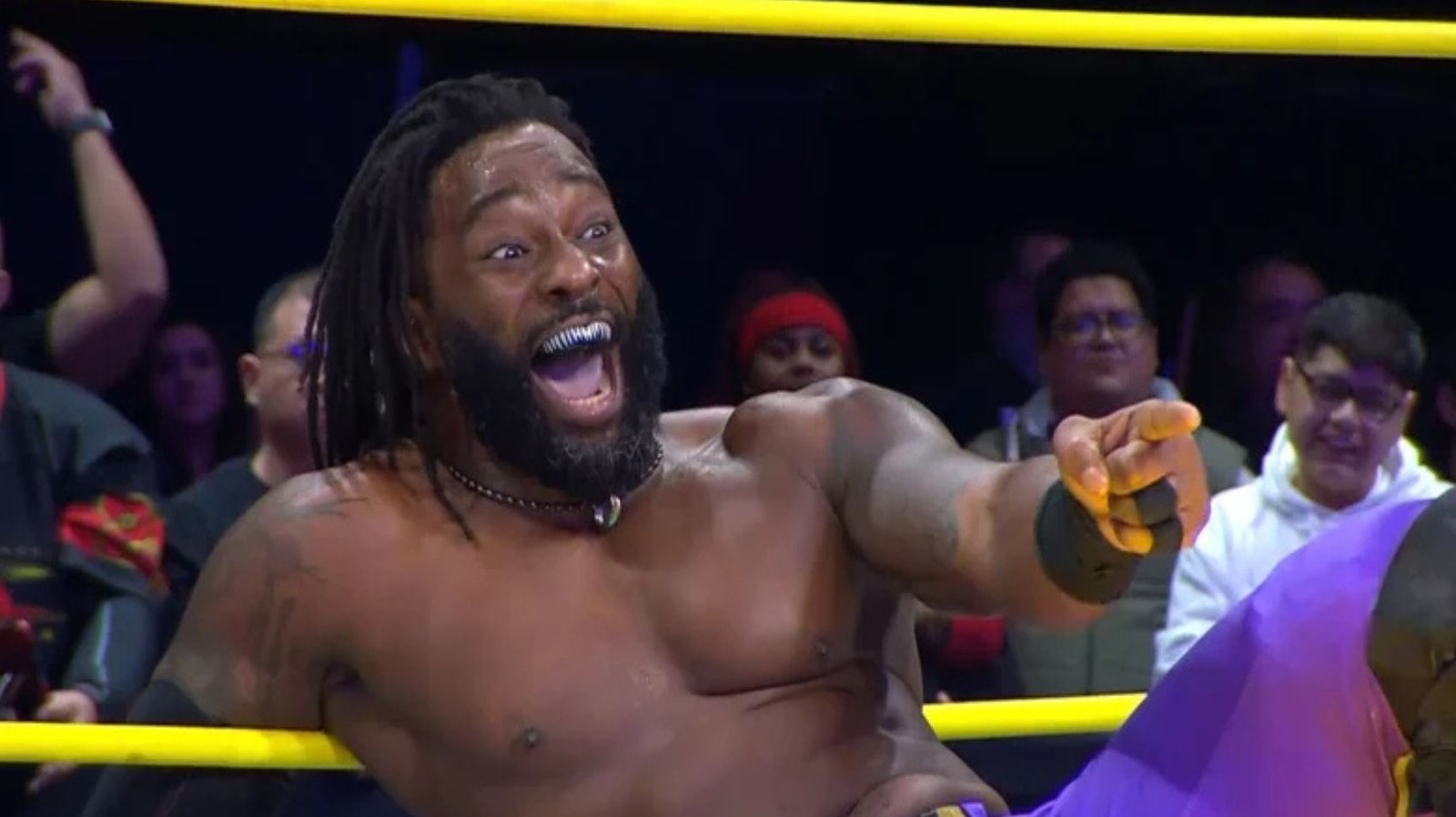
Pro wrestling operates on a relentless clock, but for Sesugh Uhaa, the time that mattered most was the 65 days between his release from WWE on April 24, 2026, and his surprise debut as Uhaa Nation at TNA Slammiversary on June 28, 2026. Stepping into the Agganis Arena in Boston, Nation confronted a stark promotional reality where the broadcast team panned wide during the pre-show, refusing to hide the empty seats in the upper rows. Yet the atmosphere inside the building remained focused on bell-to-bell execution rather than the production tricks of larger promotions.
Nation's debut was the centerpiece of an overbooked Triple Threat match for the TNA International Championship, a title held by Mustafa Ali. The match was originally scheduled as a singles open challenge, but TNA authority figures Santino Marella and Daria Rae intervened to insert their own chosen challengers, transforming the bout into a chaotic three-way that also included Rich Swann.
As reported by PWInsider, the mystery surrounding the open challenge generated significant speculation before the show. The final product delivered a high-octane 13-minute and 45-second sprint that served as a direct indictment of the booking philosophy that kept Nation sidelined. The transition from a highly controlled television environment to a workrate-driven promotion is rarely smooth.
Nation showed minor signs of ring rust, occasionally mistiming his spacing during a double-down spot with Swann at the eight-minute mark. However, his raw athleticism remained intact when he executed a military press slam on Swann directly into a standing moonsault. This debut was a statistical recalibration of a career that had been systematically dismantled by inactivity.
The Cold Numbers of a Forgotten WWE Run
To understand why Nation's debut matters, one must analyze the stark metrics of his final years in WWE. Uhaa spent over a decade under the WWE banner as Apollo Crews, compiling a career total of 1,078 matches with a 60.1% win rate. Those numbers, however, mask a severe downward trajectory.
His volume of work did not just slow down; it fell off a cliff. He logged 28 matches in 2024, a number that plummeted to a mere 2 matches in 2025 due to a torn pectoral muscle and subsequent surgery. By the time he recovered in early 2026, WWE creative had moved on, booking him for just 13 matches, mostly on the secondary Main Event show.
A wrestler's value is directly tied to their ring time. In WWE, Crews was averaging less than six minutes of televised ring time per month during his active stretches in 2026. This is the wrestling equivalent of a bench player who only enters the game during garbage time.
His final televised match of note was the Andre the Giant Memorial Battle Royal on April 17, 2026, which was won by Royce Keys. It was an unceremonious end to a run that once promised elite-level status. When WWE released him on April 24, it was less a creative decision and more a bookkeeping formality.
In contrast, TNA offered immediate, high-stakes exposure. The 13 minutes and 45 seconds he spent in the ring at Slammiversary represented more televised singles action than he had received in the entirety of the previous 16 months combined. TNA's business model relies on maximizing the utility of underused television assets.
The promotion cannot match WWE's production budget, but it can offer the one currency that performers value most: competitive match length. For a wrestler of Nation's caliber, that currency is the difference between career survival and irrelevance.
Breaking Down the Slammiversary Triple Threat Mechanics
The Triple Threat match at Slammiversary was a study in conflicting booking styles. Mustafa Ali's 78-day reign as TNA International Champion has been defined by defensive positioning and outside help from his Order 4 stablemates. Ali won the title back at Rebellion on April 11, 2026, by defeating Trey Miguel, and he has since defended it using classic heel tactics.
According to PWInsider's coverage, the triple-threat format dilution was a creative misstep that took away from the impact of Nation's debut. By adding Rich Swann to the mix, TNA split the focus of the match, preventing a clean, one-on-one showcase that could have established Nation as a top-tier singles threat immediately.
The match progressed through distinct tactical phases. The opening three minutes featured Ali avoiding contact, forcing Nation and Swann to lock up in a series of chain-wrestling sequences. Nation utilized a tilt-a-whirl backbreaker on Swann that registered a near-fall at the four-minute mark.
Ali's role was purely opportunistic. He broke up pins, pulled referees, and utilized the ring environment to preserve his champion's advantage. This layout limited Nation's offensive volume, restricting him to power moves rather than sustained sequences.
The finish highlighted the defensive efficiency of Ali's reign. Nation hit his signature toss powerbomb on Swann and looked poised to secure the title. Ali pulled Nation out of the ring, threw him into the steel steps, and stole the pin on a depleted Swann.
The finish preserved Ali's title but left the crowd unsatisfied. It was a booking choice that prioritized long-term heel heat over the immediate payoff of a new star's arrival. Nation was protected in defeat, but the match structure prevented him from achieving a truly dominant debut.
Workrate Recalibration and the X-Division Contrast
TNA's undercard at Slammiversary provided a clear point of comparison for the International Championship match. In the X-Division Championship match, Cedric Alexander defended his title in a chaotic seven-man Ultimate X match. He faced Leon Slater, Frankie Kazarian, Amazing Red, Mr. Elegance, Fabian Aichner, and KC Navarro.
The match ended in a bizarre fashion when Leon Slater and Amazing Red fought over the belt while suspended on the cables. Their struggle caused the title to slip loose and fall directly into the hands of a waiting Alexander on the canvas below. This finish was highly criticized by observers who felt it made the champion look like a bystander.
While Ultimate X matches are designed to be spectacles, this particular ending highlighted a recurring issue in TNA booking: a tendency to favor elaborate spots over logical match progression. Alexander's victory kept the title on a deserving worker, but the execution lacked the definitive punch needed to elevate the championship.
The contrast between the International Championship's overbooked drama and the X-Division's chaotic finish shows the duality of modern TNA. The promotion is caught between its history of convoluted gimmicks and its desire to be a workrate haven. Ricky Sosa's clean victory over Eric Young on the pre-show was a rare example of straightforward storytelling.
Sosa pinned Young following a Blue Thunder Bang, resolving a months-long feud with a decisive finish. That match proved that TNA does not need authority figure interference or falling belts to create compelling drama.
The Ali Equation and the International Title's Value
For Uhaa Nation, the path forward must bypass these booking traps. His debut proved that his physical capabilities are still elite, but he cannot afford to be trapped in overbooked midcard feuds. His WWE run was defined by a lack of direction; TNA must not replicate that mistake.
With a roster full of high-level workers, the promotion has the tools to build a compelling athletic product. Whether they have the discipline to let those workers perform without creative interference is a question that remains unanswered on the drawing board in Boston.
Read Next