Safety over flash
Tiffany Stratton has officially moved on from her debut finishing maneuver, citing a high risk of long-term injury. The decision to retire the move comes after a period of self-evaluation regarding the physical toll of her high-flying style. Stratton now relies heavily on her Premier Moonsault to close out matches, a shift that has defined her transition onto the main roster.
The abandoned move, which required a high-velocity rotation that placed immense strain on both her neck and spine, was deemed unsustainable by the performer herself. In an industry where longevity is often sacrificed for instant impact, Stratton’s early pivot indicates a focus on career preservation. She identified the landing trajectory as a recurring point of failure for her stability.
The mechanics of the change
High-flying talent consistently navigate the fine line between show-stopping athletics and chronic injury. Stratton’s pivot to the moonsault serves as a technical compromise. It allows her to maintain the aerial spectacle required to maintain her position on the card while managing the landing mechanics that were arguably problematic with her previous setup.
Critics might point out that moonsaults carry their own significant risk profile, particularly regarding ankle trauma and knees. However, internal tracking of her recent performances suggests she has calibrated her distance and height to mitigate the standard impact load. She has recognized the limitations of her previous toolkit before a catastrophic incident occurred, a rarity for performers who often wait for a major injury to force a stylistic change.
Strategic context and industry implications
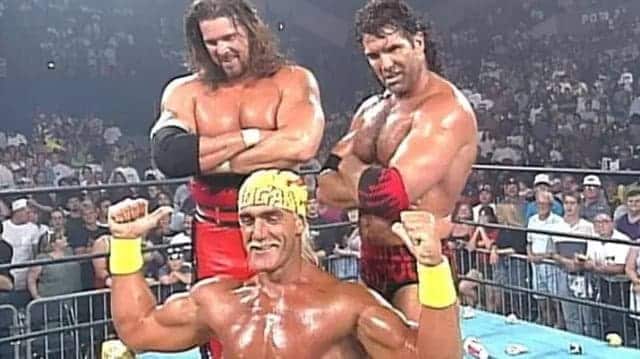
This development sheds light on how current talent manages their training load compared to previous eras. The recent reporting on Stratton's process highlights that modern performers are more vigilant about protecting their bodies via pre-emptive modification. This stands in contrast to the late 90s, where performers like those involved in the failed nWo revival plans often worked through debilitating pain to sustain aging gimmicks.
The business impact of such changes is clear. A performer forced out of the ring for a major recovery—such as an ACL or cervical spine injury—disrupts television booking and merchandising cycles for months. By proactively retiring a dangerous spot, Stratton keeps herself available for the summer schedule. With the 2026 World Cup kickoff dates effectively monopolizing global broadcast attention, keeping top stars healthy for domestic follow-up events is a priority for production teams.
Historical precedent for stylistic pivots
Athletes changing finishers due to injury concerns isn't new, though it is often kept quiet until years later. We have seen champions move from power-based moves to technical submissions to avoid repeated spinal compression. Stratton is operating with a clear understanding that the spectacle is secondary to her ability to compete at a high frequency over the next 48 months.
However, the transition is not without its risks. Any change in high-impact finishing moves requires secondary wrestlers to adjust their own rhythm. If the timing on a moonsault is off, it can result in botched landings that are arguably more dangerous than a standard high-angle strike. The training staff at the Performance Center has reportedly been monitoring her landing mechanics to ensure the safety threshold is met during heavy touring schedules.
Looking forward
Stratton’s career trajectory remains tied to her ability to perform under high pressure. With no long-term injury reported, her shift suggests a clean bill of health. She has transitioned to a move that requires more precise spatial awareness rather than raw kinetic force.
The industry will watch to see if this shift impacts her win percentage or her involvement in marquee matches. As long as she maintains the accuracy of her current finisher, the move away from her original repertoire is likely to be viewed as a prudent tactical adjustment. By avoiding a 6-to-9 month recovery timeline and keeping her schedule open, she has protected both her health and her placement in the current creative rotation.