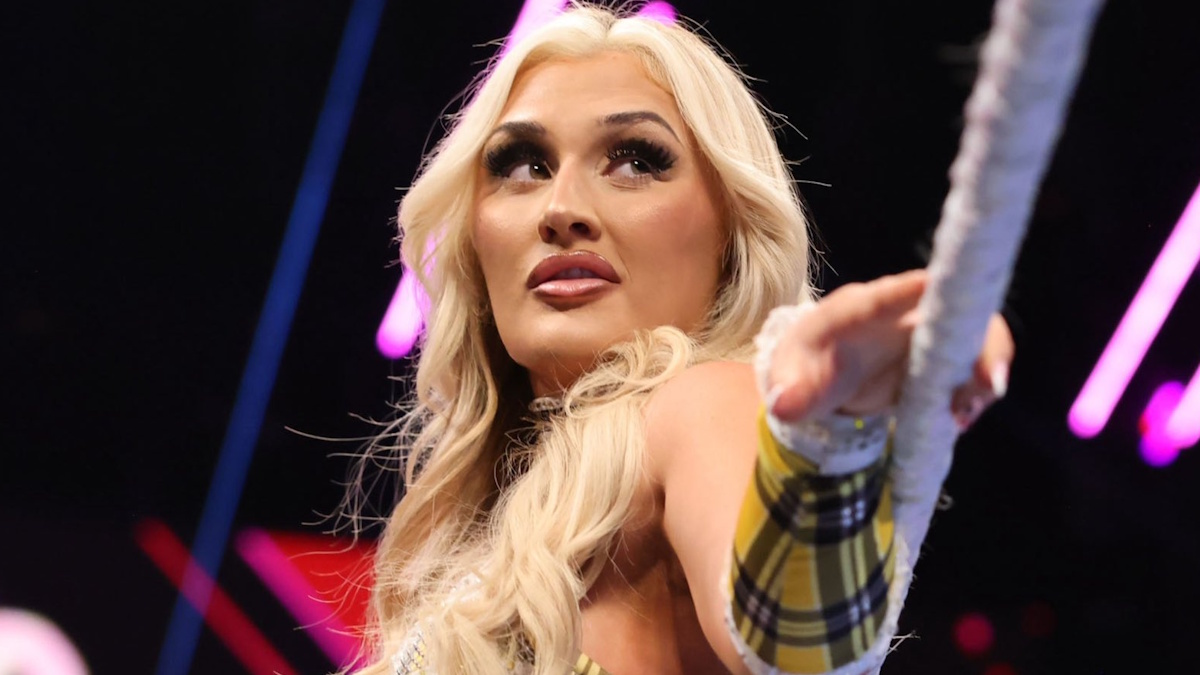
Tiffany Stratton is playing us all, but Backlash will expose the truth
Heat by design
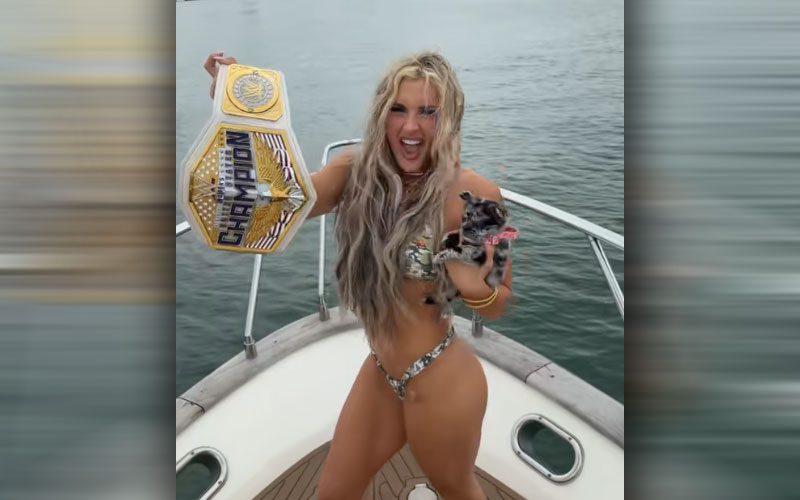
The footage dropped over the weekend, playing out as a textbook piece of modern heel work masquerading as a vapid lifestyle vlog. Tiffany Stratton, draped aggressively across the sun-soaked deck of a yacht in a bikini, flaunted the newly minted Women's WWE United States Championship for her millions of followers. It was obnoxious, it was loud, and it was entirely, brilliantly deliberate.
Stratton isn't just taking a standard post-victory lap. She is actively weaponizing the quiet resentment of the hardcore wrestling fanbase. In an era where villains constantly break character on podcasts to explain the nuances of their craft or show how much they respect the business behind the curtain, Stratton leans violently into her own entitlement. She offers no apologies and no winks to the smart marks.
She treats the championship belt like a designer handbag. It is a high-end accessory to her personal brand, a shiny, oversized prop meant to provoke the exact kind of angry quote-tweets that drive the social media algorithm into overdrive. You can practically hear the collective groan from the purists who desperately want their champions to talk about fighting spirit, the prestige of the lineage, or the honor of the locker room.
But that cognitive dissonance is the entire point of the exercise. You can hate the arrogant attitude, but you absolutely cannot deny the sheer physical superiority she displays between the ropes. WWE management wants you to be deeply annoyed by the boat video. They want you to tune into SmackDown on Friday nights actively hoping someone kicks her head off. That is the definition of drawing money in the digital age.
The midcard bottleneck
To truly understand the value of Stratton holding this specific belt right now, you have to look at the structural mathematics of the main roster. For years, the women's division suffered from a brutal, uncompromising, all-or-nothing binary. You were either locked in a blood feud with Rhea Ripley or Bianca Belair for a world title, or you were standing quietly in the background during chaotic backstage segments.
The tag team titles occasionally offered a temporary life raft, but they rarely elevated individual performers into bankable singles stars. The introduction of the Women's U.S. Title fundamentally alters the geometry of the booking sheets. It forces the creative team to write secondary feuds with actual stakes, rather than just throwing combinations of women into meaningless three-minute matches to fill a television quarter-hour.
Look at the talent logjam that plagued the roster throughout the last eighteen months. Performers like Chelsea Green, Michin, and Lyra Valkyria desperately needed a tangible prize to fight over — one that did not require going through the untouchable, heavily protected main event stars. The U.S. Title provides that critical middle tier. It gives television time a defined purpose and an endpoint.
Giving the inaugural run to Stratton is a shrewd tactical move by the booking committee. She draws heat effortlessly just by walking down the ramp. By having a brash, arrogant heel hold the secondary belt first, WWE instantly creates a dynamic where any babyface who steps up to challenge her receives automatic, default crowd support. The belt isn't elevating Stratton; she is elevating the belt by making everyone in the arena desperate to see her lose it.
Where the polish fades
This is exactly where the praise stops and the harsh reality of her in-ring progression sets in. While Stratton's character work is lightyears ahead of most of her peers, her actual match psychology remains deeply flawed and frustrating to watch. She is still, fundamentally, a gymnast executing a choreographed athletic routine, rather than a fighter surviving a grueling physical contest.
Watch her closely during a 15-minute television match. When she is on offense, she is undeniably dazzling. The handspring back elbows, the standing moonsaults, the terrifying velocity of her strikes — it is all spectacular. The glaring problems begin the moment she has to sell sustained, logical damage.
Wrestling is ultimately about what happens in the empty spaces between the moves. During a recent high-profile title defense, her opponent spent the better part of eight minutes methodically attacking Stratton's left knee. She sold the initial impact reasonably well, limping dramatically and grimacing while trapped in various intricate submissions. Then the mandatory comeback spot arrived, and the narrative fell apart completely.
Stratton hit a sudden jawbreaker, popped up instantly off the mat, and sprinted full-speed into a corner splash without a single hint of hesitation or pain. The damage to the leg was entirely forgotten. She reset her physical state the exact moment it was her turn to do her signature moves. That lack of connective tissue ruins the suspension of disbelief for anyone paying close attention to the story of the match.
Elite, generational workers like Asuka or Bayley let the accumulated damage dictate their comebacks. They drag the injured limb behind them. They adapt their offense on the fly to protect the injured body part. Stratton still wrestles as if her health bar fully regenerates after a successful counter-attack. It is a glaring blind spot for a champion who is supposed to be carrying a division.
The burden of the highlight reel
Part of this psychological gap stems from her reliance on the Prettiest Moonsault Ever. From a purely athletic standpoint, it is a marvel of physics. The rapid rotation, the absurd hang time, the crushing impact — it is arguably the most protected and visually stunning finisher in the women's division right now. But a spectacular finisher can often become a developmental trap.
When a wrestler knows they have a guaranteed highlight-reel moment waiting at the end of the bout, they often build the entire match around merely setting it up, ignoring the grueling narrative journey required to get there. The match becomes a factory for producing viral clips rather than a cohesive athletic struggle.
If Stratton wants to be viewed as a true ring general, she needs to develop a secondary, grounded finishing maneuver. A vicious, punishing submission hold would show the audience that she isn't just a one-trick pony relying on her gymnastics background. Winning via tap-out would silence the critics who dismiss her as just an athlete playing wrestler. It would add a layer of sadism to her character that the boat videos can only hint at.
The Backlash crucible
That psychological weakness will be tested immediately under the brightest lights. WWE Backlash is scheduled for May 09, 2026, and the environment in Lyon, France will be completely unforgiving. European crowds do not politely applaud high-spots or sit on their hands during rest holds. They actively try to hijack the narrative with relentless chanting.
A pristine, arrogant, undeniably American heel is exactly the archetype that international crowds love to rattle and break down. The atmosphere inside the arena will be suffocating. This is the exact environment where a green performer can easily lose their nerve, panic, and rush frantically through their planned sequences just to get to the finish line.
Stratton needs to prove she can scramble when the plan goes out the window. If she is matched up against a seasoned veteran who understands how to manipulate deafening crowd noise — someone who uses the chaos to their advantage — she cannot just rely on hitting her moonsault perfectly. She has to show she knows how to win ugly.
Think about how Gunther defined the men's Intercontinental Championship over the last two years. He didn't just win matches; he established a specific, brutal, unyielding style that made the title feel distinctly different from the world championship. Stratton has a similar opportunity right now. She needs to define the Women's U.S. Title through entitled, desperate retention. A rake of the eyes, a handful of tights, or an exposed turnbuckle would do significantly more for her long-term character development right now than another flawless, flipping dive.
A champion for the algorithm
Professional wrestling has always served as a funhouse mirror reflecting the specific anxieties of its cultural moment. In the 1980s, the dominant narrative featured foreign menaces fighting rugged, working-class American heroes. During the Attitude Era, the central conflict was the crude, anti-establishment rebel battling the ruthless corporate boss. Today, the ultimate pop-culture villain is the flawless, privileged, utterly out-of-touch influencer.
Stratton understands this modern dynamic better than almost anyone else in the locker room. The bikini boat video is precisely the kind of content that drives massive digital engagement through pure, unadulterated irritation. She knows her target audience intimately, and she knows exactly which buttons to press to make them complain about her on Reddit threads or Twitter timelines.
It is a brilliant promotional strategy, executed flawlessly. But it sets a massive performance bar. When you talk that loud online, and when you flaunt the gold that aggressively, the bell eventually has to ring. You have to deliver the goods when the red light goes on. The Women's U.S. Title cannot survive as a mere aesthetic accessory for Instagram reels or TikTok dances. It has to mean something tangible and violent inside the ropes.
Right now, Tiffany Stratton is playing a phenomenal character. She is mastering the art of the presentation. Eventually, she will need to become a complete, uncompromising professional wrestler. The raw athleticism is what won her the gold in the first place. Her ability to slow down, sell the damage, control the pacing of a hostile room, and grind out an ugly victory is what will ultimately determine if she gets to keep it.
Read Next
- Tiffany Stratton's yacht flex is exactly what the U.S. Title needs
- WrestleMania 43 in Saudi Arabia is a logistical nightmare waiting to happen
- WWE Backlash 2026 is becoming a high-stakes test of roster depth
- WWE injury report: Assessing the current physical toll of the roster
- 💥 WWE Backlash 2026 — Full Coverage Hub
All Elite Wrestling 'The Elite' T-Shirt (Amazon Exclusive)
Show you're with The Elite with this official AEW tee.
More Coverage
WWE's momentum problem with Tiffany Stratton
1 day, 17 hours ago
Tiffany Stratton’s path to SummerSlam is the wrong move
1 day, 20 hours ago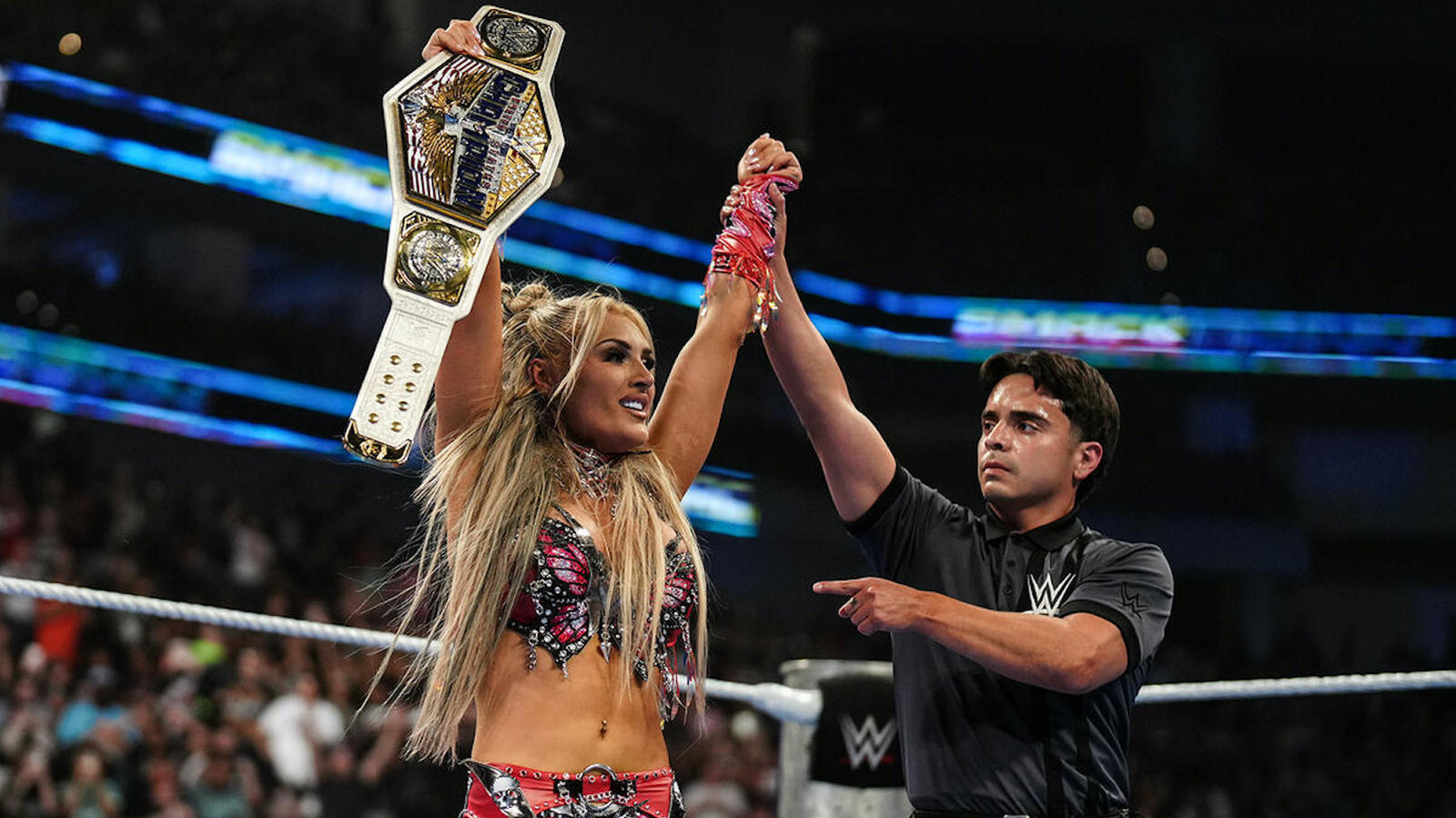
Top 10: Defining WWE Moments of 2026
2 days, 12 hours ago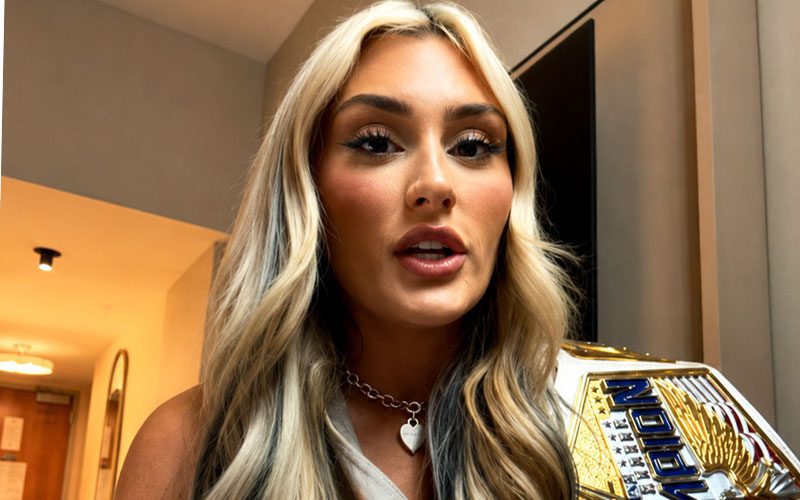
Tiffany Stratton is playing 4D chess with her character arc
1 week, 2 days ago
Top 10: Top Moments
1 week, 5 days ago
WWE is fumbling Tiffany Stratton while she is living her best life
1 week, 5 days agoMore Analysis
Tiffany Stratton's yacht flex is exactly what the U.S. Title needs
2 months, 2 weeks ago
Tiffany Stratton's NXT nostalgia masks a lack of current focus
2 months, 3 weeks ago
WWE's momentum problem with Tiffany Stratton
1 day, 17 hours ago
Tiffany Stratton is playing 4D chess with her character arc
1 week, 2 days ago
Tiffany Stratton’s path to SummerSlam is the wrong move
1 day, 20 hours ago