The Big Picture
Vince McMahon remains the gravitational pull of professional wrestling even while operating from the periphery. His legacy is defined by a chaotic mixture of corporate brinkmanship and the constant scouting of physical giants.
1. The Saudi Arabia Gamble
McMahon viewed the mid-2010s pivot to the Middle East as a reckless roll of the dice. According to former CFO George Barrios, the chairman initially believed his executive team had lost their minds when they presented the expansion plan. He was convinced they were betting the entirety of his promotion on a single international partner. This internal resistance highlights the contrast between McMahon's conservative roots and the aggressive growth strategies favored by his financial lieutenants.
2. The Quiet Introvert
Public perception of a high-decibel orator clashes directly with accounts from his inner circle. George Barrios describes a man who is startlingly quiet and introspective behind the scenes. This projection of a bombastic boss versus a reserved executive creates an identity gap that defined the company culture for years. It reminds us that the chairman you see on television is often a character performance rather than an accurate biographical depiction.
3. The Strowman Archetype Scouting
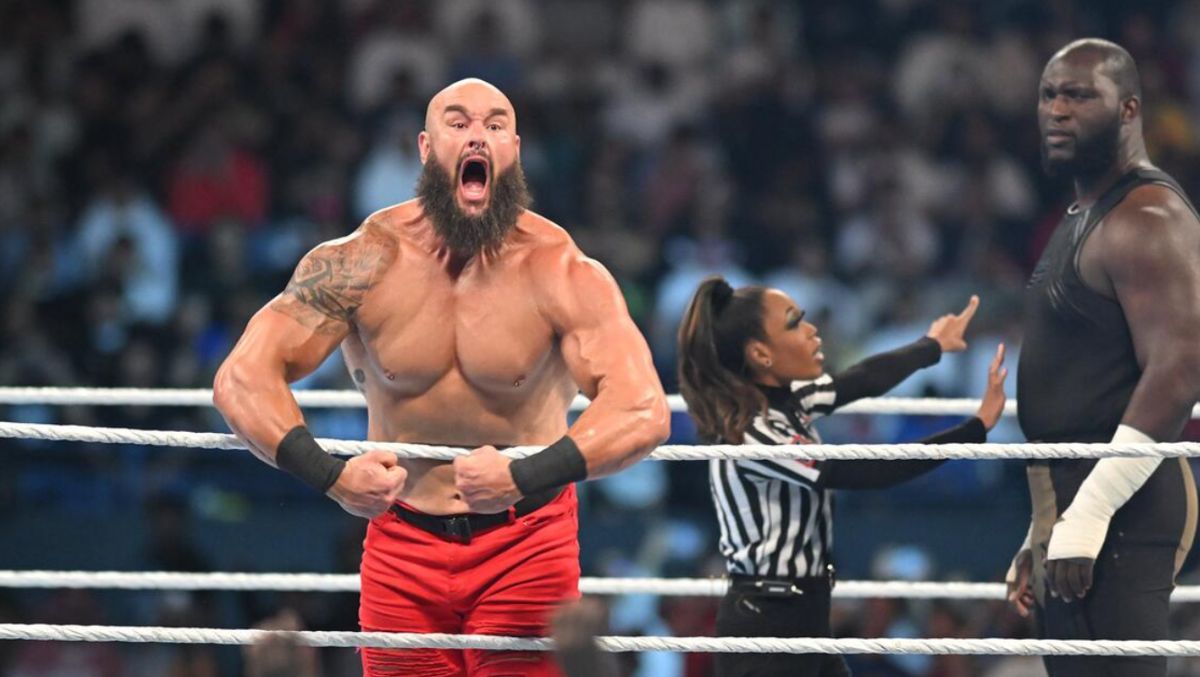
Braun Strowman remains the definitive case study for the McMahon eye. When the chairman first laid eyes on Strowman, the response was not one of nuanced analysis but immediate, focused curiosity about raw physical scale. As Braun Strowman recalls, the attention was immediate because he checked every box regarding size and presence. This singular obsession with giants often dictated the main event scene for decades, regardless of fan pushback against the limitations of power-heavy wrestling.
4. The Friction with CFOs
The relationship between the creator and the counter-balance became increasingly frayed toward the end of the corporate run. Barrios notes that he was already weighing an exit before McMahon actually handed him his walking papers in January. This power struggle reveals the burnout that permeated the executive suite as the business moved, in their view, toward a more rigid structure. It underscores the difficulty of maintaining a collaborative environment when one figure views every suggestion as a personal betrayal of the brand's heritage.
5. The Billion-Dollar Skepticism
McMahon frequently characterized his own executives as insane when they proposed massive, high-risk financial shifts. This skepticism was not just a protective measure for his capital but a fundamental disagreement on the direction of the business. Even when the deals netted massive returns, McMahon's initial refusal to participate displays a stubbornness that frustrated his leadership team. It is a cautionary tale of a visionary who eventually lost faith in the logic of his own modern boardrooms.
6. The Firing of Loyalists
The firing of George Barrios illustrates the volatility inherent in working directly under the chairman. While the company thrived during this tenure, the internal environment was defined by shifting allegiances and sudden terminations. McMahon frequently prioritized his personal comfort over the continuity of his executive team. It remains a hallmark of his management style to burn bridges, even with those who facilitated the transformation into a billion-dollar entity.
7. Execution vs. Inspiration
While McMahon is the primary driver of creative, he lacked the operational discipline to execute the business vision alone. The reliance on figures like Barrios shows he needed a foil to challenge his instincts. When he stopped listening to these voices, the decision-making process became increasingly insular. This isolation eventually led to the internal fractures that characterized the late stages of his formal power.
8. The Reliance on Personal Intuition
Every major booking success, like the push for Strowman, relied on McMahon trusting his gut over data. While this approach built the company during the 1980s and 90s, the failure to adapt to modern performance metrics was a noticeable flaw. Relying on intuition in a 2026 corporate environment is arguably the reason the business required external restructuring. Intuition does not scale when the company turns over 9 figures in revenue annually.
9. Corporate Secrecy
The culture of the front office was defined by high-level opacity. Barrios and other executives operated in an environment where major shifts were kept tightly under wraps until the moment of execution. This secrecy fostered a lack of trust that eventually crippled the organization's ability to retain top-tier corporate talent. It served McMahon’s ego but stunted the growth of a professionalized front office.
10. The Legacy of the Titan
If there is one fault in his history, it is the inability to transition gracefully. McMahon could not find the middle ground between absolute control and absolute departure. He leaves behind a footprint that is too large for any successor to fill without changing the foundation of the work itself. His impact is undeniable, but it comes at the cost of sustained structural stability.
Honorable Mentions
The hiring of specialized talent from non-wrestling backgrounds and the early 2000s expansion efforts round out his diverse, if flawed, history. These moves, while less publicized than his internal feuds, dictated the day-to-day operations of the promotion more than any championship match.