Cartwheel and Legacy hit the shelf
The independent scene and NXT are navigating a series of setbacks this week. Jack Cartwheel confirmed he is sidelined with an arm injury, putting a halt to his current momentum in AAA. The injury disrupts the division's rhythm just as the company looks to ramp up its card production for the summer.
Reports out of PWInsider indicate that Cartwheel intends to maintain a public presence despite the physical downtime. It is a familiar rhythm for high-flyers who rely on explosive motion; when the arm locks, the base stability disappears. Recovery timelines for specific arm trauma remain opaque, but the inability to perform his signature aerial arsenal is a clear negative for AAA's immediate booking.
NXT and WWE roster attrition
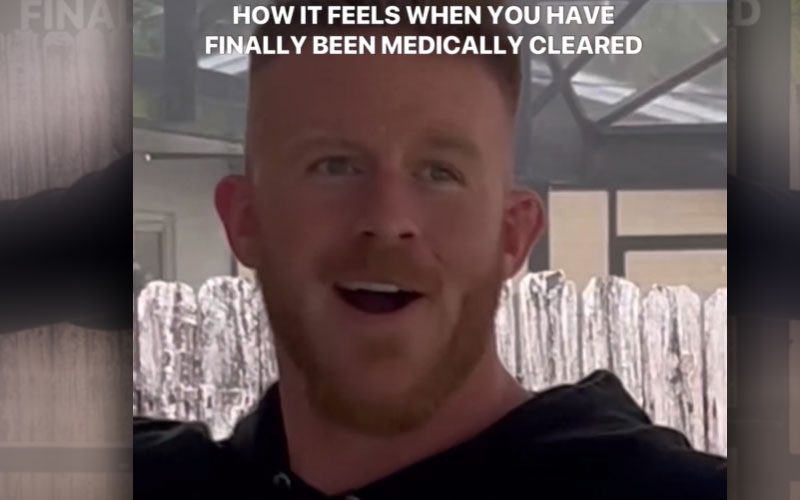
Meanwhile, Sean Legacy provided a surprise video reveal regarding his own status. NXT continues to experiment with how it communicates injury news, opting for direct-to-consumer social media drops rather than standard portal releases. While Legacy appears optimistic about his return, the lack of a firm clearance date leaves the creative team in a holding pattern for the brand's mid-card storylines.
Further up the food chain, the top of the card is not exempt from the physical toll. Cody Rhodes recently characterized his own situation as a positive yet absurd update regarding his eye. He managed to sustain the damage during his encounter with Randy Orton, a veteran who understands exactly how to exploit an orbital target. Rhodes remains the champion, but wrestling with a compromised field of vision introduces significant risk for high-stakes matches.
The cost of high-intensity performance
Professional wrestling is currently suffering from a density of injuries that feels both unsustainable and inevitable. The demand for constant content, mixed with a style that prizes high-impact maneuvers, frequently leads to these gaps in the roster. We are seeing a pattern where performers feel pressured to minimize the severity of their physical reality to remain relevant in the digital conversation.
The strategic implication is plain: booking departments must pivot faster than ever. When a talent like Cartwheel goes down, the entire sequence of events slated for his return is effectively scrapped. Historically, promotions that fail to adapt their match structures following major arm or limb injuries often see a drop in match quality. The reliance on individual star power creates a brittle product, and this week serves as a sharp reminder that safety is rarely a guarantee.
We are also monitoring updates on Sol Ruca and Trey Miguel, as noted in recent PWInsider reports. Their situations highlight a trend of inconsistency in return-to-ring protocols that seems to vary wildly between promotions. The industry standard remains elusive, as talent is often evaluated on a case-by-case basis rather than through a uniform medical framework.
Ultimately, the physical output required for a 5-star match is extracting a high price. Whether it is in the developmental pods of NXT or the high-flying circuits of AAA, the recurring theme is attrition. If the frequency of these reports continues to climb, the industry will have to reconsider how many matches of such high intensity one human body can actually sustain in a calendar year.