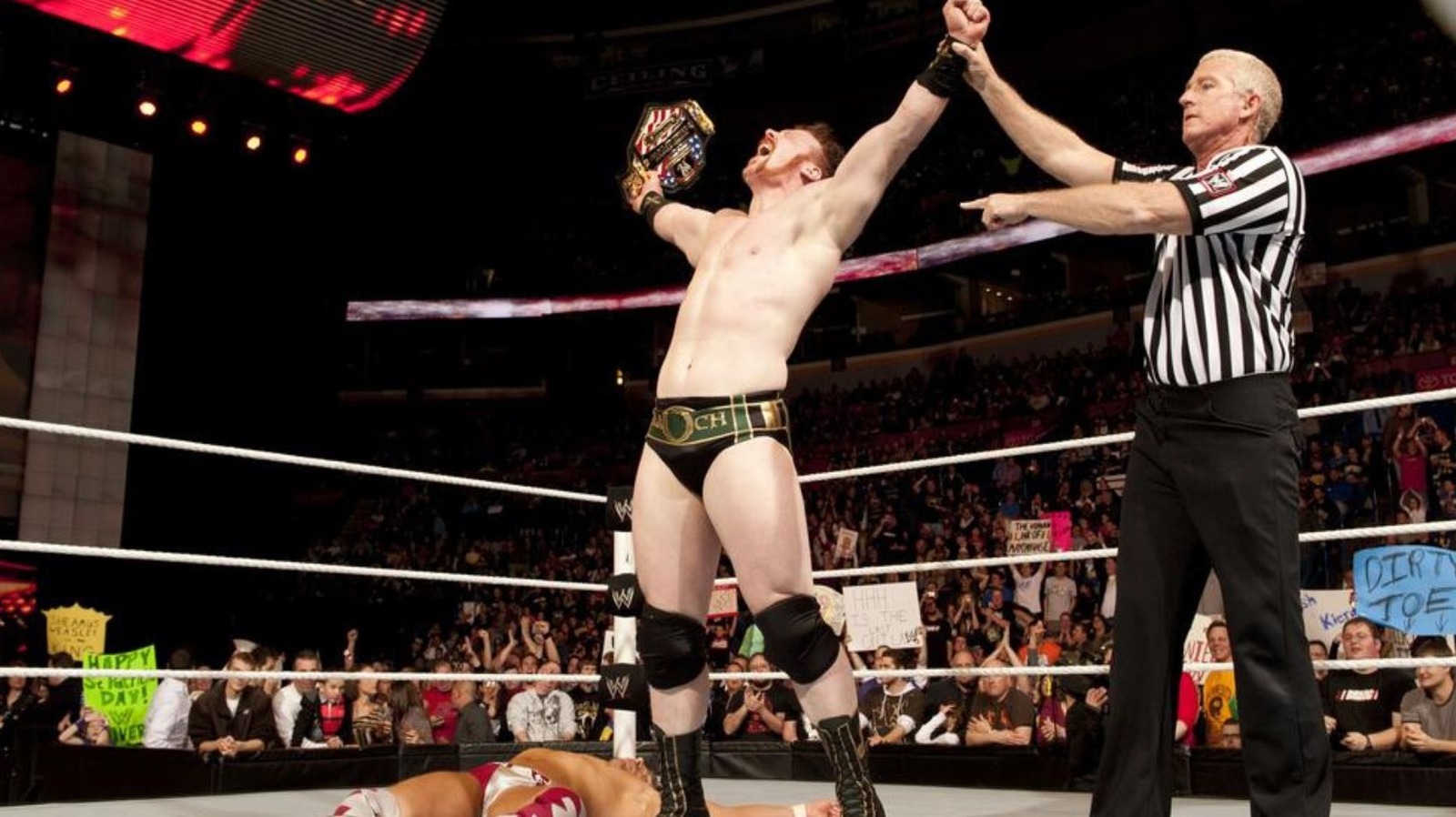
Stephen Farrelly is officially a free agent. On July 10, 2026, the man who spent nearly two decades as Sheamus updated his social media handles to @SFarrellyPro and posted a farewell to WWE. This was not a standard release. It was a conscious choice to walk away after rejecting a restructured contract extension.
The departure represents a shift in WWE’s business operations under TKO Group Holdings. For years, the promotion operated as a creative kingdom where roster depth was maintained at all costs. Now, the ledger dictates the roster. If you are a veteran on a high salary who is not actively on television, your contract is a target for reduction.
During an appearance on Ariel Helwani’s show, AEW star and TNA co-founder Jeff Jarrett analysed the situation. As Wrestling Inc reported, Jarrett observed that WWE is currently printing money but faces a new set of pressures. The merger with UFC under TKO has shifted the ultimate authority from creative minds to Wall Street investors.
Unlike Vince McMahon, who answered to his own whims, or Tony Khan, who answers to himself, Ari Emanuel answers to institutional shareholders. These shareholders look at wrestling through the cold lens of corporate finance. They do not see a legacy character who can draw a crowd; they see a cost center.
Jarrett highlighted how difficult it is to explain the intangible value of professional wrestling to a board of directors. Wall Street operates on concrete metrics, not subjective storytelling. When a performer is sidelined, the spreadsheet suggests they are dead weight.
The ledger over the locker room
Why the numbers forced a departure
Farrelly’s contract situation is a perfect case study of this financial tension. He has been sidelined since late November 2025 after suffering a severe shoulder injury that required surgery in December 2025. His final WWE match took place on the November 17, 2025 episode of Monday Night Raw, where he teamed with John Cena and Rey Mysterio.
An eight-month absence is a lifetime in professional wrestling, and it is even longer on a balance sheet. WWE management reportedly approached Farrelly with a restructured deal that offered less guaranteed money. They wanted to mitigate their risk on a 48-year-old brawler coming off major surgery.
Farrelly swiftly rejected the proposal, choosing to let his contract run out. He valued his brand name and his physical recovery too highly to accept a pay cut. This represents a fundamental disagreement about what a veteran is worth to a promotion.
Jarrett explained this friction in detail during his interview, pointing out that Wall Street lacks the context to understand why expensive veteran talent is necessary. He noted that the restructuring of deals is a natural consequence of answering to shareholders who only look at the bottom line.
"You can tell, Sheamus is the latest, but the restructuring of deals... I get that, because they're answering to Wall Street. Wall Street might not understand, 'Hey, we've got to keep this talent... Yeah, we're paying them, and we're paying them big money, and yeah, they're sitting on the bench, but boy, oh boy, when we call them off the bench, they're a brand name. They can deliver.'"
In the corporate view, keeping a high-earner on the bench is inefficient. In the wrestling view, it is an insurance policy. Without that depth, the entire show can collapse under the weight of a single bad bump.
The high-risk game of roster depletion
This contract restructuring strategy is a dangerous game for WWE as they prepare for the Netflix transition. The company is relying on a top-heavy roster to carry three hours of weekly live television. While the main event scene remains strong, the middle of the card is being hollowed out.
Let's look at the numbers. The average length of a WWE match on television has increased over the past three years. This requires performers to work longer, more physical matches. When you lose experienced workers like Farrelly, you lose the safety nets who can guide younger, less polished talent through these long television segments.
The physical toll is cumulative. Without veterans to absorb the workload and work the house show loops, the burden falls on a smaller group of top stars. This increases the likelihood of injuries, creating a vicious cycle. Wall Street’s quest for efficiency might end up costing WWE its most valuable asset: roster health.
It is a short-sighted strategy that prioritizes quarterly earnings over creative stability. WWE is betting that their brand name is strong enough to survive the loss of established stars. But wrestling history shows that fans buy tickets to see people, not corporate logos.
Evaluating the AEW fit
For Farrelly, the exit opens up a fascinating new chapter. At 48, he is looking at his final major run in the business. The obvious destination is AEW, where Tony Khan has historically been eager to sign established WWE names.
The physical match is obvious. Farrelly’s stiff, hard-hitting style matches the AEW Continental Championship division perfectly. The prospect of him stepping into the ring with Eddie Kingston or Bryan Danielson is enough to make any hardcore fan salivate.
He also has built-in history. A reunion with Claudio Castagnoli, his former tag team partner in The Bar, is an easy story to write. They were one of the most cohesive tag teams in WWE history, combining power moves with exceptional tag team psychology.
Farrelly’s in-ring pacing has always been deliberate. He relies on heavy forearm clubs, a stiff pump kick, and a submission hold that targets the lower back. His matches are physically demanding, both for himself and his opponents. This is why his recovery from a shoulder reconstruction at his age is so critical.
However, this potential signing is not without significant risk. AEW’s roster is already notoriously bloated. Many talented wrestlers struggle to find consistent television time on Dynamite or Collision.
Adding another high-priced veteran could worsen the creative bottleneck. We have seen stars like Malakai Black and Jay White get lost in the shuffle for months at a time. Farrelly could easily find himself sitting on another bench, albeit a differently funded one.
Here is a breakdown of the key factors surrounding Farrelly’s free agency:
- 20-year career in WWE, establishing him as a multi-time world champion and key legacy star.
- Final match on November 17, 2025, before a severe shoulder injury halted his run.
- A physical brawling style centered around the Brogue Kick, High Cross, and Cloverleaf.
- Current status as a free agent as of July 10, 2026, looking for a final career-defining run.
The battleground of free agency
If Farrelly wants to prove his value, he needs a promotion that allows him to showcase his physical style. TNA Wrestling has been mentioned as a dark horse candidate. They are heading to the 2300 Arena on July 16, and adding a name like Farrelly would be a massive statement.
But TNA’s budget is unlikely to match Farrelly’s salary expectations. They are a promotion in transition, and spending a large portion of their budget on a single veteran would be a massive financial gamble. Farrelly is a major league player who belongs on a major league stage.
New Japan Pro-Wrestling is another option. Farrelly’s style is built for the G1 Climax, where stiff strikes and physical brawling are the norm. But his shoulder history and age make a grueling Japanese tour highly risky. He needs a schedule that protects his body while maximizing his impact.
This leaves AEW as the only logical destination. The stakes are high for both sides. Tony Khan needs to prove that AEW remains an attractive destination for premier talent, while Farrelly needs to prove that he is still a top-tier worker who can deliver in the ring.
The contract negotiations will be intense. Farrelly is not going to sign a deal that devalues his legacy. He wants to be paid like a main eventer and booked like one. AEW will have to convince him that they have a clear plan for his debut and his long-term creative trajectory, as discussed in his recent comments on Ariel Helwani’s show.
The fan anticipation is building. On wrestling forums and social media, the speculation is running wild. Fans are debating who his first opponent should be and whether he should debut as a babyface or a heel. The buzz is real, and it is the kind of momentum that money cannot buy.
We make a confident prediction. Stephen Farrelly will sign a multi-year deal with AEW. The lure of working with Claudio Castagnoli and having the creative freedom to wrestle stiff, physical matches is too strong to ignore. He wants to prove that WWE made a mistake.
We predict his debut will take place as the surprise joker entrant in a major tournament, leading to a feud with Castagnoli. The first match will end at the 14-minute mark with a Brogue Kick. Farrelly will own his future, and Wall Street will count the cost of letting him go.