Santino Marella at Clash in Italy actually makes perfect booking sense
The Architecture of the International Site Fee Era
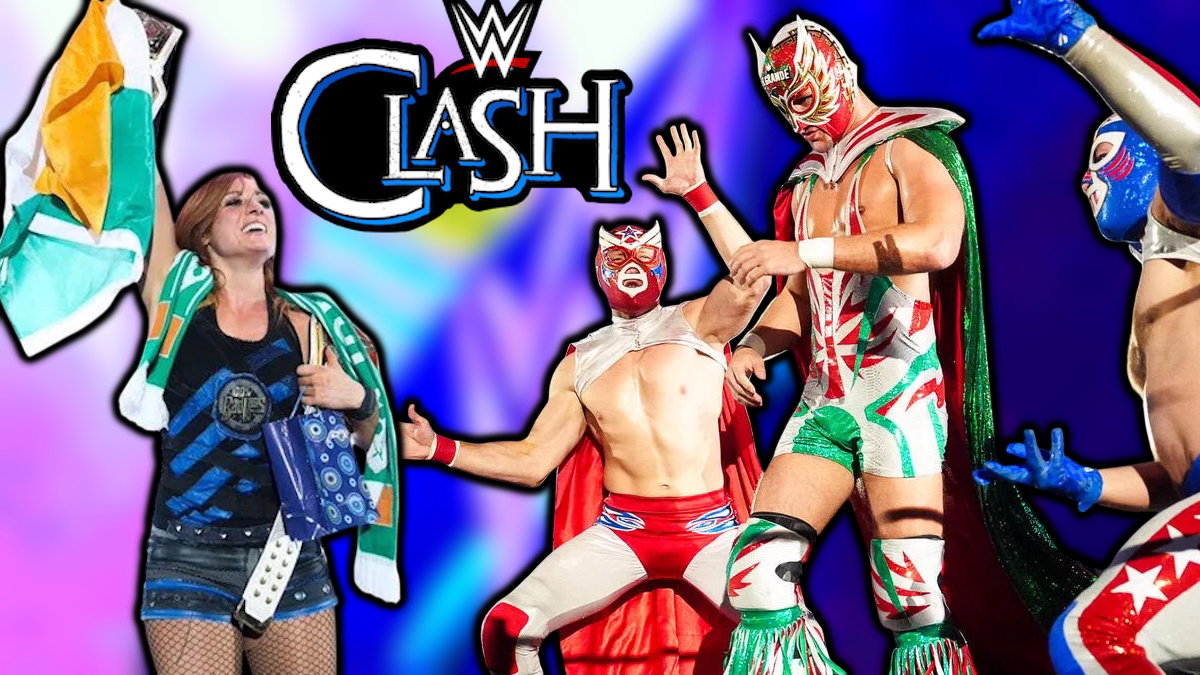
The geography of modern professional wrestling dictates that international premium live events require a localized anchor. You don't just book a card; you book the crowd. When WWE heads to the Inalpi Arena in Turin on May 31 for Clash in Italy, the structural integrity of the event's undercard relies entirely on hitting specific nostalgic beats.
The business model has shifted aggressively. WWE no longer relies on domestic pay-per-view buys; they extract massive site fees from foreign municipalities. When a local government pays millions to host a broadcast, they demand a return on investment. They want their city celebrated on a global feed. That means the booking must reflect the coordinates.
Enter Anthony Carelli.
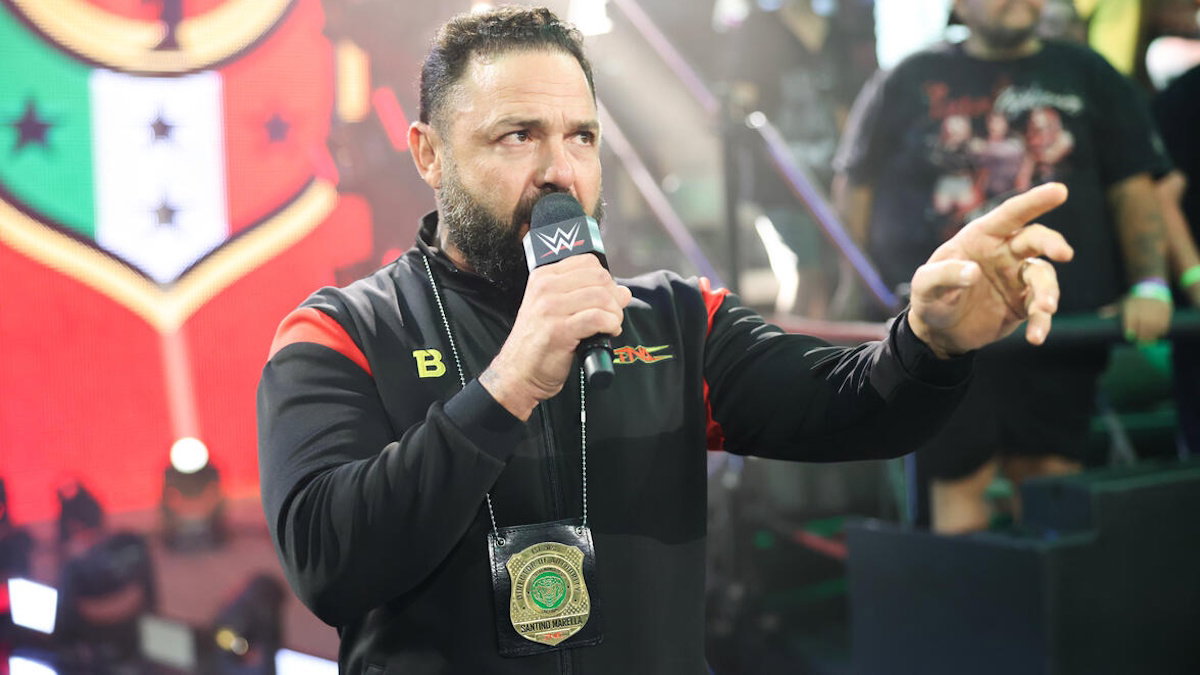
Speaking recently regarding the upcoming May 31 event, Santino Marella noted that an appearance in Turin would represent a "full circle moment." He is referencing his April 16, 2007 debut in Milan, where he was plucked from the front row to win the Intercontinental Championship from Umaga.
That debut was a masterclass in localized booking geometry. It established a character entirely predicated on geography. Now, nineteen years later, WWE possesses the opportunity to deploy that same performer as a structural support beam for an international broadcast.
Deconstructing the Milan Miracle
You cannot analyze Marella’s potential usage in 2026 without dissecting the mechanics of that April 2007 debut. Behind the scenes, Carelli was working in Ohio Valley Wrestling under the name Boris Alexiev. He portrayed a stoic, dangerous Russian shoot-fighter who utilized stiff strikes and tight submission holds. The pivot to an exaggerated Italian stereotype was jarring for anyone tracking developmental tape.
But the execution on Monday Night Raw was flawless because it masked its own absurdity with sudden violence.
Look at the specific sequencing of that Milan match. Vince McMahon stood in the ring, demanding a challenger for his invincible monster, Umaga. Carelli hopped the barricade in street clothes. The match itself was essentially a squash, designed to make the crowd suffer for their local hero. The geometry of the finish is what matters. Bobby Lashley interfered, executing a precise spear that folded Umaga in half. Lashley then physically dragged Marella's limp body and draped him over the champion.
It was a carefully constructed illusion. It protected the monster heel while delivering a massive, unearned dopamine hit to the local crowd. The Milan Miracle worked because it was an anomaly. The problems started when WWE tried to standardize the anomaly.
The Attrition of the Midcard Hierarchy
This is where we must apply a critical lens. The Santino Marella character, while undeniably successful in moving merchandise, caused significant structural damage to the midcard roster between 2008 and 2012.
Wrestling operates on internal logic. If you establish a character as a joke, their victories must be carefully managed to avoid devaluing the opposition. WWE failed repeatedly in this regard. Marella was frequently used as a blunt instrument against serious talent.
His reigns with the Intercontinental and United States Championships actively eroded the prestige of those belts. The matches lacked basic ring psychology. Rather than establishing heat through methodical limb work or geographical control of the ring, Marella's bouts relied on broad physical gags that ignored established rules. A tight headlock suddenly didn't matter if Marella decided to do a cartoonish power-walk out of the hold.
You cannot build a menacing heel when they are taking a flat-back bump for a sock puppet in the second hour of television. The spatial awareness of his matches often completely collapsed the suspension of disbelief for the viewer. It was lazy booking masquerading as entertainment.
The Biomechanics of the Cobra Strike
Despite the structural flaws in the character's long-term deployment, the physical execution of his finishing sequence was remarkably precise. We need to talk about the mechanics of the Cobra, because it is frequently dismissed as mere comedy.
Watch the setup tape from 2010. Marella drops into a low, wide base, completely altering his center of gravity. He manipulates the distance between himself and his opponent, usually creating a strict three-foot buffer zone. He pulls the green sock from his trunks—a stalling tactic designed specifically to draw the television camera in tight.
The arm extension itself is entirely linear. It requires the opponent to feed in perfectly on a straight axis. When executed correctly, the sudden deceleration of the strike against the opponent's throat generates an immediate, sharp pop from the audience. It is low-risk, high-yield offense.
Because the move is a strike rather than a grapple or a lift, it completely neutralizes weight classes. That specific biomechanical advantage is what allowed Marella to briefly threaten main event talent without requiring them to bump heavily. They just had to sell a quick shot to the neck.
The Milwaukee Anomaly: Elimination Chamber 2012
The absolute ceiling of this gimmick was reached on February 19, 2012, inside the Elimination Chamber in Milwaukee. The final sequence between Daniel Bryan and Santino Marella remains a fascinating case study in crowd manipulation.
Break down the specific string of spots. The pacing is breathless. Bryan misses a diving headbutt from the top rope, crashing onto the steel grating. Marella, exhausted, slowly reaches into his gear and produces the sock. The crowd, fully aware that a comedy act has no business winning the World Heavyweight Championship, completely loses their minds anyway.
Marella connects with the strike. He hooks the leg. The referee counts to 2.99 before Bryan kicks out.
Why did that sequence work? Because the velocity of the near-fall bypassed the audience's critical faculties. For three seconds, the sheer momentum of the match made the impossible seem mathematically probable. That is the highest level of performance you can extract from a comedy gimmick. You make the crowd forget the joke.
The Carlito Protocol: A Precedent for Saturated Deployment
If we want to understand exactly how WWE plans to utilize Marella in Turin, we only need to look back at Backlash 2023 in San Juan, Puerto Rico. The mechanics are identical.
During the street fight between Bad Bunny and Damian Priest, the pacing required a massive external shock to maintain the chaotic energy. WWE deployed Carlito. He didn't work a full match. He arrived in his vintage gear, hit a backstabber, spat an apple in a heel's face, and immediately exited the primary narrative space.
That is the blueprint. I call it the Carlito Protocol.
You extract the maximum possible nostalgic reaction while exposing the performer to the minimum possible physical risk. You don't ask them to carry a storyline; you ask them to carry a three-minute segment. Marella in Turin fits this protocol flawlessly.
The danger arises only when a promotion forgets why the pop worked and tries to integrate the legacy act back into the weekly television rotation. A surprise appearance at Clash in Italy is electric. A multi-week program on Monday Night Raw following the event is exhausting. The utility of the character has a strict expiration date.
WWE must resist the urge to squeeze more blood from the stone. The Turin appearance must exist in a vacuum. It should be a standalone sequence that rewards the local audience without altering the broader trajectory of the summer storylines heading into the major stadium shows.
Tactical Deployment in the Modern Era
Apply this historical data to Clash in Italy. Marella states it would be a "full circle moment." He is correct, but only if the current creative regime utilizes him strictly as a tactical asset rather than an active competitor.
Under Paul Levesque's direction, WWE generally avoids booking 15-minute comedy matches on premium live events. The current product prioritizes tight in-ring work rates and long-term narrative tension. A prolonged Santino Marella match on May 31 would actively derail the pacing of the card.
Therefore, if Marella appears at the Inalpi Arena, expect a surgical deployment.
Picture the scenario. A prominent heel stable—perhaps The Judgment Day or Imperium—stands in the center of the ring. They cut a localized promo designed to irritate the Turin crowd. They insult the local football clubs. They demand respect. The boos become deafening.
Then, the music hits.
Marella does not need to bump. He does not need to take a hip toss or run the ropes. He simply needs to speed-walk down the entrance ramp, provide a distraction on the apron, and allow a babyface to hit their finisher from the blind side.
It takes exactly four minutes of broadcast time. It registers a massive decibel reading. It protects the physical limitations of a retired 52-year-old performer while giving the live crowd exactly the nostalgic hit they paid for.
The Acoustic Properties of Nostalgia
Clash in Italy requires these localized pops. These international B-tier events are heavily reliant on atmospheric variables to elevate standard matches into memorable television segments.
The Inalpi Arena holds roughly 15,000 fans. That is a tight, dense acoustic environment. The sound of a hometown pop in a building that size doesn't dissipate into the open air of a stadium; it bounces directly off the low ceiling and straight into the production microphones.
Marella's potential return is not just sentimental fan service. It is a statistically proven method for spiking crowd engagement at precisely the right moment in a three-hour broadcast.
"With WWE Clash in Italy approaching, Santino Marella has said an appearance there would be a 'full circle moment'."
He understands his function. The Milan debut was a bizarre fluke of booking that somehow worked. A Turin return would be a calculated, strategic deployment of a legacy asset.
WWE does not rely on accidents anymore. If Marella is publicly teasing an appearance on May 31, it means the production team in Stamford has already looked at the run sheet. They have identified a potential dead zone in the second hour of the broadcast, and they know exactly how to fix it.
Sometimes, the most efficient way to control a restless international crowd is to deploy a brightly colored sock. It is cheap nostalgia, undoubtedly. But in the rigid architecture of an international wrestling broadcast, cheap nostalgia is a heavily relied upon, load-bearing pillar.
WWE Cody Rhodes 'And Still' Undisputed Champion T-Shirt
Celebrate the American Nightmare's dominant championship reign.
Frequently Asked Questions
When and where is WWE Clash in Italy taking place?
How did Santino Marella make his WWE debut?
Why does WWE book local legacy acts for international events?
Who did Anthony Carelli portray before becoming Santino Marella?
What title did Santino Marella win during his Milan debut?
More Coverage
Why CM Punk vs Cody Rhodes is a game of psychological chicken
3 hours ago
Bayley finds herself at a career-defining crossroads
3 hours ago
Dustin Rhodes is waiting for his final act
3 hours agoWWE’s SummerSlam kickoff hype is drowning in a sea of corporate polish
5 hours agoOn This Day in Wrestling: July 20
6 hours ago
John Cena’s final act is becoming a masterclass in nostalgia
7 hours agoMore Analysis
Santino Marella teasing a WWE return in Italy makes perfect sense
2 months ago
WWE Clash In Italy is a make-or-break show for the international expansion
1 month, 2 weeks ago
WWE's Italian invasion is the next step in the global takeover
3 months, 1 week ago
WWE is turning Clash in Italy into a nostalgia-fueled fever dream
1 month, 3 weeks ago
WWE is finally bringing the big fight to Italy
3 months, 1 week ago