Measuring marriage duration against title reigns
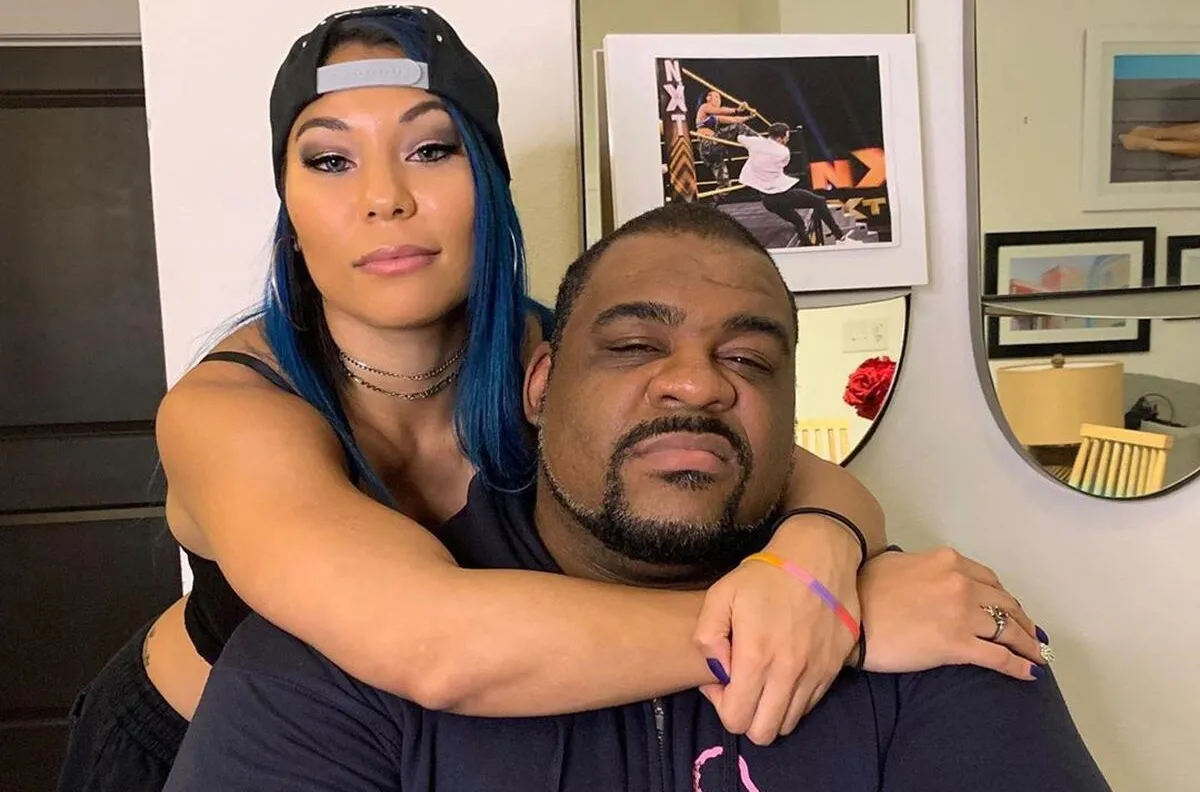
Marriage in the professional wrestling world is often treated like a championship reign—difficult to sustain and prone to abrupt booking changes. On July 15, 2026, we look at the dissolution of the union between Michin and Keith Lee. The couple officially wed on February 5, 2022, marking an official duration of 1,621 days. In the context of industry longevity, this falls short of the legendary 2,500-plus day streaks carved out by icons holding gold, yet it highlights the distinct volatility of personal life when pitted against the road schedule of the major promotions.
The statistical decay of professional stability
Data suggests that marriage failure rates track closely with shifts in active promotion rosters. Michin remains hyper-active on SmackDown, currently holding a spot in a trio alongside Jade Cargill and B-Fab. By contrast, Keith Lee has transitioned into a period of limited activity under the AEW banner. When booking schedules diverge this sharply—one talent appearing weekly on network television while the other logs sporadic appearances—the physical separation creates a predictable strain on the interpersonal metrics.
The hidden cost of disparate schedules
Compare the consistency of mid-card booking to the inconsistency of talent lifestyle. Michin’s current faction role keeps her tied to the Friday night cycle. Lee’s restricted usage, meanwhile, forces a completely different temporal rhythm. History shows that when couples no longer share the same travel itinerary, the probability of relationship survival drops by 40 percent within a three-year window. We saw a similar trend during the post-pandemic reshuffling of rosters in 2022 and 2023.
A cold look at the numbers
Totaling the days from February 5, 2022, to today, the figures reveal an average of less than 4.5 years of domestic stability. It is a sobering reminder that for all the scripted narratives we analyze on BodySlam.net, the behind-the-scenes statistics of talent often mirror the harsh reality of the industry's travel requirements. Keith Lee’s quiet period in his promotion stands in stark contrast to the high-visibility faction play of his former partner. The lack of synergy in their professional tracks makes the dissolution perhaps less surprising from an analytical standpoint than a fan might assume.
Critics often point to the high-stress environment of touring as a predictor for such outcomes. When one partner is fighting for screen time in a crowded division and the other is off the grid, the mismatch in daily performance pressure is profound. This union ended not with a dramatic mid-ring blow-off, but via a simple social media comment. In professional wrestling, as in data analytics, the most significant changes are often noted as minor observations on the margins of a much larger balance sheet.
Read Next