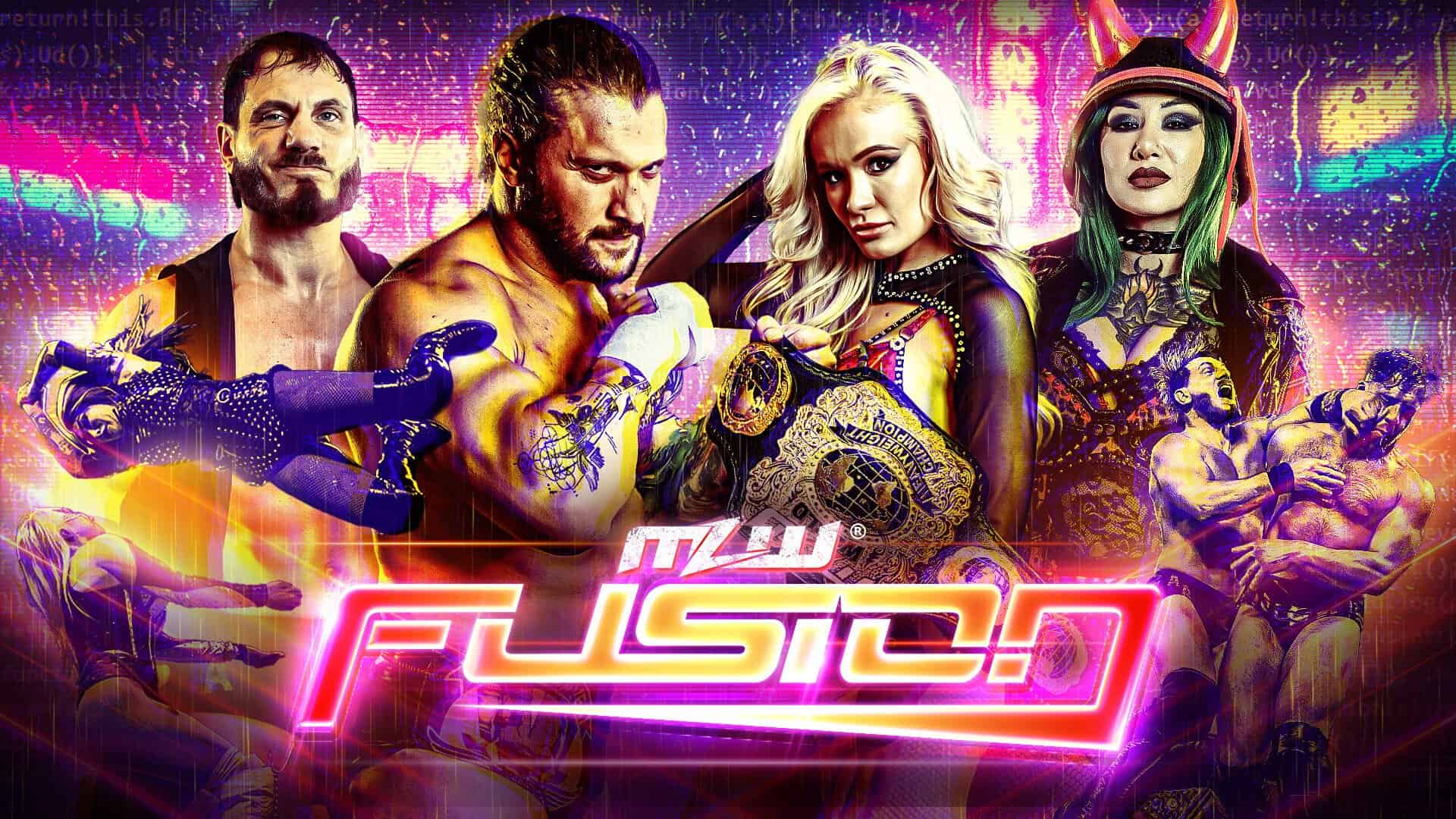
MLW's broadcast shakeup with Rich Bocchini is a long overdue fix

The voice of the fight
Commentary is the invisible skeleton of professional wrestling. You only notice it when it breaks. For the past several years, Major League Wrestling has struggled to maintain a consistent skeletal structure at the broadcast desk. The promotion cycles through voices, tones, and presentation styles faster than most promotions cycle through midcard champions. Now, Court Bauer is making a necessary adjustment.
As reported by PWInsider, MLW is shifting Rich Bocchini into a new broadcast role. This isn't just a simple desk shuffle. It represents a fundamental shift in how MLW wants its product consumed by the television audience.
Bocchini has been the straight man in the MLW booth for years. He approaches the product with a traditional, sports-centric gravity. When a match hits the mat, he calls the holds. When a brawl spills into the crowd, he lowers his register to sell the danger. He does not scream at the audience. He does not try to get himself over with inside jokes.
The problem with the modern booth
To understand why this move matters, you have to look at the state of wrestling commentary across the industry. We are living in an era of hyperactive broadcasters. Promotions often instruct their play-by-play leads to sound like morning zoo radio hosts. They manufacture excitement through volume rather than context. It wears the viewer down.
MLW has occasionally fallen into this trap. When you pair a serious play-by-play man with an overly aggressive color commentator, the broadcast disjoints. We saw this during the periods where MSL or Jared St. Laurent sat in the color chair. The contrast was too sharp. Bocchini would try to explain the mechanics of an Alex Kane suplex, and his partner would immediately pivot to cheap heat.
A broadcast team needs rhythm. They need to breathe. If every near-fall at the five-minute mark is treated like the climax of WrestleMania, the actual finish has nowhere to go. Bocchini understands this pacing. He knows how to lay out.
The episodic continuity failure
Here is the critical flaw in MLW's presentation over the last three years. The promotion has lacked episodic continuity. You tune in to MLW Fusion one month, and Joe Dombrowski is calling the action. You tune in the next month, and Matt Striker is heavily producing the narrative. Then Bocchini returns. The viewer never gets a chance to settle into a familiar audio cadence.
Dombrowski is an excellent encyclopedia of independent wrestling history. Striker is highly analytical, sometimes to a fault. But rotating them constantly damages the product. When a promotion changes its lead voice every taping cycle, the storylines suffer. The emotional hooks fail to land because the person selling those hooks keeps changing their tone.
By solidifying Bocchini in a defined, likely elevated role, MLW is attempting to stop the bleeding. They need a true anchor. Court Bauer built MLW on the concept of "hybrid wrestling" — a mixture of Lucha Libre, strong style, and traditional American grappling. You need a specific type of broadcaster to stitch those disparate styles together.
Calling the contrasting styles
Let's look at the actual mechanics of an MLW card. In the opener, you might have a high-flying Lucha showcase featuring Salina de la Renta's Promociones Dorado stable. The pace is frantic. The spots happen every ten seconds. A traditional WWE-style announcer struggles here because they try to call every single arm-drag.
Bocchini learned long ago to step back during these sequences. You call the major transitions, you call the high-impact dives, and you let the crowd noise carry the rest. Then, forty minutes later, the main event features a slow, methodical title defense by Satoshi Kojima. The style completely changes. The broadcast must change with it.
When Kojima is chopping an opponent in the corner, the commentary shouldn't be frantic. It should be reverent. The spacing of the words matters. You have to sell the physical toll of a heavyweight fight. This is where Bocchini excels. He treats a heavyweight title match like a prizefight, not a television angle.
The Contra Unit blueprint
Think back to the peak of the Contra Unit angle. Jacob Fatu was tearing through the roster. Josef Samael was throwing fireballs. The presentation felt genuinely chaotic, largely because the commentary sold the fear. The broadcast desk wasn't laughing at the violence. They sounded legitimately concerned for the safety of the roster.
That is the tone MLW needs to recapture. In recent months, the product has occasionally drifted toward standard sports entertainment. The angles feel a bit more scripted. The promos feel a bit more rehearsed. To counter this, the broadcast needs to ground the product in reality.
If Bocchini is moving into a senior broadcast role, or perhaps taking over desk segments to preview the fights, it adds immediate legitimacy. It signals to the viewer that MLW takes its own rules seriously.
The statistical breakdown of a match
Good commentary also relies on specific details. When a wrestler targets a limb, the broadcast needs to track that damage. If a challenger gets his knee worked over in the first five minutes, that knee must remain a focal point of the story.
I track match pacing constantly. In a standard 15-minute television bout, the "heat" segment usually lasts about four minutes. This is the period where the heel dominates. The best commentators use this time to educate the viewer. They explain why a certain submission hold restricts breathing. They cite the weight difference. They pull a statistic from a previous encounter.
Bocchini does this well, but he needs the right partner to bounce these statistics off. He needs a color analyst who understands ring psychology rather than just character work. If this new role allows Bocchini to direct the flow of information better, MLW's match quality will instantly appear higher on television.
The production side
We also have to consider what happens behind the curtain. A lead broadcaster does more than just talk. They act as the primary conduit between the production truck and the television viewer. When the director cuts to a tight shot of a manager slipping brass knuckles to a wrestler, the commentator has to catch it instantly.
In independent wrestling, camera cuts are often messy. The truck misses spots. A good play-by-play man covers for the production errors. If the camera misses a low blow, the commentator has to react verbally so the home audience knows what happened. They paint the picture the lenses missed.
With MLW pushing toward new distribution models and streaming platforms, their production value has to tighten up. They cannot afford amateur hours at the desk. Elevating a seasoned professional like Bocchini is a direct response to this pressure.
The road ahead for MLW
MLW operates in a very difficult space. They are not WWE. They are not AEW. They do not have unlimited budgets or a roster of eighty international superstars. They survive on atmosphere, smart booking, and presenting a gritty alternative to the mainstream.
To maintain that atmosphere, every piece of the puzzle must fit. The lighting must be moody. The ring announcing must be sharp. And the commentary must sound like an authentic sports broadcast. Court Bauer knows this. He cut his teeth writing for WWE during a period when Jim Ross and Paul Heyman were putting on masterclasses at the desk.
This announcement regarding Rich Bocchini won't trend number one on social media. It won't sell an extra five thousand tickets to the next television taping. But it is exactly the kind of unsexy, fundamental improvement that a promotion needs to survive in a crowded market.
You build a house from the foundation up. Commentary is the foundation of the television product. Let's see if MLW can finally keep this foundation stable for more than one season. They have the talent in the ring. Now they just need the right voices explaining why that talent matters.
Title WWE Authentic Championship Mini Replica Belt
Bring home the gold without emptying your wallet.
Frequently Asked Questions
Why is MLW changing Rich Bocchini's role?
What style of commentary does Rich Bocchini bring to MLW?
How has the rotation of announcers affected MLW's storylines?
What is the main issue with modern wrestling commentary?
Who is credited with the vision behind MLW's "hybrid wrestling" concept?
More Coverage
Major League Wrestling is betting big on TSN for the Road to Mayhem
1 week ago
CM Punk and the Bishop Dyer lockout prove WWE is addicted to backstage drama
1 week, 5 days ago
Baron Corbin stripped of indie title as WWE return rumors heat up
1 week, 6 days ago
Top 10: july
1 week, 6 days agoMLW locked out Bishop Dyer over absurd contract demands
2 weeks agoHow MLW is turning its real-world roster drama into must-watch television
2 weeks agoMore Analysis
MLW is finally putting Rich Bocchini exactly where he belongs
3 months, 3 weeks agoMLW is betting big on the two-hour comeback
1 month, 3 weeks agoMLW Fusion returns with high stakes for the Middleweight division
1 month, 1 week agoMLW is doing their own thing and it’s actually working
3 weeks, 6 days ago