The Defection and The Physical Reality
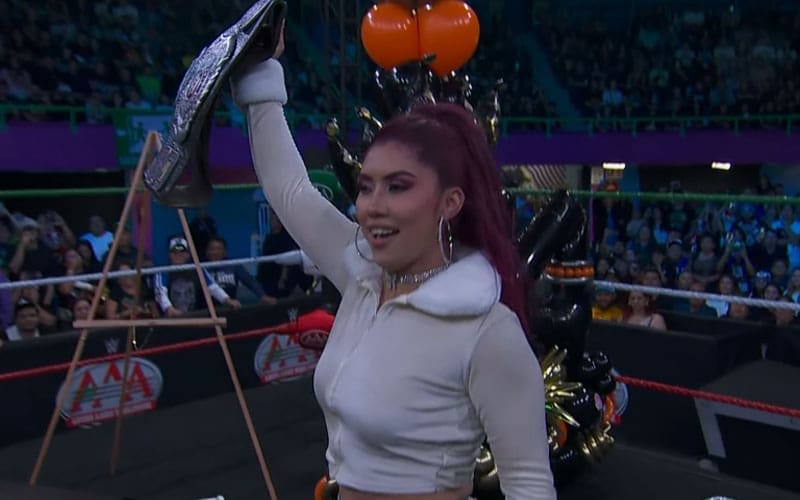
While the American wrestling media is entirely consumed by WrestleMania 41 kicking off in just six days, a massive shift in the Latin American market just occurred. The defection is official. La Catalina has crossed the most volatile promotional border in professional wrestling.
The former CMLL standout made a surprise debut for AAA, walking away from Arena Mexico. As Wrestling Inc reported, this makes her the very first wrestler to jump ship from CMLL to AAA since WWE completed its shocking purchase of the historic promotion last April.
For La Catalina, this is a calculated risk. For the broader industry, it is a warning shot. WWE assumed their financial muscle and corporate protocols would keep the CMLL roster locked down. They were wrong.
As a reporter who tracks the physical toll and medical realities of professional wrestling, I look at this move through a physiological lens. Switching from CMLL to AAA is far more than a simple change of logos. It requires a complete physical recalibration.
The athletic demands placed on a performer in AAA differ wildly from the traditional environment of Arena Mexico in three main ways:
- Higher bump frequency on springier, unpredictable rings.
- Faster transitions demanding rapid fast-twitch muscle response.
- Increased exposure to dangerous floor bumps outside the ring on concrete.
Let us start with the ring itself. CMLL rings are notoriously stiff. They are built for traditional mat wrestling and base-heavy impacts.
The ropes are tighter, and the canvas has minimal give. AAA features a faster, chaotic environment with springier rings that encourage high-altitude offense. The bump frequency in AAA is significantly higher per match.
Cardiovascular and Joint Stress
La Catalina will have to adjust her cardiovascular conditioning immediately. CMLL dictates a slower, deliberate pace. Matches are often contested under two-out-of-three falls rules, forcing wrestlers to conserve energy and pace their breathing.
AAA operates at a frantic sprint. The transitions between high spots are virtually non-existent. Adapting to the AAA style requires a fundamental shift in fast-twitch muscle fiber utilization.
In CMLL, extended holds and traditional grappling require sustained isometric strength. Wrestlers spend minutes locked in intricate submission knots. AAA throws that playbook out the window.
The promotion relies on rapid-fire sequences, requiring explosive bursts of energy followed by immediate recovery. A wrestler’s VO2 max is tested heavily in this environment. From a fitness standpoint, La Catalina is actually well-equipped for this transition.
During her run in Arena Mexico, she noticeably increased her functional strength. She built up her posterior chain and core stability, allowing her to easily base for smaller opponents. She relies heavily on power moves, including a modified Samoan Drop and a heavy top-rope splash.
Delivering top-rope splashes in AAA comes with a higher degree of risk. The chaotic multi-person matches mean bodies are rarely positioned perfectly for a safe landing. The impact on the patellar tendons and lower lumbar region increases exponentially when a wrestler adjusts their trajectory mid-air.
She will need to prioritize joint health and aggressive recovery protocols to maintain her move-set. AAA ringside areas are littered with debris and steel barriers that do not forgive careless landings.
Escaping the WWE Medical Protocol
Then there is the WWE factor. When WWE bought CMLL last April, they instituted proprietary medical standards. This included mandatory pre-match physicals, strict concussion protocols, and standardized injury rehabilitation at corporate facilities.
For older luchadores, this was a massive benefit that extended careers. But for a younger talent like La Catalina, the WWE system clearly felt restrictive. She already knows how Stamford operates.
She spent two years in the WWE Performance Center, debuting on Raw in 2019 under the name Carolina alongside Sin Cara. She experienced the grueling weight-room requirements and hyper-managed match layouts.
When released in November 2021, she rebuilt her physical and professional identity from the ground up. She stripped away unnecessary mass to improve her ring cardio and headed to Mexico. Returning to a WWE-controlled environment was never going to work for her long-term.
The contrast with AAA’s medical oversight is stark, and this is where a critical eye is necessary. AAA does not have a spotless record regarding talent safety. Their medical protocols are frequently described as outdated by modern sports medicine standards.
Ringside physicians are present, but the locker room culture heavily encourages working through pain. Concussion spotters are not utilized with the same rigor as in WWE or AEW. Injuries that would mandate a four-week suspension in WWE are taped up and ignored in AAA.
This is the ultimate trade-off. La Catalina is escaping the corporate sterilization of WWE's CMLL, but she is entering a promotion where her physical safety is largely in her own hands. We have seen numerous wrestlers make this jump over the years, only to suffer severe muscular tears or repetitive stress injuries.
The Roster Impact and Timeline
Her addition to the AAA roster immediately alters their women's division. Flammer and Sexy Star II have been carrying the physical load for the past year. La Catalina brings a completely different body type and wrestling style.
She is a powerhouse in a division completely dominated by smaller, agility-based athletes. We expect her to be pushed straight to the top of the card. AAA television tapings are fast approaching, and the timeline for her first major program is immediate.
This places the burden entirely on La Catalina's training regimen. She needs to incorporate more plyometrics to keep up with the AAA speed. She also needs to focus heavily on neck strengthening.
AAA heavily features Canadian Destroyers, poison ranas, and high-angle dropping moves that CMLL traditionally banned or heavily regulated. The cervical spine takes a massive beating in an AAA ring. If her neck flexors are not properly conditioned, the whiplash effect from these moves can cause immediate disc damage.
Let us also look at the broader industry impact. WWE bought CMLL to corner the Latin American market and secure a pipeline of masked merchandise movers. They assumed the legacy of Arena Mexico and the promise of a WWE paycheck would keep talent loyal.
La Catalina just proved that theory wrong. She is the first to walk away, but she will absolutely not be the last. If she thrives in AAA and manages to remain injury-free, it provides a functional blueprint for other disgruntled CMLL talents.
AAA is now positioned as the wild west alternative to WWE's sanitized lucha libre product. It is a dangerous, physically taxing environment. But for wrestlers who want creative freedom and refuse to be micromanaged by a corporate medical staff, it is the only viable option in Mexico.
La Catalina has made her choice. Her body is healthy right now. She stands at 5-foot-8 and possesses a base of power that few luchadoras can match.
The real test begins now. Can her joints, her cardiovascular system, and her daily training habits survive the brutal reality of an AAA schedule? She will not have a WWE doctor telling her when to rest.
She will not have an Arena Mexico traditionalist telling her to slow down. It is all on her. The transition is complete, but the physical toll is just beginning.