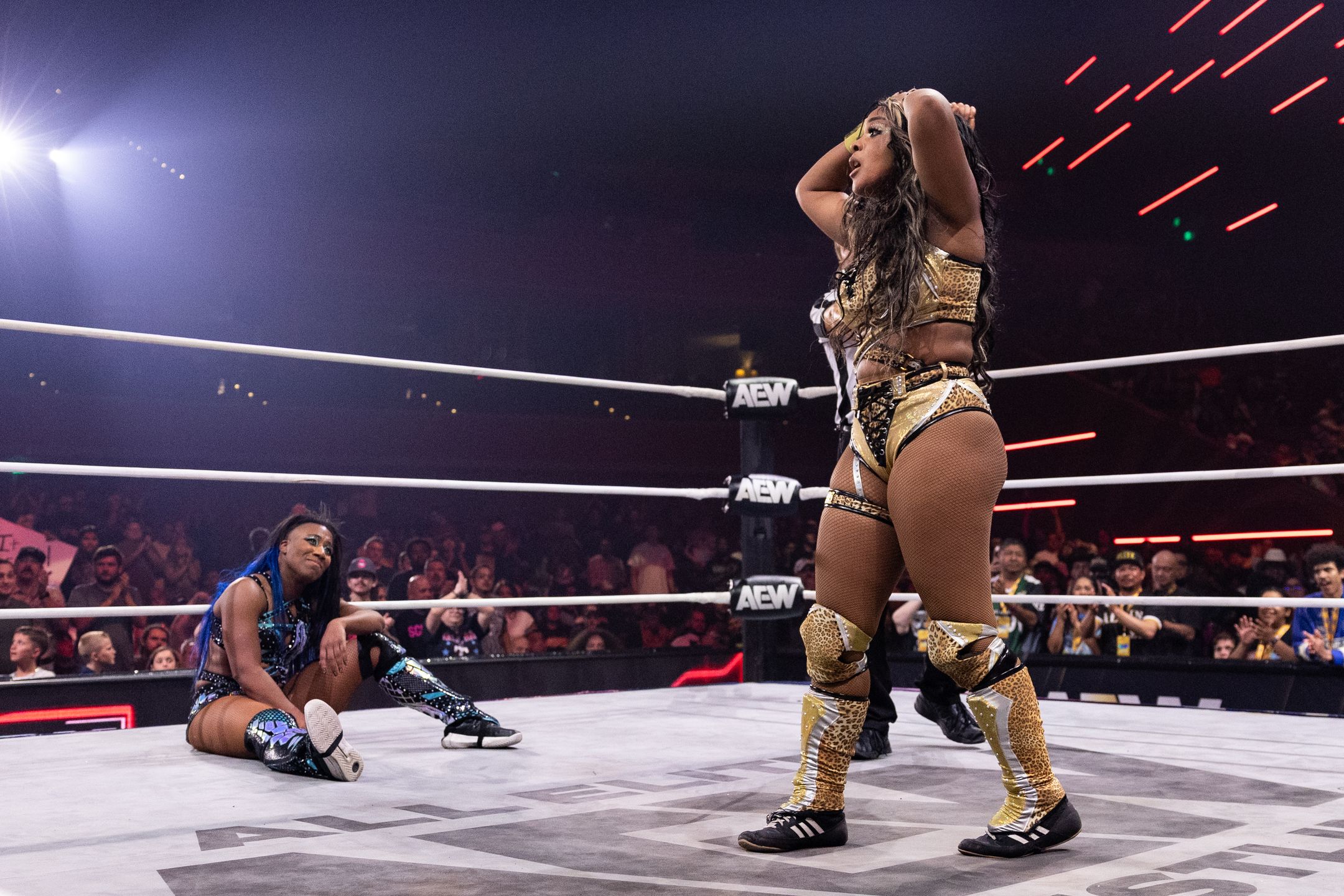
Joe Doering was the last of a dying breed in professional wrestling
The Windsor Roots and the Shock of June 26
The news broke yesterday. On June 26, 2026, professional wrestler Joe Doering passed away at the age of 44. The announcement, released by Scott D'Amore's resurrected Maple Leaf Pro Wrestling promotion, ended a decade-long battle with recurring brain cancer. It was a loss that was felt deeply across the Canadian independent scene and the archives of All Japan Pro Wrestling.
Doering was a physical anomaly in the modern ring. In an era dominated by hyper-choreographed cruiserweight action and rapid-fire spot-fests, he was a massive, silent monument of heavyweight violence. He did not wrestle to capture the internet's attention. He wrestled to make you believe that a 280-pound powerhouse could actually tear down a building with his bare hands.
Shortly after the announcement, Scott D'Amore posted a deeply personal message honoring his former trainee and close friend. In Scott D'Amore's public tribute on PWInsider, the veteran promoter laid bare a relationship that was forged not in corporate boardrooms, but in the freezing winter sessions of the Can-Am Wrestling School in Windsor, Ontario. D'Amore described a bond that went far deeper than a standard business arrangement between an executive and a performer.
"Joe was my big little brother if that makes sense. In wrestling people often talk about family but Joe truly was family."
Doering spent years living with D'Amore and his cousin Jeff. He was a regular guest at D'Amore's mother's house, eating holiday dinners and becoming a fixture in their household. In a business notorious for superficial alliances and rapid backstabbing, their relationship was a rare, genuine brotherhood.
The Windsor Roots and the Gaijin Blueprint
Doering entered the Windsor training school as a quiet giant from Ohio. D'Amore and the training staff immediately noticed his natural balance and low center of gravity. Unlike many large trainees who struggle with balance, Doering could throw heavy overhead suplexes with minimal effort. He possessed an innate understanding of weight distribution that made his offensive moves look twice as devastating as they would from a less coordinated big man.
He did not need to run fast to look threatening. When he stepped through the middle rope, his sheer bulk occupied the ring, forcing opponents to work around him. This heavy, deliberate style caught the attention of scouts from Japan, leading him to All Japan Pro Wrestling in 2007. In Tokyo, Doering found his true calling as the classic gaijin monster, following the path carved by Stan Hansen and Bruiser Brody.
His work in Tokyo was defined by spatial geometry. Modern matches often feature wrestlers running back and forth, trading forearm strikes in the center of the ring. Doering rejected this frantic pacing, choosing instead to make a single strike count. When he landed a forearm shiver, the sound echoed through Korakuen Hall, and his opponent crumbled like a pile of bricks.
He understood the power of the singular, impactful moment. He did not waste energy on unnecessary movement, opting to stand his ground in the center of the ring. This forced smaller, faster opponents to bounce off his massive frame, creating a simple but highly effective dynamic. He made every babyface look like a heroic survivor just for getting back to their feet.
This approach culminated in his first Triple Crown Heavyweight Championship victory. On July 27, 2014, he defeated Suwama in a bruising, physical encounter that lasted 18 minutes and 32 seconds. The match was a textbook demonstration of old-school heavyweight psychology. There were no flashy dives or convoluted referee distractions; it was a simple, brutal exchange of powerbombs, lariats, and suplexes.
Doering's victory cemented his status as the division's premier gatekeeper. In an era when All Japan was trying to rebuild its identity, Doering served as the ultimate test for the promotion's rising stars. His battles with Kento Miyahara and Suwama became legendary for their sheer physical intensity. He was the foreign conqueror that the Japanese heroes had to chop down, blow by painful blow.
His tag team run with Keiji Mutoh was equally disruptive. Winning the 2007 Real World Tag League alongside Mutoh allowed Doering to study under one of the greatest minds in the history of the sport. Under Mutoh's guidance, Doering refined his ring positioning, learning how to tease hot tags and cut off the ring with maximum efficiency. This technical polish, combined with his raw power, made him one of the most reliable foreign workers of his generation.
The Yokohama Comeback and Medical Defiance
In early 2016, Doering's career was derailed by a Stage 3 brain cancer diagnosis. Doctors performed surgery on March 4, 2016, to remove the tumor, followed by months of grueling radiation and chemotherapy. For most heavyweight athletes, a medical crisis of this magnitude would mark the end of their in-ring careers. The physical toll of the treatments often ruins an athlete's conditioning and reflexes.
Doering refused to accept retirement. He returned to an All Japan ring in January 2017, looking leaner but carrying the same menacing presence. His recovery culminated on October 21, 2017, at the Yokohama Bunka Gymnasium. He stood across the ring from Suwama once again, defeating his long-time rival to capture the Triple Crown Championship for the second time in his career.
That second title reign lasted for 155 days. It was not a ceremonial run designed to generate cheap sympathy. Doering defended the belt against the promotion's absolute best, proving that his comeback was built on athletic merit. The Yokohama match itself was a masterclass in economy of movement, with Doering using his position to force Suwama to make all the running.
He used his short-arm lariat and running crossbody to dictate the match's tempo. Instead of chasing Suwama around the ring, Doering stood in the center, waiting for his opponent to crash into him. It was a performance that showed how much Doering understood the limits of his own body. He did not try to wrestle the match he would have wrestled in 2014; he wrestled the match that made sense for his current physical condition.
He eventually dropped the title to Kento Miyahara in March 2018. The loss was a passing of the torch, but it did not diminish what Doering had accomplished. He had stared down a terminal diagnosis, returned to the ring, and carried the historic Triple Crown Championship. It remains one of the most inspiring and physically demanding comebacks in the history of professional wrestling.
The Strategic Failure of Faction Booking
In late 2020, Doering signed with Impact Wrestling, marking his return to national television in North America. The signing was met with great anticipation from fans who had spent years trading tapes of his matches in Tokyo. They expected him to be treated as a sovereign monster, a solitary force who could tear through the roster. Unfortunately, the booking took a different direction.
Impact immediately placed Doering in the Violent By Design faction, led by Eric Young and featuring Cody Deaner. This decision was a critical mistake. It immediately diluted his greatest asset: his solitary, terrifying aura. Instead of being presented as an independent force of destruction, he was cast as the silent muscle for a mid-card heel stable.
The faction booking forced Doering into over-designed, chaotic multi-man matches. He was frequently involved in interference-heavy finishes, distractions, and weapon spots that contradicted his style. A wrestler who built his reputation on pure physical authority in Yokohama was reduced to a henchman trading cheap distractions in television segments. The realistic violence of his offense was lost in the booking noise.
When a wrestler's main weapon is a devastating lariat, that move must be protected. In Japan, Doering's lariat was a finish that fans respected. In Impact, his lariats were frequently used as transition moves in chaotic tag matches, stripping them of their narrative weight. The booking chose to prioritize faction warfare over individual star-making, a choice that limited Doering's ultimate growth in the company.
Despite these creative obstacles, Doering still delivered when given a clean canvas. His singles match against Josh Alexander showed what he could do when the faction elements were stripped away. In that match, Doering was allowed to work his classic heavyweight style, punishing Alexander with heavy strikes and suplexes. It was a reminder that Doering did not need stablemates or microphones; he just needed a ring and a willing opponent.
The Violent By Design run did yield a tag team championship, but it felt like a consolation prize. The Freebird rule was used to share the title among the group, which further diluted the physical accomplishment of winning the gold. It was a creative decision that prioritized stable dynamics over the individual dominance that Doering was uniquely qualified to project.
A Rare Tradition Passes
Doering's final match occurred in August 2022. The brain cancer had returned, forcing him to step away from the ring for a second and final time. He quietly retired to his home, avoiding the public spotlight and choosing to spend his remaining years in private. He did not seek online sympathy or launch fundraising campaigns; he simply went home to be with his family.
This quiet departure was consistent with how Doering carried himself throughout his career. He was a professional wrestler who believed in the reality of the work. He did not spend his time posting training videos on social media or engaging in online drama. He was a silent professional who understood that the only place that mattered was inside the ropes.
Scott D'Amore's tribute, as documented in the PWInsider report, highlights the human element that is often forgotten in the modern corporate era. The connection between D'Amore and Doering was built on years of shared travel, hard training, and family dinners. It was a relationship that could not be replicated by a corporate talent relations department. It was a reminder of a time when the wrestling business was built on real, lifelong bonds.
"I’ll pour one out for you Joe. Better yet, I’ll drink it and toast you. You never liked to see a good drink go to waste… Love ya big guy."
The Can-Am Wrestling School was built on a simple philosophy: respect the business, respect your opponent, and make everything look real. Doering was the embodiment of that philosophy. His matches in Tokyo and Windsor were tutorials in how to build drama without sacrificing physical credibility. He showed that you do not need to perform high-flying maneuvers to get a reaction; you just need to make the audience believe in the violence of your work.
As the industry moves forward, Doering's work will remain essential viewing for any student of the sport. His matches are blueprints for how to work as a heavyweight. They show that a wrestler does not need to do fifty moves to be great; they just need to do five moves that look like they could end a career. His legacy is secure, written in the stiff strikes and heavy collisions of a remarkable career.
D'Amore's promise to toast his fallen friend is a fitting tribute. It is a toast that should be joined by anyone who appreciates the hard, unvarnished reality of professional wrestling. Joe Doering was a giant who did not need a gimmick to stand tall. He was a wrestler's wrestler, a quiet professional who leaves behind a footprint that will not be easily filled.
WWE Championship Toy Title Belt
Hold the gold and live out your championship dreams right in your living room!
Frequently Asked Questions
When did wrestler Joe Doering pass away and what was the cause?
What was the relationship between Joe Doering and Scott D'Amore?
Where did Joe Doering train to become a professional wrestler?
How was Joe Doering's wrestling career in Japan characterized?
What made Joe Doering's in-ring wrestling style unique?
More Coverage
Top 10: Top Moments
3 hours ago
How John Cena mastered the quiet art of the WWE locker room
8 hours agoOn This Day in Wrestling for June 26
9 hours ago
Joe Doering and the brutal reality of professional wrestling's physical toll
2 days, 11 hours ago
TNA is betting big on nostalgia as Slammiversary approaches
3 days, 13 hours ago
Paul Heyman was right to bail on the 2006 ECW dumpster fire
3 days, 14 hours agoMore Analysis
SmackDown leaked online and Solo Sikoa's faction completely fell apart
3 hours agoWhy WWE must pull the trigger on Oba Femi tonight in Riyadh
3 hours agoTop 10: Top Moments
3 hours agoWWE SmackDown was a wild, leaked mess before Night of Champions
3 hours agoBloodline drama and title brawls highlight chaotic SmackDown in London
3 hours ago