The cost of the slap: Jack Swagger's rough night
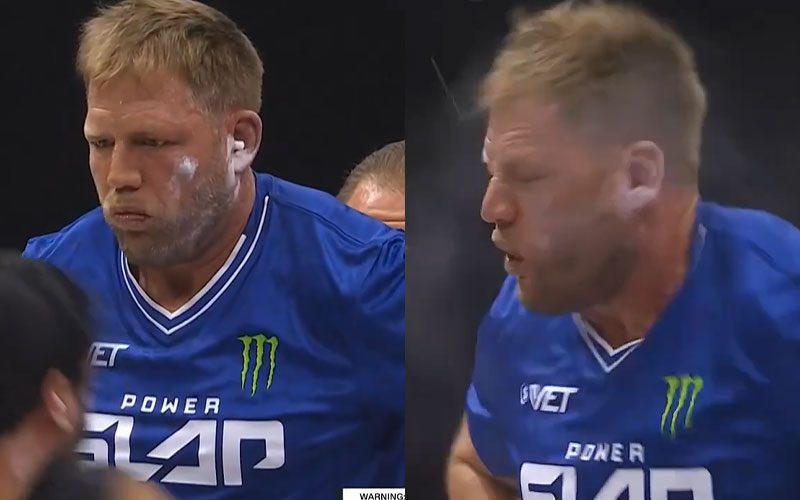
Jack Swagger’s latest outing outside of standard professional wrestling ended in a blunt, immediate lights-out scenario. Competing in a Power Slap event, the former WWE champion was caught flush, resulting in a knockout that has drawn significant attention back to the safety protocols of unregulated combat sports crossover events.
His opponent, Mahabali Shera, did not rely on complex submissions or technical striking sequences. Instead, Shera landed a clean, high-velocity strike to the jaw that sent Swagger reeling instantly. The finish was swift, occurring in a matter of seconds, leaving little room for a recovery attempt or defensive adjustment.
Reports from Ringside News highlight the physical cost of this pivot toward slap-based competition. For a performer with Swagger's history of high-impact bumps in wrestling, the nature of this injury differs entirely from a standard ring tear or dislocation. This is trauma specifically focused on the cranium without the luxury of the protective physics inherent in a padded wrestling ring.
The shifting career trajectories of wrestling crossover stars
The knockout serves as a grim contrast to the other major news affecting former WWE talent this week, specifically involving Gable Steveson. While Swagger handles the fallout from his slap-fighting exit, Steveson is preparing for a transition that demands a vastly different kind of physical and tactical output at UFC 329.
Steveson enters the Octagon tonight as a heavy betting favorite. His background as an Olympic gold medalist provides a base that bookies are treating with extreme confidence, marking a shift from the novelty-seeking nature of Power Slap. Unlike Swagger’s flat-back moment, Steveson faces a full-scale mixed martial arts contest, which is arguably a safer environment for a trained athlete than the static violence of slapped competition.
Why the crossover market remains a double-edged sword
The industry remains split on the value of these detours. When a wrestler transitions to MMA, there is at least an expectation of training, discipline, and a defense-heavy strategy. Slap fighting, by contrast, removes the defense entirely. It is a one-dimensional stress test that offers low strategic upside but high concussion risk.
Historical precedents show that wrestlers taking on non-wrestling combat roles rarely see a long-term benefit for their career longevity. The attrition rate is high, and the skills rarely translate between the sports. Swagger facing a knockout in this setting raises valid questions regarding how wrestling promotions monitor the extracurricular activities of their veterans.
The road ahead for Swagger and Steveson
Regarding Swagger, the timeline for any return to high-impact work is now significantly clouded. Concussion protocols are not mere suggestions; they are industry-standard requirements. He will likely need to sit out any form of contact training for a minimum of 30 days to ensure proper neurological recovery, a duration that is subject to change based on further medical evaluation.
Steveson, conversely, faces the pressure of expectation. According to sources monitoring the UFC 329 card, the focus is entirely on whether he can translate his amateur wrestling credentials into a winnable professional debut. A loss for him would not result in a knockout in the same vein as Swagger, but it would represent a significant hit to his standing as a premium athlete.
Both scenarios underline the risks involved in leaving the controlled environment of professional wrestling. Swagger’s situation is particularly concerning due to the lack of technical elements involved in the injury. Watching a veteran get leveled in a contest that prioritizes impact over skill should be a bellwether for others considering similar paths.
- Jack Swagger: Expected 30-day medical hold for concussion protocols following the knockout loss to Mahabali Shera.
- Gable Steveson: Making his UFC 329 debut tonight, entering as a massive betting favorite.
The optics of these dual narratives weigh heavily on fans. One represents the unrefined violence of novelty combat, while the other represents a high-stakes bet on athletic transition. As of July 11, 2026, the industry is watching both men closely, though for starkly different reasons.