The Tactical Geometry of Tag Team Wrestling
Tag team wrestling is a game of geometry. It is about shrinking the space your opponent can move in, while maximizing the distance between them and their only lifeline.
When the new Maple Leaf Pro Tag Team Champions were crowned, it was not the result of an overwhelming high-flying spectacle or a barrage of superkicks. It was the result of brutal, calculated math.
The standard modern tag match often devolves into a tornado of bodies. The referee's count is ignored. The ropes become mere suggestions.
But what we saw in the crowning of the new MLP champions was a violent return to the fundamentals. It was a masterclass in ring positioning. The champions did not just beat their opponents; they suffocated them.
They utilized the corner not as a resting place, but as a weapon. Every tag was accompanied by a strike, every double-team maneuver designed to limit the opponent's oxygen rather than pop the crowd.
As PWInsider confirmed this morning, the titles have officially changed hands. In Scott D'Amore's revived Maple Leaf Pro, this has been the underlying philosophy.
Since its reboot, the promotion has positioned itself as the antithesis of the chaotic, disjointed tag team wrestling seen elsewhere. They enforce the rules. They enforce the five-count.
And because of that, the teams that succeed in MLP are the ones who understand the mechanics of isolation.
Cutting the Ring in Half
Consider the typical defensive strategy of the newly crowned champions. When the opposing team attempts a hot tag, they don't just stand in the middle of the ring waiting for a clothesline.
They actively attack the apron. They pull the non-legal man to the floor before the tag can be made. It is a heel tactic executed with babyface precision.
It forces the isolated opponent to expend double the energy just to survive. This is the difference between wrestling to perform and wrestling to win.
The state of tag team wrestling is about to shift again. Tomorrow night in Kansas City, AEW Dynasty will present its own vision of the sport.
We will likely see matches that rely on breathtaking athleticism and synchronized high-flying. The Young Bucks—Matthew and Nicholas Jackson—have built an entire empire on that style.
But the true hardcore fan, the one who analyzes a match with a notebook, is looking at what is happening in MLP. They are looking at how a simple armbar, applied in the center of the ring while the partner blocks the ropes, is far more devastating than a 450 splash.
You cannot discuss tag team wrestling in a Canadian promotion without acknowledging the ghosts that haunt the turnbuckles. The Hart Foundation wrote the textbook on the power-and-speed dynamic.
Jim Neidhart was the anvil, applying blunt force trauma, while Bret Hart was the scalpel, meticulously dismantling an opponent’s joint. The new MLP champions operate with a similar, albeit updated, division of labor.
One partner acts as the base, the immovable object that absorbs the momentum of the opposing team. The other is the striker, darting in from the apron to deliver sharp, decisive blows before retreating to safety.
The Flaws in the Booking
But let's address the reality of the situation: the booking of this title change was deeply flawed. Scott D'Amore and the MLP booking committee rushed the tournament final.
The match was placed abruptly in the semi-main event slot, completely overshadowing the emotional stakes of the competitors. It felt like an administrative checkbox being ticked rather than a crowning moment.
Worse still, the champions' fire was completely undermined by a botched finish. The referee was clearly out of position during the deciding pinfall, creating an awkward two-second delay that sucked the air out of the arena.
When you are trying to establish a new championship lineage, you cannot afford amateur mistakes at the timekeeper's table. It leaves a sour taste that the champions now have to work twice as hard to erase.
After AEW Dynasty concludes, the wrestling calendar accelerates rapidly towards Las Vegas. With WrestleMania 41 Night 1 scheduled for April 19, and Night 2 on April 20, the entire industry is fighting for oxygen.
When WWE dominates the news cycle, independent promotions like Maple Leaf Pro have to offer an alternative. You cannot counter-program Cody Rhodes and Roman Reigns with sports entertainment.
You have to counter-program it with unapologetic, violent, technical professional wrestling. That is the mandate the new MLP champions have been handed.
The Brutality of Isolation
Consider the art of cutting the ring in half. It sounds like a cliché chanted by commentators, but in practice, it is a demanding physical task.
To properly cut the ring in half, the heel team must control the diagonal axis. When the legal man is dragged to the enemy corner, the non-legal partner doesn't just stand on the apron.
They extend their body over the top rope, physically blocking the line of sight to the babyface corner. The new champions execute this with a grim efficiency. They use rapid, three-second tags.
One partner hits a snap suplex, tags out, and the incoming partner immediately drops an elbow before the opponent can bridge out of the impact. It is exhausting to watch, let alone endure.
This relentless pacing forces the opposing team into a state of panic. Panic leads to mistakes. A desperate lunge for a tag results in a missed assignment.
The isolated wrestler gets caught in a waistlock, dragged back to the center of the ring, and the cycle begins anew. It is the wrestling equivalent of a suffocating full-court press in basketball.
The objective is not just physical destruction, but psychological submission. There is also the matter of striking velocity.
The new MLP champions do not throw working punches. They utilize forearm smashes and open-handed chops designed to leave welts.
In a recent title eliminator bout, the sheer sound of the impact echoing through the arena was enough to turn the crowd from politely invested to uncomfortably silent. When you hear flesh slapping against flesh with that kind of velocity, the illusion of cooperation vanishes.
The Impending Challenges
But this style has inherent risks. When you wrestle at that velocity, you open yourself up to counter-strikes.
If an opponent ducks a lariat and responds with a half-nelson suplex, the sheer momentum of the initial missed strike will amplify the impact of the suplex. The champions are playing a dangerous game of chicken, betting that their cardiovascular conditioning will hold out longer than their opponents' pain tolerance.
Let's look closely at the challenge posed by a team like The Rascalz. If Trey Miguel and Zachary Wentz were to challenge for the MLP belts, the champions would face a stylistic nightmare.
Miguel and Wentz do not adhere to traditional tag team geometry. They bounce off the ropes with erratic, unpredictable trajectories. They turn defensive positions into offensive strikes.
How do you cut the ring in half when your opponents spend the majority of the match in the air? The champions would have to rely heavily on limb targeting.
If they can catch Wentz on a springboard and drop him throat-first across the top rope, they can ground the attack. From there, it becomes a matter of applying a standing figure-four or a kneebar, systematically destroying the joints required for flight.
This is the chess match we are tuning in for. The MLP Tag Team Championship is no longer just a prop; it is a tactical puzzle.
If you want to understand the current tag team environment, you have to look at the teams that have shaped it. For the last five years, FTR—Dax Harwood and Cash Wheeler—have been the undisputed kings of traditional tag team wrestling.
They revived the Southern style, built on heat segments and desperate hot tags. The new MLP Tag Team Champions sit somewhere in the middle of this historical spectrum.
They possess the technical proficiency of FTR, but they are capable of explosive bursts of offense when the situation demands it.
The Form Guide and Prediction
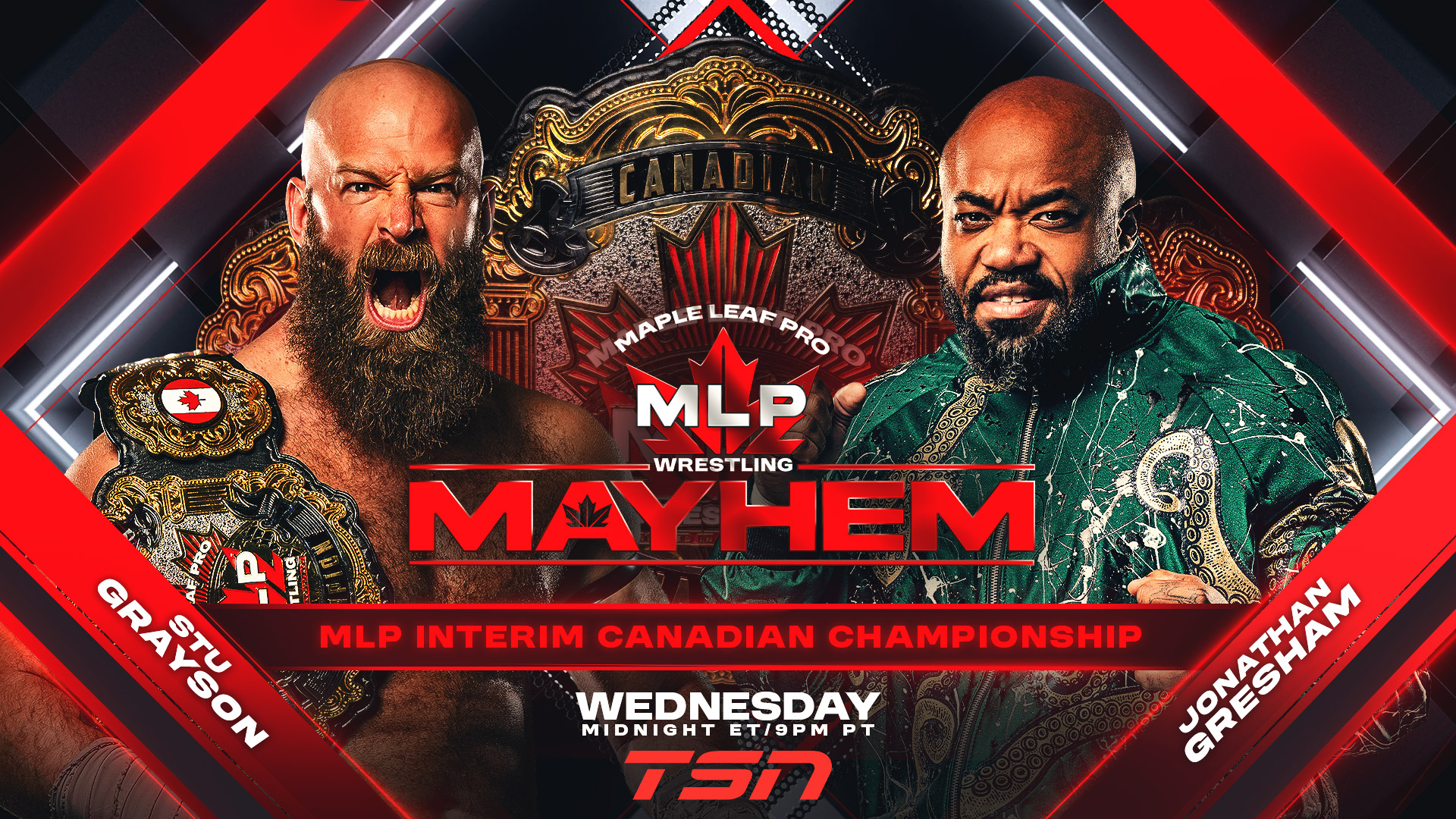
Another potential match-up that demands attention is against a bruising, heavyweight duo. Imagine the champions squaring off against a reunited Stu Grayson and Evil Uno.
Grayson is a freakish athlete, capable of terrifying displays of power, while Uno is a cunning strategist who uses his size to manipulate ring positioning. The MLP Champions would have to abandon their standard game plan.
They couldn't hope to match Grayson's power or outmuscle Uno in the clinch. They would have to drag the match into the deep waters, exhausting the larger men before attempting to secure a submission.
The form guide heading into this weekend is telling. The champions are riding a massive wave of momentum.
They have secured victories in four of their last five matches, with their opponents averaging a survival time of just 14 minutes. Their defensive record is particularly impressive; they have not conceded a pinfall in over a month.
But momentum is a fragile thing in professional wrestling. A single misstep, a blown assignment, or a momentary lapse in concentration can erase months of hard work.
My prediction for the coming weeks is straightforward. The champions will successfully defend their titles in their first outing, but the cracks will begin to show.
The sheer physical toll of their demanding style will catch up to them. They will be pushed to the limit, forced to rely on instinct rather than strategy, surviving by the thinnest of margins.
They will leave the ring with the belts, but the aura of invincibility will be gone. The locker room is watching, and the countdown to their eventual defeat has already started.