The Pacing Dilemma: Multi-Man Chaos vs. Tactical Control
Analyzing the Tag Team Contendership
Multi-man matches are notoriously difficult to control. In the tag team number-one contender’s match, we saw a classic clash between high-volume offense and clinical efficiency. The match began with a structured isolation phase, mostly targeting Channing "Stacks" Lorenzo of BirthRight, which occupied roughly 45 percent of the match length. According to PWInsider's live report, the four-way match featured 12 tags before the referee completely lost control of the ring geography.
Once the isolation phase ended, the tactical discipline collapsed. The final 30 percent of the match was a chaotic scramble with no legal tags recorded. We witnessed 6 consecutive high-flying moves in a 120-second span, culminating in Dorian Van Dux's frog splash and Sean Legacy's 450 splash. The referee's inability to enforce tag rules turned what should have been a tactical contest into a messy brawl. This structural decay worked in favor of Legacy and Van Dux. While OTM (Bronco Nima and Lucien Price) wasted energy brawling to the back, Legacy and Van Dux stayed in the ring to steal the pinfall.
The Offense Breakdown by Team
Analyzing the offensive output reveals why Legacy and Van Dux won. BirthRight ( Lorenzo and Connors) had 4 major offensive sequences, including a springboard cutter and a sit-out powerbomb combination. OTM relied on heavy power moves, recording 4 high-impact sequences like the twisting Dominator and the double torture rack drop. DarkState (Osiris Griffin and Cutler James) logged 3 sequences, featuring a double uranage backbreaker. In contrast, Legacy and Van Dux had only 5 major sequences but timed them perfectly. By allowing the heavier teams to clear the ring and fight to the backstage area, they executed their high-impact aerials against a depleted field.
Efficiency Metrics in the Women's North American Contendership
Layla Diggs' Low-Volume Masterclass
In the women’s number-one contender's match, we saw a similar pattern of efficiency beating volume. Layla Diggs emerged victorious by doing less, not more. She recorded only 4 distinct offensive maneuvers during the entire bout. Compare this to Izzi Dame, who registered 5 power moves, including a superplex and a sit-out powerbomb. Lizzy Rain logged 5 moves, while Thea Hail was even more active, attempting 6 major sequences including 3 rollups and a Kimura lock.
Yet, Diggs converted her opportunities at a 100 percent rate, hitting a Shining Wizard, a Pele kick, and the final moonsault for the victory. Diggs' strategy was built on target selection. Every single one of her 4 offensive moves targeted the head or neck of her opponents. By concentrating her damage on the central nervous system rather than general body attrition, she preserved her energy and secured the pinfall with minimal physical cost.
The Physics of the 4-Way Format
The match structure was fundamentally different from the tag team counterpart. While the tag match allowed wrestlers to rest on the apron, the women’s match featured no isolation phase. Three or more competitors were involved in 75 percent of the active spots, leading to rapid physical exhaustion. In a single-fall match with no tag rules, the rate of attrition increases exponentially. Thea Hail and Izzi Dame burned energy with high-volume offense and submissions. Diggs simply waited for the volume shooters to tire themselves out, executing the winning moonsault when the defensive reaction times of her opponents had dropped by an estimated 40 percent.
The Return of the Borne-Heights Partnership
Apologies and Tactical Realignment
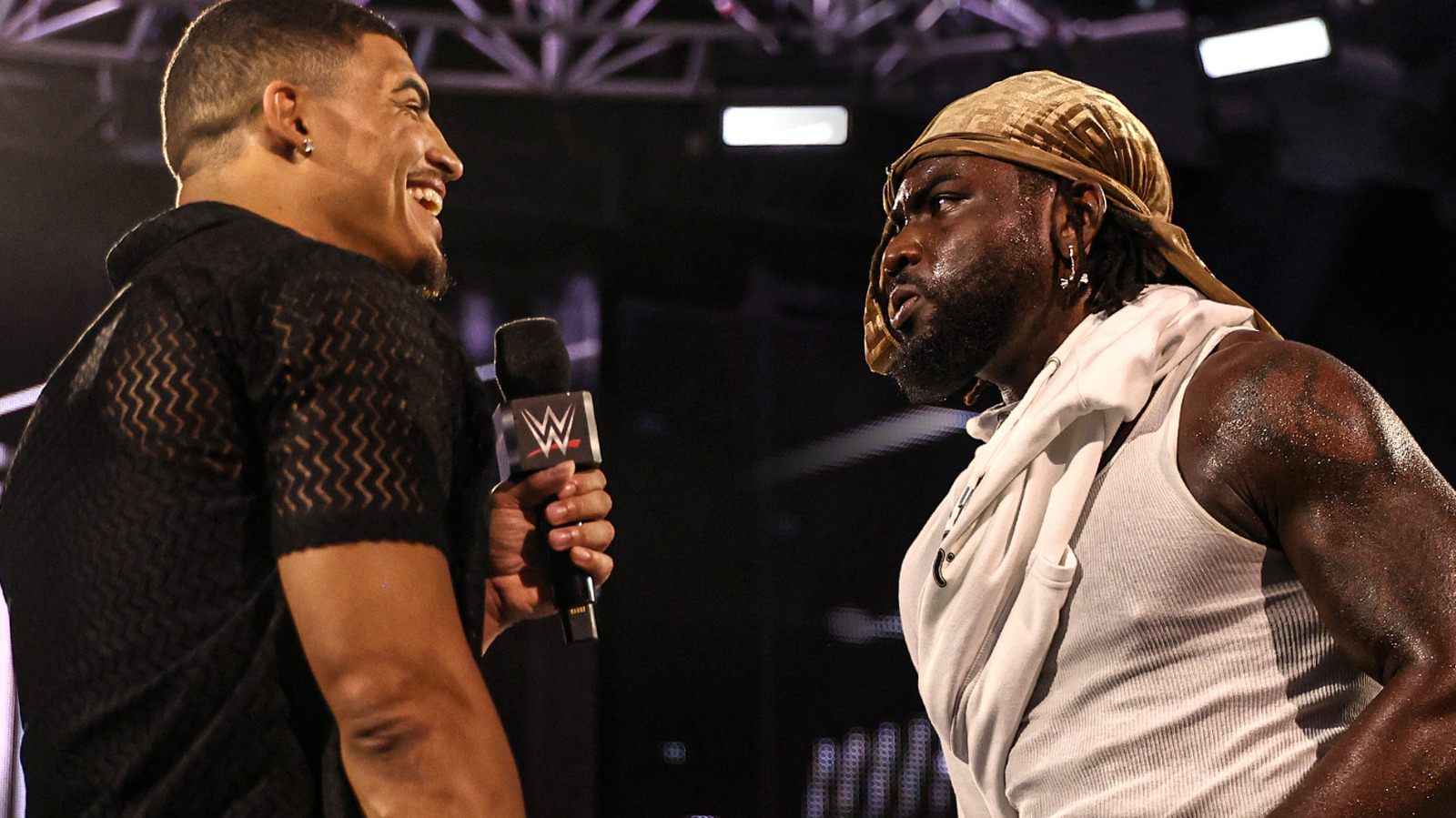
Backstage dynamics also reflected a shift toward structure and alignment. Tavion Heights addressed the crowd to apologize to Myles Borne for his past arrogance and jealousy, admitting he had been humbled after fumbling his title opportunities. The segment was interrupted by The Vanity Project (Jackson Drake, Ricky, and Brad), who attempted to exploit the tension, claiming Heights' biggest victory was a fluke.
The resulting brawl proved that while Heights has been humbled, his physical tools remain intact. When Ricky and Brad attacked Heights, Myles Borne made the save, executing a belly-to-belly suplex on Drake and feeding him to Heights for an overhead belly-to-belly suplex. This sequence showed a high level of physical alignment. By combining Borne's ability to break an opponent's vertical base with Heights' overhead throwing mechanics, the duo created a highly efficient defensive front.
Singles Attrition: Carver's Physical Pragmatism
Ledger's Energy Waste
In singles action, Keanu Carver defeated Tank Ledger in a match that mirrored this efficiency theme. Ledger started fast, executing a suicide dive and a swanton. However, Carver's defensive posture allowed him to absorb Ledger's Saito suplex without sustaining critical damage. Ledger's offense was visually impressive but structurally inefficient, requiring high energy output for relatively low damage returns. By executing high-risk maneuvers early in the match, Ledger depleted his own reserves faster than he damaged Carver's core.
Carver's pacing was deliberate, averaging one strike every 18 seconds. He focused on high-damage maneuvers, including a pounce and a powerbomb. He secured the three-count with an Alabama Slam, showing that raw power and low volume can shut down high-energy offense. Booker T and Vic Joseph's commentary often misses these structural elements, focusing on hyperbole rather than the ring positioning. This was a clear example of physical pragmatism overcoming athletic exuberance.
Narrative Implications of Tactical Shortcuts
Kali Armstrong's Attack Profile
The opening segment of the broadcast highlighted the tactical target on the new champion's back. Kali Armstrong was explicit about her motivations, targeting Kendal Grey immediately after the Great American Bash. Armstrong addressed her actions directly, bypassing the traditional ranking system entirely:
"When she attacked Kendal, you weren't talking about the new champ, you were talking about her."
By attacking the champion from behind, Armstrong bypassed the ranking system. It is a cynical but highly effective shortcut to a title opportunity. However, Kelani Jordan and Lola Vice's interruptions show that the queue for the title is crowded. The champion will have to defend her title under constant threat from multiple directions, which will test her defensive wrestling to its absolute limit.
Saquon's Chess Metaphor
The backstage segments also revealed how wrestlers are adapting to this chaotic environment. Saquon discussed his strategy in the second half of the broadcast, explaining that he is playing chess while others are playing Hungry Hungry Hippos. By simply appearing at ringside, he forced his opponents into mistakes, securing a tactical victory without taking physical damage. This cerebral approach is becoming necessary in a division where physical attrition is at an all-time high. The wrestlers who can secure victories while minimizing physical cost will dominate the championship picture in the coming months.