The Little Brother premiere takeaway
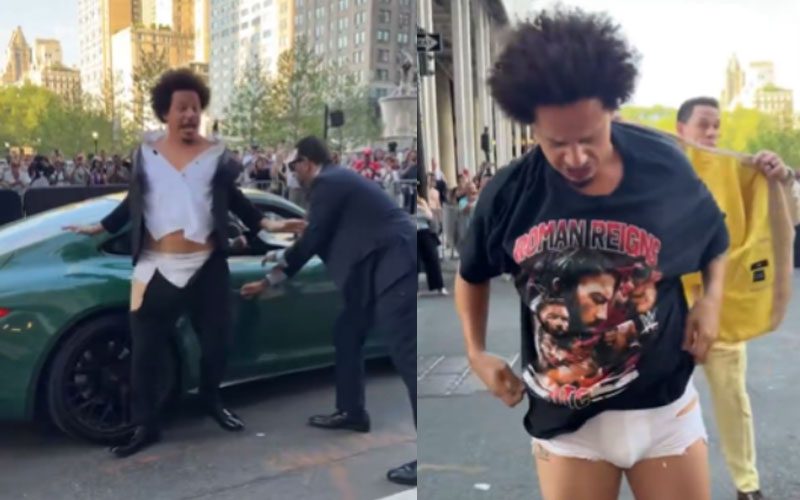
Eric André made headlines this week by appearing in his underwear at the premiere of his film, Little Brother. The incident, captured by Netflix, showed the comedian being forcefully de-robed before being handed a Bloodline-branded wrestling shirt.
André refused to don the apparel. He opted to remain in his undergarments during the duration of his walk down the red carpet. The maneuver served as a stark distraction from the promotional slate for the film, effectively overshadowing the standard marketing beats.
The intersection of promotion and performance
This stunt sits at a strange intersection of industry influence. The WWE-Netflix partnership is currently in full swing, seeking to integrate talent across broader entertainment demographics. André’s refusal to wear the branding highlights a growing friction between organic comedy and corporate synergy requirements.
While fans often enjoy seeing wrestlers pop up on talk shows, this specific instance felt mismatched. The Bloodline brand is built on a narrative of intense, high-stakes tribal warfare. Seeing that aesthetic forced onto a comedian at a comedy premiere resulted in clear audience confusion and a lack of authentic resonance.
Strategic optics moving forward
The incident reflects a wider issue in how promotional material is currently handled. When companies force cross-platform branding onto talent—or celebrities—who aren't invested in the narrative, the results often miss the mark. The marketing team likely intended to generate a trending social media moment. Instead, they earned a viral clip of an awkward refusal.
Historically, cross-branding in professional wrestling has been successful only when it aligns with the performer’s brand. Think of the 90s era crossovers where athletes understood the tone of the promotion they were engaging with. André’s reaction suggests that Netflix may need to refine how it bridges its comedy arm with its new live wrestling content.
Analyzing the failure of the pitch
The execution here was flawed primarily due to tonal dissonance. Comedy premieres depend on spontaneity; the Bloodline storyline depends on serious, long-term storytelling. By trying to combine them, the promotion failed to land the joke or the advertisement.
If the plan was to increase visibility for the product, it backfired by drawing focus entirely away from the work being sold. Professional wrestling relies on the audience buying into the reality presented in the ring. When that reality is treated as a disposable costume at a Hollywood event, it devalues the product for the core fanbase.
Assessing the long-term impact
The fallout from this event is minimal for the wrestlers involved, but it is a black eye for the PR teams tasked with managing the Netflix account. It serves as a reminder that not every medium is appropriate for a gimmick swap. Fans want to see the product treated with a level of respect that justifies the time invested in its complex storylines.
The industry must be careful not to oversaturate the public with branding that lacks context. Viewers can identify forced marketing immediately. When a high-profile performer like André rejects the gear, it validates the weariness some fans already feel regarding the current promotional intensity.
Moving forward, the strategy needs a recalibration. Less focus on generic merchandise distribution and more focus on earned media presence is needed. The obsession with checking boxes for corporate partners frequently results in these disjointed displays. 5 incidents of this nature in a single quarter are enough to frustrate even the most dedicated viewers who are simply looking for a cohesive narrative product.
As of June 19, 2026, the promotion has yet to release a statement regarding the incident. It is unlikely that they will acknowledge the refusal publicly. Silence is the standard playbook in these situations. However, the optics remain problematic for those who track how wrestling talent is viewed in the broader theater of mainstream entertainment.
Moving into the second half of the year, it is vital for these productions to differentiate between a hit and a miss. Marketing is only effective if it reaches the right audience at the right time. Forcing a Bloodline shirt onto a comedian in his underwear is not the way to build long-term interest in the product.