Dragon Gate USA's Vegas revival is a massive test for indie wrestling
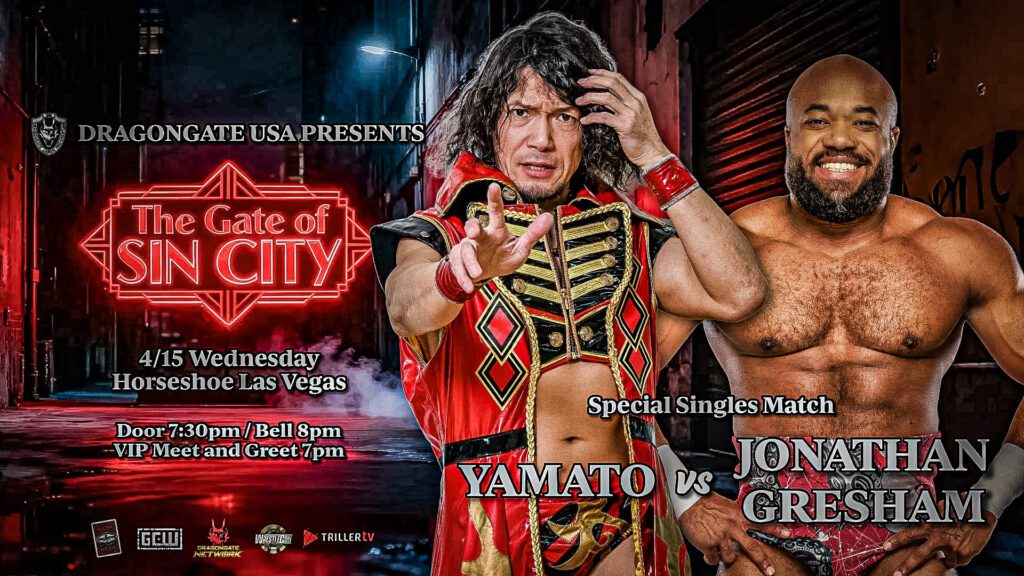
The ghost of indie wrestling past returns to Vegas
WrestleMania week is built on extreme excess. We all know the drill by now. When the wrestling circus rolls into Las Vegas ahead of WrestleMania 41 this weekend, the sheer volume of events will border on the absurd.
We have 13 separate shows lined up for The Collective alone across four exhausting days. The marathon kicks off tomorrow, Wednesday, April 15, live at The Horseshoe Las Vegas. Amidst the endless stream of supercards, late-night shoot interviews, and questionable midnight deathmatches, one particular name stands out from the pack.
Dragon Gate USA is officially back.
The event, explicitly billed as The Gate Of Sin City, represents a resurrection of a brand that fundamentally altered the tactical trajectory of North American independent wrestling. For fans of a certain vintage, those five letters carry significant weight. But the announcement also invites a deep sense of skepticism.
It is remarkably easy to forget just how radically different the independent scene looked in 2009 when Gabe Sapolsky and CIMA first brought the Dragon Gate product to the States. Ring of Honor had successfully established a hard-hitting, heavily technical baseline for indie workrate throughout the mid-2000s. However, that ROH style was still largely grounded in a traditional American psychological structure.
Matches built slowly. Body parts were meticulously worked over. The pacing, while faster than WWE, followed a logical, recognizable western tempo.
Dragon Gate USA threw that established structure out the window on day one. They introduced an adrenaline-fueled, hyper-complex lucha-puroresu hybrid that completely melted the brains of tape traders and forum users alike. The pacing was utterly relentless. The multi-man tags were not just spot-fests; they were meticulously choreographed chaos rooted in strict faction warfare.
A tactical style that swallowed the industry
The stark irony of bringing DGUSA back in 2026 is that the promotion's core tactical identity no longer feels revolutionary. The frantic style they pioneered has simply become the default mechanical setting for modern professional wrestling.
When you sit down and watch a frantic, multi-phase sequence on AEW Dynamite, or a high-speed, counter-heavy sprint on NXT television, you are watching the direct descendants of Dragon Gate USA. The DNA is everywhere.
Look closely at the talent that cut their teeth in those early DGUSA rings. Johnny Gargano built his entire plucky underdog persona fighting his way through the ranks of the Open the Freedom Gate Championship scene. He learned how to structure his dramatic near-falls by working with masters of the Japanese sprint.
Ricochet and PAC (then wrestling under the Jungle Pac moniker) put on gravity-defying spectacles that redefined what was physically possible in a squared circle. Jon Moxley honed his unhinged brawler mechanics as part of the Kamikaze USA stable before the WWE machine ever came calling.
These performers were working a style that mainstream television producers firmly believed was too fast, too dangerous, and far too niche for a national television audience. Fifteen years later, that exact "niche" style main events major pay-per-views on a monthly basis. The transition from indie darling to industry standard is complete.
This brings us to the central, unavoidable problem with tomorrow night's revival at The Horseshoe. How exactly do you stand out when everyone else has already stolen your playbook?
The severe risk of the nostalgia pop
This is precisely where the criticism needs to be leveled at The Collective's current booking philosophy. We have seen this exact movie before with other resurrected brands.
A beloved name from the mid-2000s gets slapped on a digital poster, nostalgic fans buy tickets based on warm memories, and the actual product in the ring feels like a hollow, low-energy cover band.
Dragon Gate USA was genuinely special because of its unparalleled roster cohesion. The Japanese stars like Shingo Takagi, Yamato, and BxB Hulk possessed a frantic, aggressive rhythm that took years to properly develop in the Kobe dojo.
You could not just throw three random American indie workers together in 2010 and tell them to "do a Dragon Gate match." It required absolute precision. It required a deep understanding of how to sequence moves without making the cooperation look painfully obvious.
If The Gate Of Sin City relies entirely on modern independent wrestlers attempting to mimic that 2010 magic without the requisite reps, the show will absolutely fall flat. The multi-man tags will look sloppy and disjointed. The intricate reversal sequences will devolve into obvious, slow-motion cooperation.
Reviving a dead promotion is inherently risky. DGUSA quietly faded away around 2014, eventually morphing entirely into EVOLVE, which subsequently got swallowed whole by the WWE developmental machine.
Leaving the brand in the grave preserved its legacy as a fleeting, perfect moment in time. Digging it up for a quick Wednesday night pop in Vegas feels slightly cynical. It asks fans to pay for the classic logo on the canvas rather than a guaranteed standard of in-ring quality.
Analyzing the mechanics of the DGUSA sprint
To understand why replicating this style is so difficult, you have to break down the actual mechanics of a classic Dragon Gate six-man tag.
Modern wrestling often relies on the "your turn, my turn" philosophy of striking exchanges. Two guys stand in the middle of the ring and trade forearms until someone falls down. It is effective, but it is massively overused.
DGUSA rarely relied on that trope. Their tag matches were built on rapid-fire blind tags, constant motion, and the concept of cutting off the ring at a sprinters pace.
When a heel stable like Blood Warriors took control, they did not just apply a rest hold. They utilized high-impact double-team maneuvers that required split-second timing. The babyfaces did not mount comebacks with simple punches; they used intricate, looping lucha arm-drags that transitioned smoothly into pinning combinations.
The sheer cardio required to maintain a 20-minute DGUSA main event pace is staggering. Very few active workers on the independent scene today have the conditioning to pull it off without noticeably blowing up by the ten-minute mark.
Furthermore, the original shows benefited from the novelty of the interactions. Seeing Bryan Danielson trade intricate mat holds with Naruki Doi at the inaugural Enter the Dragon show in 2009 was a genuine revelation.
Seeing Shingo Takagi decapitate an undersized American indie darling with a Pumping Bomber felt incredibly dangerous. The clash of styles was the primary selling point.
Tomorrow night in Vegas, that novelty is gone. The American workers have all adopted the Japanese stiffness, and the Mexican lucha influence is baked into every wrestling school curriculum in the country.
The booking architecture of Gabe Sapolsky
We also have to critically evaluate the booking philosophy that originally drove the promotion. Gabe Sapolsky, fresh off his unceremonious departure from Ring of Honor, used Dragon Gate USA as a blank canvas to refine his grand booking theories.
He abandoned the slow-burn, multi-year storytelling arcs he utilized with Samoa Joe and CM Punk. Instead, he opted for rapid, high-impact episodic storytelling that matched the frantic pace of the in-ring action.
Feuds in DGUSA rarely dragged on for six months. They burned hot and fast. A betrayal in a six-man tag team match would immediately lead to a brutal, conclusive singles match at the next set of tapings.
Sapolsky recognized that the complex Japanese faction dynamics were confusing to casual American fans, so he streamlined them. He created clear, easily identifiable stables like Ronin—featuring Gargano, Chuck Taylor, and Rich Swann—that American crowds could immediately emotionally invest in.
This structural pacing is another element that modern revivals frequently get wrong. Indie bookers today often try to cram a year’s worth of storytelling into a single weekend show, resulting in convoluted angles and confusing post-match promos.
If The Gate Of Sin City tries to establish deep, complex lore in a single night, it will fail miserably. Tomorrow's show needs to be utterly ruthlessly efficient. Establish the heels, establish the faces, ring the bell, and let the athletes sprint.
Navigating the WrestleMania week saturation
We also have to deeply consider the exhaustion factor surrounding the entire weekend. The Collective is ambitiously running 13 shows in 96 hours.
By the time fans stumble into The Horseshoe tomorrow evening, they will already be mentally preparing to pace themselves for the long weekend ahead. To make a lasting impact, DGUSA cannot afford a traditional slow start.
The card needs to open with something undeniably explosive. In the old days, a DGUSA show felt like an athletic arms race from the opening bell. The mid-card workers were constantly trying to steal the show from the main eventers, resulting in a brutally competitive locker room environment.
There is a significant mechanical and atmospheric issue here as well. The Horseshoe is a sprawling casino venue. It is not an intimate, sweaty armory in Philadelphia, nor is it a packed, low-ceiling bingo hall in Reseda.
The acoustics will be vastly different. The lighting will be brighter and less atmospheric. Vegas crowds during WrestleMania week are also notoriously fickle beasts.
They are often burned out, severely hungover, or distracted, perpetually waiting for the next big surprise cameo to tweet about. If the ring action lulls for even five consecutive minutes, a Vegas crowd will violently turn on the product or simply check out and stare at their phones. The performers tasked with carrying the DGUSA banner tomorrow have absolutely zero margin for error.
What success actually looks like in 2026
For this revival to be considered anything more than a fleeting, cynical nostalgia grab, it has to offer something structurally distinct from the other 12 shows on The Collective's jam-packed schedule.
It simply cannot just be a standard modern indie show with a fresh DGUSA apron and a retro graphic package. We need to see the distinct return of the Open the United Gate tag team mechanics.
We need strict adherence to the intense faction system, even if it is just a temporary, patched-together alliance for one night only. The matches need to prominently feature the rapid-fire, escalating near-fall sequences that originally defined the promotion.
More importantly, it needs a legitimate, world-class main event. The original DGUSA was built on main events that felt like genuine, elite-level encounters.
Can tomorrow's card actually deliver something on that elite level? The talent pool on the independent scene is arguably deeper and more athletic than it was fifteen years ago, but the true top-tier stars are firmly locked into exclusive television contracts.
Assembling a true dream match in 2026 requires navigating a frustrating minefield of booking politics, contract restrictions, and schedule conflicts.
The shadow of 2010 looms large
I am absolutely going to watch The Gate Of Sin City tomorrow night. Any serious tactical student of independent wrestling history has to tune in, out of sheer curiosity if absolutely nothing else.
But my expectations are firmly and brutally grounded. You simply cannot step into the same river twice. The wrestling industry has irrevocably moved on.
The high-speed, high-impact revolution that Dragon Gate USA sparked all those years ago has long since concluded, and the rebels decisively won the war. The exact style they fought so incredibly hard to legitimize is now the boring, everyday industry standard.
In a strange way, DGUSA is a massive victim of its own towering success. When everyone on television wrestles like Dragon Gate, nobody truly feels like Dragon Gate anymore.
Tomorrow night at The Horseshoe will be a fascinating, potentially car-crash experiment. We will see if the old magic can be effectively conjured one more time, or if some legendary ghosts are genuinely better left undisturbed in the tape archives.
Either way, for a few brief hours in Las Vegas, the letters DGUSA will actually mean something again. And for an older generation of fans who clearly remember the thrill of tape-trading and viciously arguing on early internet message boards, that fleeting feeling alone might just be worth the inflated price of admission.
Read Next
- Blake Monroe's late-night thirst trap is a wrestling merch masterclass
- Ricky Starks in Las Vegas: Why the BRCW debut signals a massive shift
- Las Vegas is about to host the most tactical week in wrestling history
- Roman Reigns is heading into WrestleMania 41 convinced nobody can touch him
- 🏆 WrestleMania 41 — Full Coverage Hub
TMNT x WWE Superstars Leonardo as John Cena Figure
The ultimate crossover mashup for fans of the 90s and modern wrestling.
Frequently Asked Questions
When is the Dragon Gate USA revival event happening in Las Vegas?
Where is the Dragon Gate USA return event taking place?
Who originally brought Dragon Gate to the United States?
How did Dragon Gate USA change independent wrestling?
What famous wrestlers started their careers in Dragon Gate USA?
More Coverage
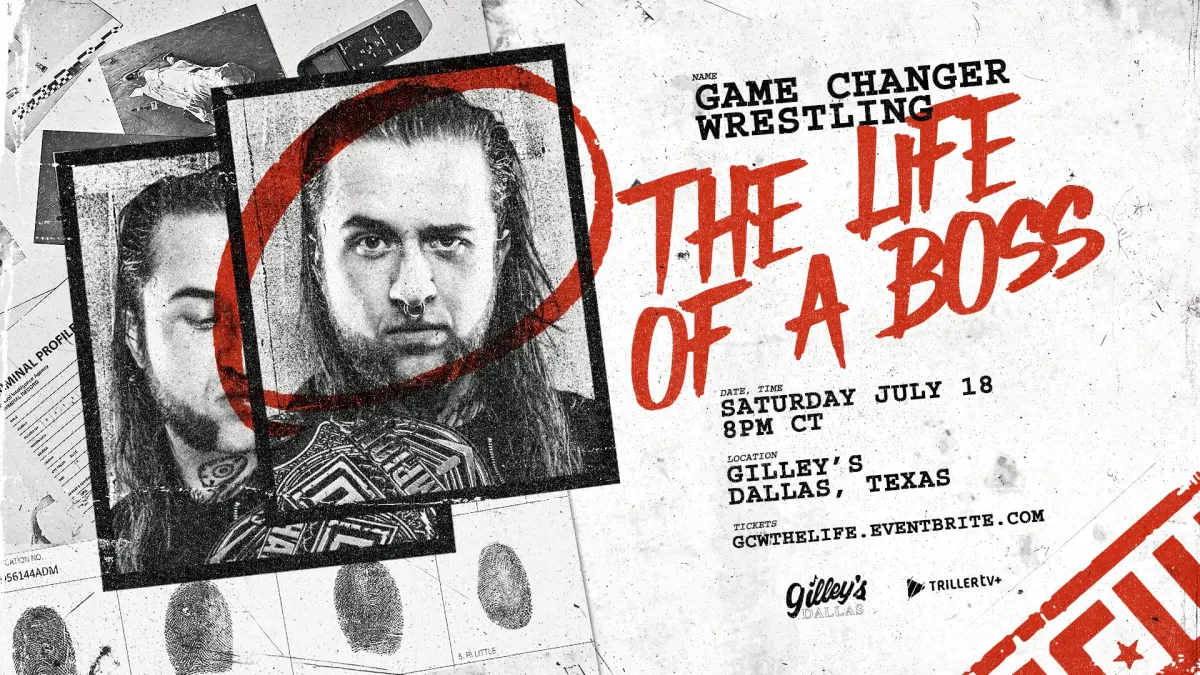
GCW 'Life of a Boss' in Dallas was a chaotic, beautiful mess
5 hours agoWhy the Scenic City Invitational is the indie wrestling heart we need
22 hours agoBeyond Wrestling just booked a show for nobody and it somehow worked
23 hours agoMaple Leaf Pro Wrestling is the fever dream we actually need
3 days, 15 hours agoScott D'Amore and the MLP Mayhem debut: A Canadian wrestling fever dream
3 days, 22 hours agoNattie Neidhart is gambling her legacy on an NWA experiment
5 days, 19 hours agoMore Analysis

DGUSA returns to Vegas: The tactical breakdown of Gresham vs YAMATO
3 months ago
The 10 Must-See Matches of WrestleMania 41 Week
3 months ago
Top 10: Moments Defining WrestleMania 41 Week
3 months agoLas Vegas is about to learn that indie wrestling doesn't play by the rules
3 months, 2 weeks ago
WrestleMania weekend in Las Vegas is already descending into beautiful chaos
3 months ago