The Illusion of the Indestructible Babyface
The Chase Phase: 2023 to 2024
In 2023, Cody Rhodes wrestled 113 matches and won 108 of them. That is a 95.6% win rate, a number reflecting the heavy burden of being WWE's premier chasing babyface. Once a performer reaches the top of the card, the mathematical formula of their career changes.
To understand the scale of Cody Rhodes' workload, one must look at the numbers behind his rise. After returning to WWE at WrestleMania 38 in April 2022, Rhodes became the workhorse of the promotion. In 2023, his matches were spread across weekly television, premium live events, and a grueling house show schedule.
Winning 108 of those matches meant providing a reliable, victorious finish for fans in every city. By 2024, he maintained this blistering pace, competing in 101 matches and winning 98 of them. This translates to a career-high yearly win rate of 97.0%.
The Cena Standard
This level of success is historically unprecedented for a top babyface. Compare these numbers to the peak years of John Cena, who was the definitive franchise player of the PG Era. Over his entire career, Cena wrestled in more than 2,300 matches, holding a career win percentage of 78.3%.
However, when we isolate televised singles matches during his absolute prime, Cena’s win rates were far more modest. In 2006, he won 29 televised singles matches and lost 6, yielding a win rate of 82.8%. By 2011, as the crowd became increasingly polarized, his televised singles win rate dropped to 61.5%, with 16 wins and 10 losses.
The contrast is stark. Cody's chase was protected by a near-flawless win percentage that exceeded Cena's peak by more than fifteen points.
But this protection is an illusion. A wrestler cannot win at a ninety-seven percent clip indefinitely without exhausting the audience.
The Crash of the Championship Schedule
The Title Effect: 2025 to 2026
Once Rhodes defeated Roman Reigns at WrestleMania XL in April 2024, the mathematical model of his career shifted. The high-volume house show loops began to fade. In 2025, Rhodes wrestled just 36 matches, recording 28 wins, 6 losses, and 2 draws.
In the first half of 2026, leading up to July 4, he has competed in only 30 matches, securing 24 wins, 5 losses, and 1 draw. His win percentage in 2025 dropped to 77.8%. This drop is not a sign of weakness; it is the natural consequence of championship booking.
When you are the champion, you no longer wrestle on every untelevised live event where babyfaces win to send families home happy. Instead, you are preserved for televised main events, multi-man tag matches, and high-stakes pay-per-view defenses. These matches are far more likely to end in disqualifications, count-outs, or booking compromises.
This drop in volume exposes a champion. When you wrestle 113 matches a year, a bad match or a questionable finish is quickly forgotten in the weekly grind. When you wrestle only 36 matches, every single outing is scrutinized under a microscope.
The Shift From Chemistry to Authenticity
The Diamond Dallas Page Revelations
This reduction in matches makes the quality of his ring work and his connection to the fans paramount. It also explains why John Cena's advice to Rhodes is so critical. As Diamond Dallas Page recently revealed on the Wrestling Life Online show, Cody Rhodes has felt the immense weight of carrying the company on his back.
In those private moments of pressure, Cena offered a simple piece of guidance. According to a report by WrestleTalk, Cena's advice to Cody was straightforward.
"Just be you."
Cena’s advice is rooted in his own experience of surviving at the top. John Cena downplayed the importance of in-ring chemistry with opponents, explaining that while chemistry is a welcome bonus that allows for physical creativity, authenticity is the true metric of success. If a performer lacks authenticity, Cena noted in a piece by Wrestling Inc that the audience will see through it immediately.
This philosophy is visible in Cody's championship run. In his title defenses against AJ Styles at Backlash and Clash at the Castle, the matches did not rely on the rapid-fire, choreographed chemistry of modern indy wrestling. Instead, they relied on Cody's authentic portrayal of a fighting champion who registers pain, shows vulnerability, and fights from underneath.
By staying true to his babyface persona, Rhodes has avoided the aggressive crowd backlash that plagued Cena during his peak years. He has done this by refusing to play a character, ensuring his actions match his words.
The Ghost of the Part-Time Feud
The Hollywood Divide
Staying authentic is especially difficult when part-time stars return to claim the spotlight. Cena knows this struggle intimately.
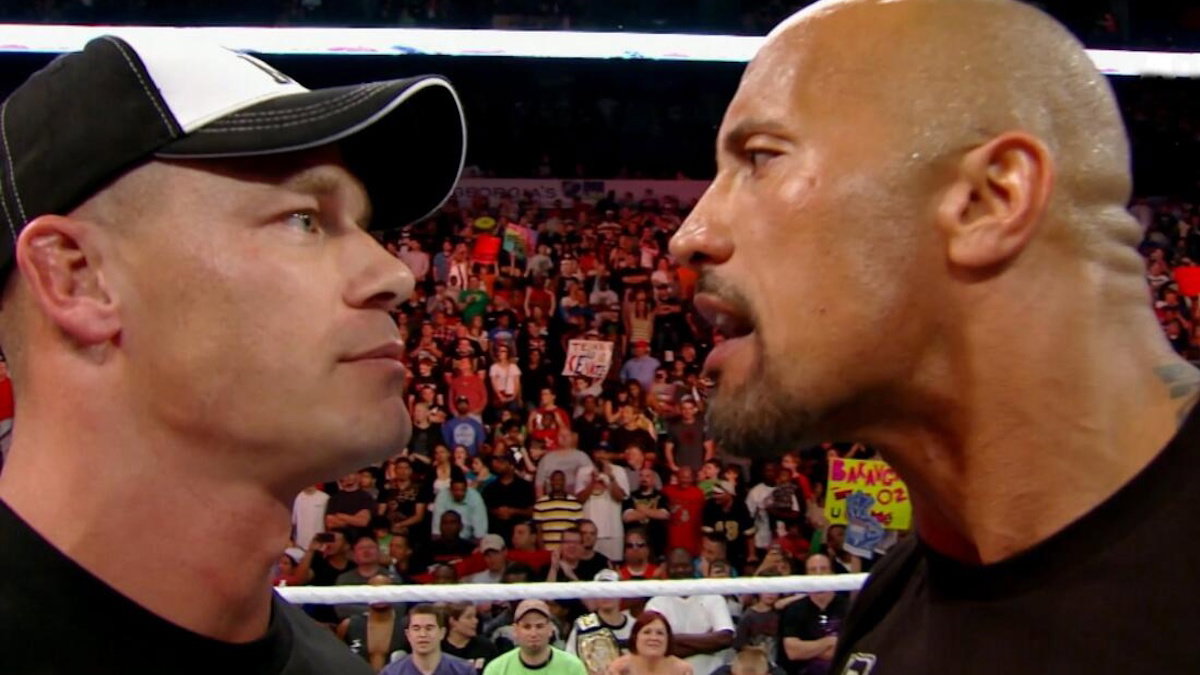
His legendary rivalry with The Rock, which main-evented WrestleMania 28 on April 1, 2012, and WrestleMania 29 on April 7, 2013, was fueled by genuine real-life tension. Cena publicly criticized The Rock for leaving WWE for Hollywood and writing promo notes on his wrist.
However, Cena recently admitted that his attitude during that feud was selfish and short-sighted. As Cena recently explained to WrestleTalk, he lacked the wisdom to understand that The Rock was operating on a much larger scale.
He was building a crossover platform that would ultimately benefit the entire wrestling industry. Cena's transition to Hollywood helped him realize that his rigid, full-time mentality was a mistake.
For Cody Rhodes, this is a vital history lesson. As the current face of the company, Rhodes must share the stage with returning giants like Roman Reigns and The Rock.
The temptation to resent these part-time performers is natural, especially when you are the one working the weekly television shows. But by adopting Cena's mature perspective, Rhodes can view these stars as partners who grow the business, rather than rivals who steal his spotlight.
A Critical Look at the Modern Champion
The Formulaic Routine
Despite his success, Rhodes' championship run has not been without its flaws. The dramatic drop in his match volume from 113 in 2023 to 36 in 2025 means that his in-ring formula is showing signs of wear. Without the constant repetition of live events to test new material, his matches have occasionally felt repetitive.
The sequence of a disaster kick, a Cody Cutter, and a triple Cross Rhodes has become his own version of Cena's Five Moves of Doom. His match against Logan Paul at King and Queen of the Ring in May 2024 was highly entertaining, but it relied heavily on outside interference and referee bumps to protect both performers.
Similarly, his defense against Solo Sikoa at SummerSlam 2024 felt bloated and overbooked, relying on a parade of run-ins rather than a clean, compelling singles narrative. When a champion only wrestles a few times a month, the fans expect masterclasses, not overproduced soap operas.
Cody Rhodes has successfully navigated the transition from the chase to the throne, but the numbers show that the margin for error is shrinking. His win rate has normalized, and his matches are now scarce commodities.
To maintain his position as the face of WWE, he must ensure that his matches remain as authentic as the promos that got him here. Otherwise, the same fans who cheered his 97.0% win rate will begin to count the days until the next challenger takes his place.
Read Next
- Sami Zayn defending his title on Raw in Chicago is a disaster in the making
- Why Cody Rhodes is walking into a tactical trap against Sami Zayn on Raw
- WWE fans are completely split on Cody Rhodes getting an instant title shot
- Cody Rhodes gets his title rematch on Raw but the timing is all wrong
- 🏆 WrestleMania 41 — Full Coverage Hub
- 💥 WWE Backlash 2026 — Full Coverage Hub
- 👴 John Cena Retirement Tour 2026