The Ghost of 1953 and the Failure of the Pull-Up
When the original Kraus-Weber study was published in 1953, the numbers sparked immediate panic. Dr. Hans Kraus and Dr. Sonja Weber found that 57.9 percent of American children failed at least one of six basic muscular-fitness and flexibility tests. By comparison, only 8.7 percent of European children failed.
This stark disparity led to the creation of the President's Council on Youth Fitness. The program was eventually shelved in 2013, replaced by the less competitive FitnessGram. This change followed decades of criticism for promoting gym class humiliation.
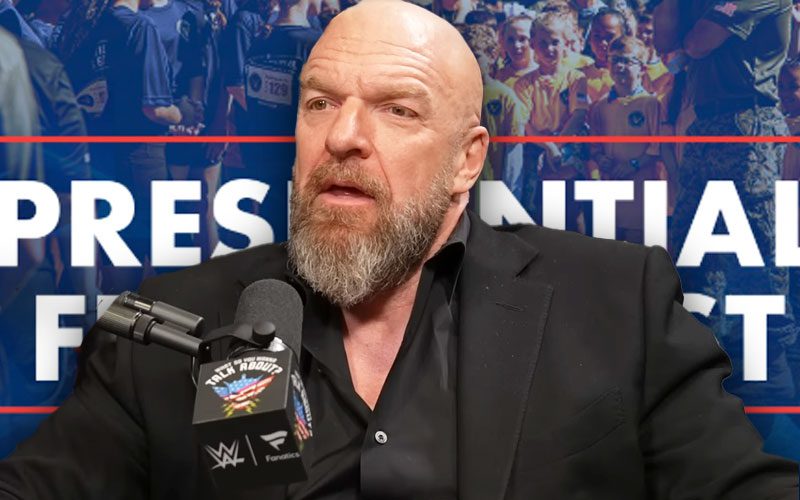
On June 29, 2026, the program returned under a new banner. WWE Chief Content Officer Paul "Triple H" Levesque stood alongside Health and Human Services Secretary Robert F. Kennedy Jr. at the Boys & Girls Club of Atlantic City to relaunch the initiative. With more than 75 children running drills under the supervision of Cody Rhodes and Charlotte Flair, the event marked the debut of GetActive.gov/kids.
While Triple H defended the comeback on NewsNation, claiming the test will "reward effort," the partnership presents a massive contradiction. WWE is a corporation built entirely on filtering out the bottom 99 percent of athletic performers.
Triple H's assertion that the new test will not humiliate children ignores the structural reality of fitness testing. The old test failed not because teachers enjoyed roasting kids, but because the percentile-based standards were mathematically brutal. If the new system is to succeed, it must reckon with how fitness is actually measured.
The Outlier Metrics of the WWE Performance Center
WWE is not a general fitness organization; it is an elite athletic incubator that screens for extreme genetic outliers. The WWE Performance Center in Orlando, Florida, operates its own annual athletic combine to track talent development. In the 2022 strength testing, former NXT Champion Bron Breakker registered a 455-pound two-rep bench press.
Meanwhile, recruit Omari Palmer holds the record with an 800-pound trap-bar deadlift. On the women's side, Zoey Stark benched 155 pounds for two repetitions, and Kayden Carter box-squatted 275 pounds.
These numbers represent the absolute peak of athletic profiling. The first PC Combine in 2016, won by Bianca Belair and Riddick Moss, established a baseline of power-to-weight ratios that most collegiate athletes cannot match.
When Triple H says that gym class shouldn't be a roast session, he is speaking from the perspective of an executive who oversaw this elite combine. The contradiction is clear: WWE is trying to design a supportive, effort-based program for schools using the brand value of performers who represent the top 0.1 percent of physical development.
In average American high schools, only about 7 percent of student-athletes go on to play varsity sports in college. Of those, less than 2 percent make it to the professional level. WWE's recruitment pool is drawn almost exclusively from that final 2 percent, meaning their baseline entry requirements are out of reach for 98 percent of the population.
When Cody Rhodes demonstrates a shuttle run, the children watching are not seeing a standard fitness baseline. They are seeing an athlete who has spent years optimizing his body for high-impact performance. The physical distance between the average child and a WWE superstar is wider today than it was during the height of the original test in the 1980s.
The Hard Math of Professional Wrestling Workloads
Conditioning in WWE is not a wellness strategy; it is a mechanism to survive a punishing physical schedule. In 2024, Cody Rhodes wrestled 101 matches on the active roster. To sustain a 97.0 percent win rate across hundreds of travel days, Rhodes must maintain a level of cardiorespiratory endurance that is mathematically unsustainable for average people.
His workload represents a process of physical depreciation. Elite conditioning is his only shield against injury.
Consider the physical demands of a standard WWE match. An active competitor's heart rate will frequently sit between 160 and 180 beats per minute for 15 to 20 minutes at a time. This is punctuated by high-velocity impacts that register significant G-forces on landing.
In 2024, Cody Rhodes' 101 matches meant he was executing at this intensity nearly every three days. When Triple H spoke to NewsNation about the initiative, he framed it as a personal mission:
“We’re rewarding effort, not just the upper end of success. It’s incredibly important for us to teach kids to support the kid that can’t do it… you don’t bully them, you don’t make fun of them.”
This quote illustrates the core philosophy driving the relaunch, but it also highlights the disconnect. The idea that "the weights don't lie" is an old-school bodybuilding maxim. In a middle school gym class of 30 kids, where 10 may be dealing with pediatric obesity and another five have asthma, that philosophy can easily devolve into the same "gym class torture" that Triple H claims he wants to avoid.
The Fallacy of Effort-Based Grading in Physical Education
The new initiative promises to focus on personal progress rather than absolute benchmarks. But from a data standpoint, how do you measure effort in a standardized school setting? In sports science, effort is measured via relative metrics like heart rate zones or rating of perceived exertion (RPE) scales.
A school gym class does not have the resources to equip every student with a heart rate monitor. They cannot verify if a child is working at 80 percent of their maximum capacity during a run.
Without these tools, "effort" becomes a subjective judgment call by the instructor. This introduces a new set of biases. A child who is naturally athletic can coast through a test at 60 percent capacity and appear to be succeeding.
Meanwhile, an overweight child might work at 95 percent capacity, struggle visibly, and still receive a lower score because their absolute output is poor. If the new test attempts to grade on "improvement," it requires longitudinal data collection that most underfunded departments cannot handle.
Furthermore, the collaboration with Robert F. Kennedy Jr. adds a layer of political branding to what should be a clinical health discussion. The focus should be on the numbers: pediatric physical activity has declined by more than 15 percent over the last decade. The solution requires structural changes in school funding, not just promotional visits from WWE superstars.
Why the New Model Risks Repeating Past Failures
When Triple H joined the White House effort to revive the test, he brought the marketing muscle of the WWE. But marketing is not a substitute for peer-reviewed exercise science. The WWE Performance Center works because it has a clear, binary objective: identify the strongest athletes and cut the rest.
A public school system has the exact opposite goal. They must keep every single child engaged, healthy, and moving, regardless of their starting athletic baseline.
By using the WWE to promote the relaunch, the government is trying to make fitness look cool. But fitness for children doesn't need to look like a WWE main event. It must focus on sustainable, daily physical activity.
In 2026, the primary barrier to youth fitness is not a lack of motivation or discipline in the gym. It is a lack of safe play spaces, the reduction of recess time, and the systemic defunding of physical education programs.
Until those structural issues are addressed, the return of the Presidential Fitness Test will remain a cosmetic fix. It does not matter if Triple H, Cody Rhodes, or Charlotte Flair tell kids that fitness is important. If school districts only allocate 30 minutes a week to physical education, no amount of WWE branding will change the physical trajectory of the next generation.
The weights might not lie, but the policy metrics do not either.