
Beyond the Mat ripped the curtain down and forced wrestling to grow up

The Anatomy of an Ambush
Barry Blaustein died on Tuesday at the age of 72. The news, reported by Wrestling Inc., marks the passing of a man who held a mirror up to an industry that desperately wanted to look away. He was a successful Hollywood screenwriter, penning massive studio comedies. But to the professional wrestling world, Blaustein is immortalized for a single, uncompromising piece of work.
His 1999 documentary, Beyond the Mat, remains the most important film ever made about the business. It arrived at a bizarre intersection in wrestling history. The Monday Night Wars were peaking. Stone Cold Steve Austin and The Rock were drawing record cable ratings. The industry had never been hotter or more profitable.
Yet, the inner workings remained obscured by the lingering ghosts of kayfabe. The curtain was slipping, but it hadn't been completely torn down. Blaustein didn't just peek behind that curtain. He ripped it off the rod and exposed the frayed wires, the broken bones, and the shattered families hiding underneath.
The Setup and the Aesthetic
The film operates on a deceptively simple premise. Blaustein, a lifelong wrestling fan, wanted to understand the men bleeding for his entertainment. He financed the project himself. He used his Hollywood credentials to secure unprecedented access, convincing Vince McMahon to let his cameras backstage.
McMahon’s early cooperation is still staggering when viewed through a modern lens. Today, WWE is a publicly traded monolith tightly controlling every frame of behind-the-scenes footage. In 1999, McMahon sat in his office, completely unvarnished, insisting to the camera that his promotion was actually in the business of making movies.
It was a rare moment of corporate honesty. McMahon clearly thought Blaustein was producing a glossy promotional video. He assumed a Hollywood comedy writer would churn out an affectionate, harmless tribute to sports entertainment. He miscalculated terribly. Blaustein had no interest in repeating corporate talking points. He was searching for the human cost of the Attitude Era.
Blaustein deliberately stripped away the glossy production values that defined WWF television. He used handheld cameras and natural lighting, forcing the viewer out of the arena and into the sterile, fluorescent-lit hallways of the locker rooms. When he shoots the wrestlers, he shoots them sitting in cheap rental cars or cramped hotel rooms.
This visual contrast was vital. It stripped the performers of their superhero aura and presented them as tired, traveling salesmen selling physical trauma. The tactical decision to shoot ringside footage from a low angle, often looking up through the ropes, made the impacts look heavier and significantly more dangerous than the standard broadcast camera sweeping from the hard cam position.
The Independent Grind and the ECW Cult
Before the film tackles its massive stars, it grounds itself in the grueling reality of the independent circuit. Blaustein introduces us to Mike Modest and Tony Jones, two independent workers chasing the dragon of a WWF contract. We watch them drive hundreds of miles for a single dark match before a television taping.
They are working for free, hoping to catch the eye of Jim Ross. The camera captures the agonizing anxiety in the locker room. They are two men acutely aware that their entire lives will be judged on five minutes of fake fighting.
They go out, they work stiff, and they try to get over. When they return through the curtain, the adrenaline crash is immediate. Ross gives them a polite, non-committal critique. The desperation is suffocating. Blaustein forces the viewer to acknowledge that for every massive draw, there are a thousand Modests and Joneses breaking their necks in high school gyms for fifty bucks and a handshake.
Blaustein then pivots to Extreme Championship Wrestling. If WWE was the polished Hollywood blockbuster, ECW was the snuff film distributed in a plain brown wrapper. Blaustein captures the terrifying reality of the Philadelphia bingo hall.
Paul Heyman is shown delivering sermons to his battered locker room. He operates less like a promoter and more like a cult leader, convincing men to jump off balconies into tables wrapped in barbed wire. We see the horrific aftermath of the matches. Men bleeding profusely, taped together with athletic tape and spite.
Blaustein doesn't judge Heyman or the wrestlers. He simply documents the madness. He shows the fans screaming for more blood, questioning the morality of the audience just as much as the performers in the ring.
The Tragedy and the Paradox
The most controversial element of Beyond the Mat is undoubtedly Jake Roberts. This is where Blaustein's role as an objective observer gets murky, blurring the line between documentation and exploitation. Roberts is shown in the throes of severe crack cocaine addiction.
He is a shell of the psychological master who terrorized the WWF in the 1980s. Blaustein films him in a dingy hotel room, smoking out of a glass pipe. He is missing independent bookings. He is spiraling rapidly.
The hardest sequence to watch is Roberts attempting a reconciliation with his estranged daughter in Texas. It is a disastrous, heartbreaking encounter. Roberts is defensive and erratic. His daughter is guarded and exhausted.
Watching it back today, it is difficult to defend the ethics of filming a man entirely unable to consent rationally. Blaustein pushed a severely ill man in front of a camera, knowing the ensuing tragedy would make for compelling cinema. It is a deeply uncomfortable viewing experience that feels overly intrusive by modern journalistic standards.
Then there is Terry Funk. The middle-aged hardcore icon preparing for what was billed as his retirement match. Blaustein perfectly captures the bizarre paradox of Funk's existence. Here is a man who is independently wealthy, universally respected by his peers, and physically decimated.
He does not need the money. He does not need the fame. But he needs the roar of the crowd like oxygen. Blaustein shows Funk consulting with an orthopedic surgeon who bluntly tells him his knees are ruined.
Cut to Funk, days later, executing a moonsault onto a pile of steel chairs. The cognitive dissonance is staggering.
Blaustein also finds brilliant, dark humor in the tragedy. The subplot involving referee Dennis Stamp is a masterclass in documentary filmmaking. Stamp repeatedly complains about his lack of bookings while jumping on a mini-trampoline in his underwear in his backyard.
It is funny, yes. But it is desperately sad. It highlights the addiction of the spotlight. Stamp cannot let go of a business that moved on without him a decade prior.
The Arrowhead Pond Reckoning
The film builds to a terrifying crescendo with Mick Foley. It remains the most viscerally upsetting footage ever captured of professional wrestling. Blaustein filmed the aftermath of the January 1999 Royal Rumble.
Foley, performing as Mankind, defended the WWE Championship against The Rock in an "I Quit" match at the Arrowhead Pond. The match is infamous. The Rock delivered 11 unprotected chair shots to Foley's skull while Foley's wife and young children watched from the front row.
Blaustein’s cameras capture the exact moment professional wrestling stopped being a fun show for Foley's family. You see his young daughter, Noelle, sobbing uncontrollably, terrified that her father is being murdered. You see his wife, Colette, furious and panicking. The camera refuses to cut away from their trauma.
When Foley watches the footage back with Blaustein later in his living room, the silence is deafening. Foley tries to justify the violence. He talks about giving the fans their money's worth. He talks about the prestige of the championship. But the look in his eyes betrays him. He knows he went too far.
That single sequence altered the trajectory of wrestling discourse. Fans could no longer pretend the violence was harmless magic. The blood was real, the concussions were real, and the psychological damage inflicted on the families was undeniable. It made the Attitude Era's extreme violence fundamentally indefensible.
A Legacy of Vulnerability
WWE's reaction to the film tells you everything you need to know about its accuracy. Once Vince McMahon saw the final cut, he tried to kill it. He pulled all advertising. He explicitly banned his talent from discussing it publicly.
McMahon realized, too late, that he had let a Trojan Horse into Stamford. He received an uncompromising autopsy of his life's work.
The film's influence on wrestling media cannot be overstated. Before Beyond the Mat, wrestling documentaries were essentially extended promotional packages designed to protect the business. After Blaustein, the standard changed permanently.
You cannot have Dark Side of the Ring without Barry Blaustein. You cannot have the deep-dive investigative journalism that defines modern wrestling media without his blueprint. He proved that fans could handle the ugly truth. In fact, he proved they craved it.
The film was also a turning point for how performers viewed themselves. For decades, wrestlers were taught to protect the gimmick at all costs. Blaustein showed them there was immense value in vulnerability. Mick Foley’s subsequent career as a bestselling author, writing openly about his fears and mistakes, started with Blaustein's camera in his living room.
Wrestling is a significantly safer industry today than it was in 1999. The wellness policy exists. Concussion protocols, however flawed, are in place. The locker room is treated slightly more like a roster of human beings and slightly less like a collection of disposable carnival acts.
Barry Blaustein didn't enact those policy changes himself. But he held up the mirror that forced the industry to look at its own ugly reflection. He captured the desperation of Terry Funk, the agony of Jake Roberts, and the raw fear of Mick Foley's family.
He documented the exact moment the carnival tent collapsed, exposing the blood in the sawdust. The wrestling business is better for his courage. At 72, he leaves behind a legacy that permanently altered how we consume the sport.
WWE Jey Uso YEET Authentic T-Shirt
Join the YEET movement with Jey Uso's viral catchphrase tee.
More Coverage

Vince McMahon stories are still the weirdest thing in wrestling
21 hours ago
When the boss's weird stories finally hit the light of day
2 days, 1 hour ago
Maxxine Dupri, Vince McMahon, and the internet's favorite soap opera
2 days, 3 hours ago
Top 10: Top Moments
3 days, 23 hours ago
Vince McMahon's legal drama keeps getting messier
6 days, 2 hours ago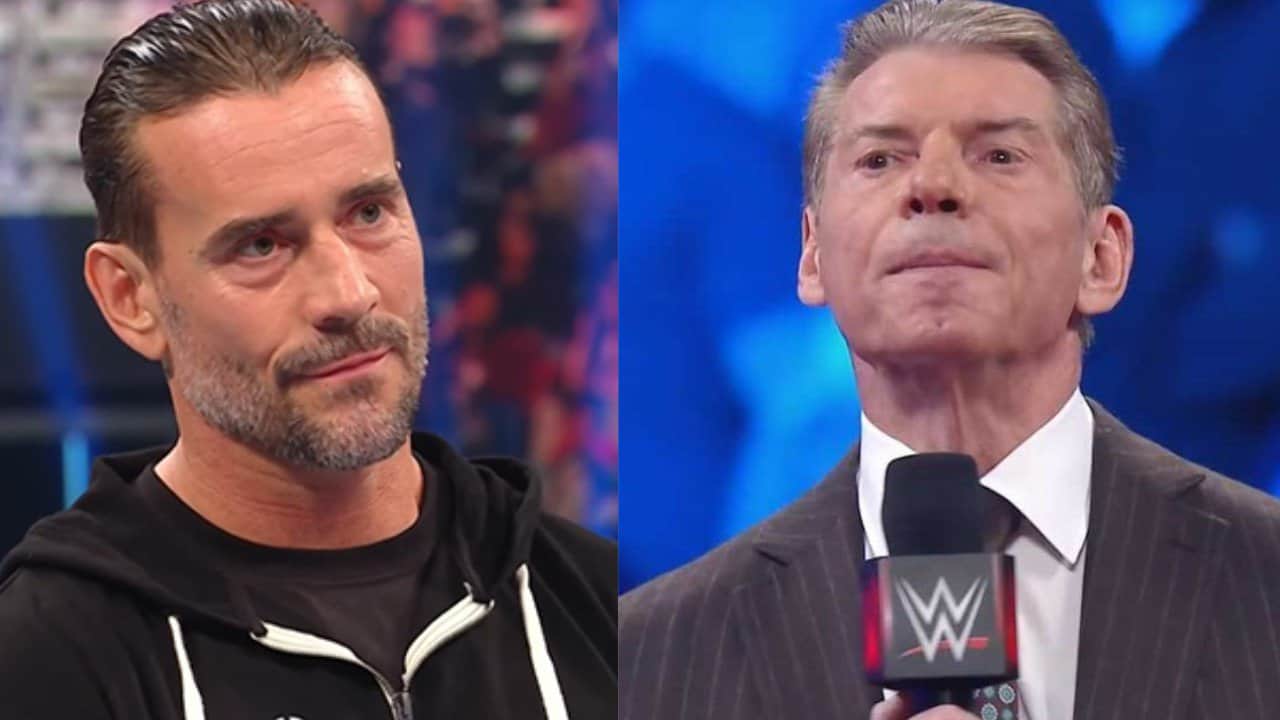
CM Punk spills on Vince McMahon's actual Pipe Bomb reaction
6 days, 3 hours agoMore Analysis

Why Barry Blaustein's Beyond The Mat remains a wrestling masterpiece
2 months ago
Barry Blaustein captured our chaos better than anyone
2 months agoBarry Blaustein is gone, and the unfiltered wrestling documentary is dead
2 months ago
Why we will never get another wrestling documentary like Beyond the Mat
2 months ago
Barry Blaustein leaves behind a complicated wrestling legacy
2 months ago