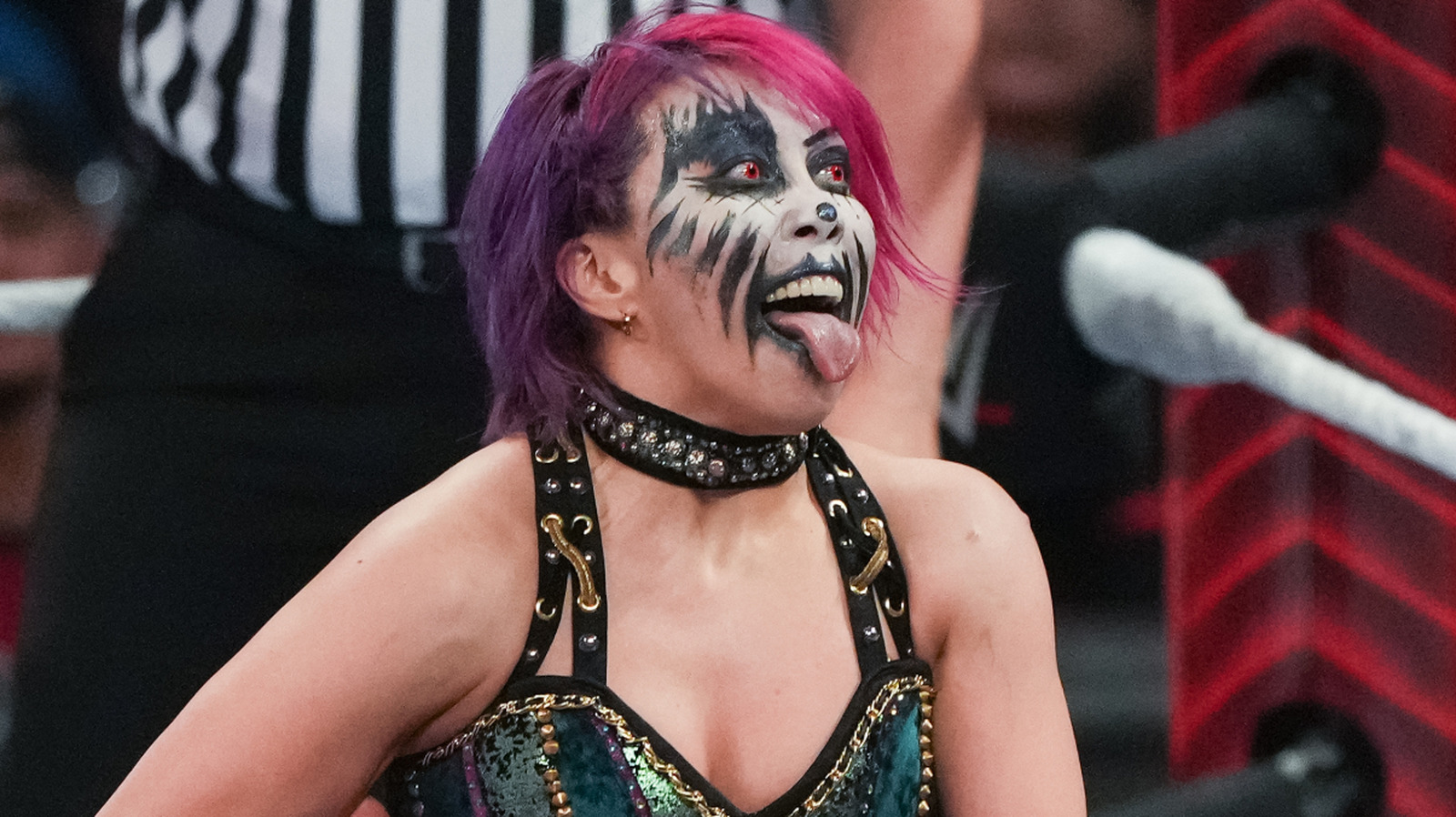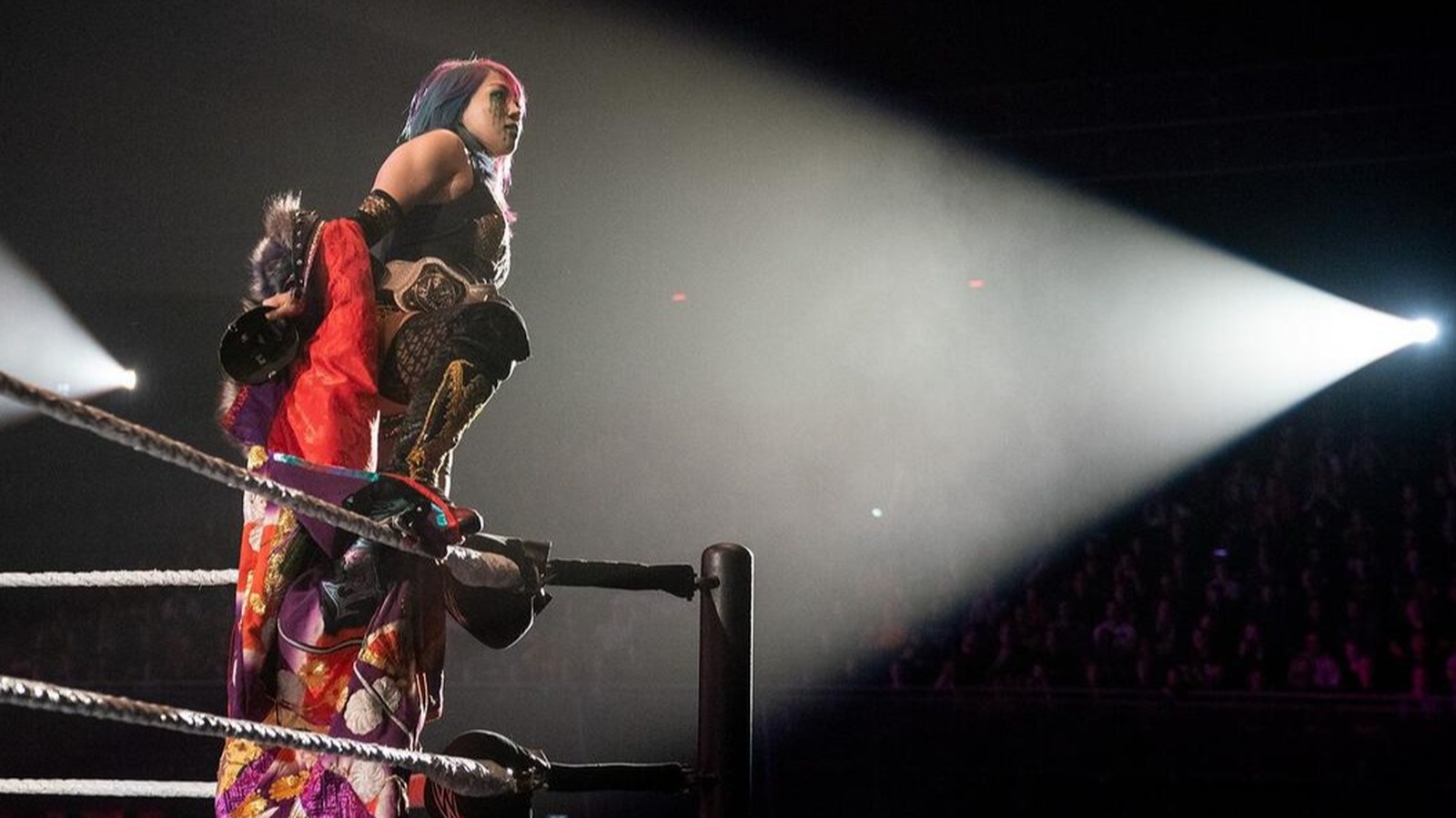
The Baseline of Dominance
For 914 days, nobody pinned Asuka. Nobody submitted her. That is not just a promotional talking point. It is a statistical anomaly that breaks the usual geometry of professional wrestling booking.
Between her NXT debut in October 2015 and WrestleMania 34 in April 2018, she compiled a jaw-dropping 267-0 record. That includes television, premium live events, and untelevised house shows. To understand the absurdity of that run, you have to look at the work rate required. Goldberg's infamous WCW streak was heavily padded with sub-two-minute squashes. Asuka was wrestling 15-minute main events against Bayley, Sasha Banks, and Ember Moon.
She was the tactical anchor of the developmental brand. She dictated the pace, usually absorbing early damage before overwhelming opponents with strike combinations and submissions. She was not just winning; she was carrying the structural weight of the entire division.
The Main Roster Transition
Numbers tell a different story once she left full-time developmental. WrestlingNews.co recently confirmed her hiatus from the ring. Her statement was brief and devoid of timeline specifics.
"There are some personal circumstances and I have consulted with WWE."
The exact nature of her absence remains private. The impact on the weekly television product, however, is immediately obvious to anyone paying attention to the match logs. Since 2018, WWE has heavily relied on Asuka as their ultimate utility player. She is a Grand Slam Champion. She won the first-ever Women's Royal Rumble. Yet her booking has often been deeply flawed.
When she lost to Charlotte Flair at WrestleMania 34, the creative team had no backup plan. Her win percentage plummeted. In the six months following that loss, her televised win rate dropped below 55 percent. She was thrust into a bizarre, heatless feud with Carmella. She was reduced to a reactionary character rather than a proactive killer. WWE simply did not know how to write television for a mortal Asuka.
The Workhorse Metrics
Despite the creative missteps, her sheer volume of output is staggering. Over the past decade, she has wrestled nearly 1,200 matches under the WWE banner. Very few performers, male or female, survive that kind of schedule without taking a major injury hiatus.
During the 2020 ThunderDome era, she functionally carried the Raw women's division on her back. In 2020 alone, she wrestled 36 televised matches. She worked multiple segments on the same night. She wrestled singles, tag matches, and champion-vs-champion exhibitions. Her tactical approach shifted during this period out of sheer necessity.
The extended grappling sequences of her NXT days were replaced by sudden-death striking. She began relying more on the spinning backfist and the buzzsaw kick. Match times shortened to fit tight pandemic broadcasting windows. The Asuka Lock, once a grueling, worked submission, transitioned into a quick counter-hold. It was a brilliant bit of self-preservation from a veteran who knew how to save her body while still producing compelling television.
Championship Efficiencies
It is also worth analyzing her efficiency in championship matches. She captured her first main roster singles title at TLC 2018 in a triple threat match against Becky Lynch and Charlotte Flair. The match ran 22 minutes and 40 seconds. It was a chaotic, weapon-heavy brawl that required Asuka to act as the grounded striker between two massive personalities.
Her subsequent reign lasted exactly 100 days. She lost it to Charlotte Flair on a random episode of SmackDown just days before WrestleMania 35. This remains one of the most statistically baffling booking decisions of the modern era. She was given a 100-day reign, only to have it snapped with zero build, simply to give the main event more props to carry to the ring.
If you track her title reigns, a frustrating pattern emerges. She has held main roster singles titles four times. Yet her average successful defense rate is shockingly low for someone with her pedigree. She frequently wins the belt in spectacular fashion, only to drop it within three months.
The Summer of 2020
The most crucial data set comes from the summer of 2020. With Becky Lynch going on maternity leave and Charlotte Flair taking time off, Asuka was handed the Raw Women's Championship. Between May and November of that year, she was essentially the entire division. She wrestled Sasha Banks and Bayley in a series of matches that defined the ThunderDome era.
At Extreme Rules 2020, she wrestled Banks for 20 minutes. A month later at SummerSlam, she wrestled twice in one night. She faced Bayley for 11 minutes, lost, and then returned later in the card to beat Banks in 11 minutes. She logged 22 minutes of high-intensity, premium live event wrestling in an empty arena.
Her strike precision during these matches was immaculate. Without crowd noise to mask missed connections, every kick had to land flush. Her offensive sequences became tighter. She leaned heavily into armbars, kneebars, and rolling submissions to create drama without a live audience.
The Rumble Metrics
Look at her performance in the Royal Rumble as a microcosm of her career. She won the inaugural women's Rumble in 2018. Entering at number 25, she lasted just under 20 minutes and eliminated three competitors. But her subsequent Rumble appearances tell a fascinating story about her changing status.
In 2019, she didn't compete in the Rumble because she was defending the SmackDown Women's Championship. By 2023, she was re-debuting as a darker, more aggressive version of her character. She entered at number 17 and lasted 33 minutes. She was the runner-up, eventually eliminated by Rhea Ripley in a sequence that anchored the final act of the match.
Her total cumulative time in Royal Rumble matches puts her in the top percentile of the women's roster. She averages over 22 minutes per Rumble appearance when she is actually in the battle royal. She is not a quick elimination. She is the structural glue that holds the middle stretches of those matches together. When she isn't there, the match pacing visibly suffers.
A Glaring WrestleMania Problem
Any honest statistical review must also point out the glaring negative in her WWE run. For a performer of her caliber, her WrestleMania record is abysmal. She went 0-5 at the biggest show of the year before finally securing a tag team victory.
She lost to Charlotte Flair, Rhea Ripley, and Bianca Belair on the grandest stage. She was frequently positioned as the final hurdle for younger stars to clear. While this makes sense in isolation, doing it five years in a row damaged her aura. She became the prestige opponent you beat to prove you were a top-tier champion. She was no longer the final boss. She was the gatekeeper.
The Current Tag Team Era
In recent years, WWE shifted her heavily into tag team competition. Whether alongside Kairi Sane in the Kabuki Warriors or as part of Damage CTRL, her role evolved. A deep dive into her match logs shows that nearly 45 percent of her televised matches since 2022 have been tag team bouts.
This allowed her to work fewer minutes and protect herself while still popping the crowd with high-impact hot tags. Her striking remains remarkably crisp. Even at 44 years old, her offensive sequences look faster and more lethal than half the locker room.
But the tag team division is notoriously volatile. Without her stabilizing presence, Damage CTRL loses its most reliable worker. The faction's geometry changes entirely when you remove the veteran who can realistically absorb a pinfall or secure a submission at any moment.
Filling the Void
So what happens to the weekly television output now? Asuka's hiatus creates an immediate vacuum. You cannot simply replace a performer who guarantees a good-to-great match every single Monday or Friday. Iyo Sky is spectacular, but her high-flying style carries more inherent risk.
Kairi Sane is a completely different kind of worker, relying on aerial offense rather than ground control. The division lacks another veteran who can seamlessly transition between comedy segments and brutal 20-minute title bouts. WWE has lost their safety net.
As we head toward the summer of 2026, the creative team will have to find a new mechanic. If a match was falling apart, you tagged Asuka in. If a storyline needed a credible challenger, you drafted Asuka. They can no longer rely on her to fix their booking holes. The numbers don't lie. Her absence is going to expose exactly how much weight she was carrying.