
Are there any actual dream matches left for the Young Bucks?
The Diminishing Returns of the Impossible
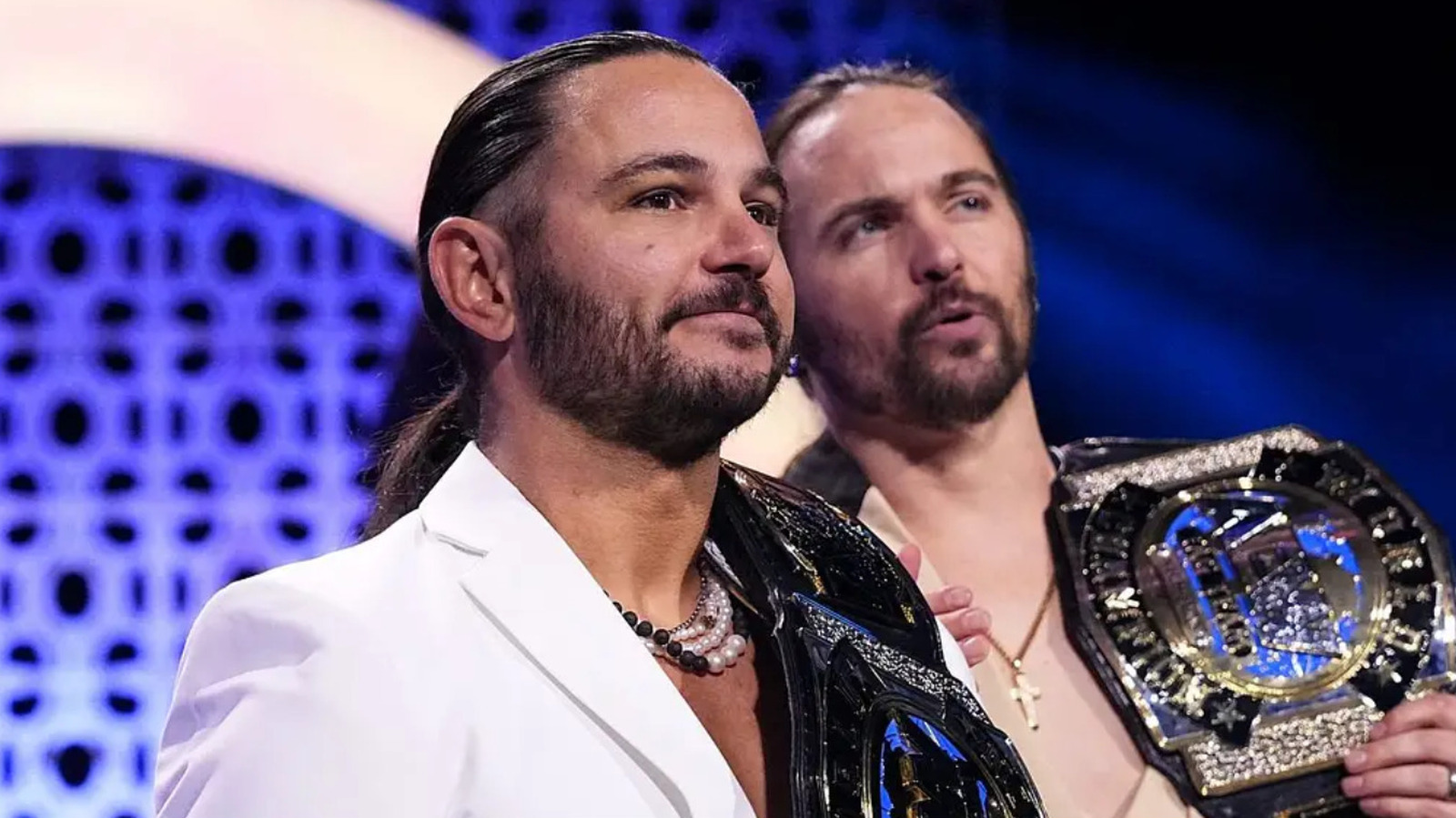
Matt and Nick Jackson have built an entire empire on the back of the impossible. From their days barnstorming through Reseda to selling out independent shows across the globe, they monetized the concept of the theoretical mega-fight better than anyone in modern wrestling history. Now, as they sit as executive vice presidents of a company heading toward its next massive stadium show, they are returning to that exact same well.
According to recent comments reported by Wrestling Inc., the former AEW Tag Team Champions are suggesting that "a lot of dream matches" could become a reality at All In 2026 and beyond. It is a familiar promotional tactic from the duo. You dangle the carrot of an unprecedented pairing to keep viewers invested through the typically slow summer months.
But the statement forces a necessary, analytical question. In a promotion that has spent the last five years tearing down every conceivable promotional boundary, what exactly constitutes a dream match in 2026? We have seen the proverbial forbidden doors kicked open, ripped off their hinges, and sold for scrap metal.
The Bucks themselves have exhausted almost every compelling rivalry available outside of Stamford. They have traded superkicks with the Lucha Brothers until the concept completely lost its novelty. They have engaged in deeply technical, structurally rigid clinics with FTR that polarized fans but undeniably pushed the boundaries of tag team psychology.
Those matches with Dax Harwood and Cash Wheeler forced the Bucks out of their comfort zone, stripping away the synchronized flips in favor of gritty, Southern-style territorial wrestling. It proved they could adapt, but it also closed the book on their most compelling stylistic counterweight. They retired Sting. They fought Kenny Omega and 'Hangman' Adam Page in a grueling 31-minute classic that effectively birthed the narrative backbone of AEW.
When a team has done everything, the promise of "more" often rings incredibly hollow. A true mega-match requires absolute scarcity. It requires a barrier to entry that fans believe cannot be overcome.
The Mechanics of a Modern Jackson Match
To understand why this tease feels slightly detached from reality, you have to look at how the Young Bucks actually construct a wrestling match today. They are no longer the breathless, high-flying innovators of 2016. The physical toll of taking flat back bumps on the floor and delivering stereo Meltzer Drivers has forced a permanent stylistic evolution.
Today, a Young Bucks match relies heavily on meta-narrative and heel stalling tactics. They isolate a babyface, not with brutal limb work, but with arrogant pacing. They stop to pose for the hard camera. They mock the crowd. They actively attempt to drain the energy from the building before launching into their signature, highly choreographed finishing stretches.
Watch the way Matt Jackson positions himself during the heat segment of any recent match. He no longer stalks the apron, screaming for the hot tag. He often slumps against the turnbuckle, intentionally projecting a total lack of urgency. It is a brilliant bit of heel character work, a subtle nod to the fact that he knows he is an executive who helps write the script.
He does not need to fight desperately; he is already in control of the promotion. But that exact character trait destroys the suspension of disbelief required for a classic babyface comeback. If the villain does not care, why should the audience? When a supposed elite opponent finally locks in a submission hold, Matt's reaction is often more annoyed than agonizing.
It turns the match from a physical struggle into a performance art piece about professional wrestling. This shift in psychology is necessary for their physical longevity. But it fundamentally alters what a massive cross-promotional bout looks like for them.
You cannot throw them in the ring with a hyper-athletic, fast-paced team from CMLL or AAA and expect the same chaotic sprint we saw in the mid-2010s. The current crop of luchadores works at a speed that requires absolute precision and unwavering cardiovascular endurance. The Bucks, now dealing with the inevitable accumulation of back and knee injuries, will purposefully slow the match down.
They will grind the opposition's momentum to an absolute halt to generate cheap heat, breaking the kinetic flow that makes lucha libre so captivating. There is a stark contrast between a match that looks good on a marquee and one that functions well between the ropes.
A pairing against a legendary Mexican tag team might sound incredible to a certain segment of the internet fan base. But practically, it would likely devolve into a clunky clash of styles. The Bucks would end up enforcing their distinct, Americanized television rhythm onto opponents accustomed to a totally different flow.
The Degradation of the Arsenal
Consider the Meltzer Driver, once the most protected and devastating tag team finisher in the entire industry. For years, the mere setup of the move sent crowds into an absolute frenzy. It required precise timing, exceptional vertical leaps from Nick Jackson, and a perfectly executed tombstone piledriver from Matt.
Today, the move is frequently countered, dodged, or simply kicked out of by upper-card talent. The Bucks have diluted their own ultimate weapon through sheer repetition. In a true stadium setting, they can no longer rely on their historical finish to guarantee a reaction.
They are forced to construct increasingly convoluted, multi-man sequences just to elicit the same gasp from the audience that a single superkick generated in 2017. This mechanical degradation matters because it severely limits their tactical flexibility against elite, fresh opponents.
If they were to step into the ring with a team like the Creed Brothers—assuming an impossible promotional crossover for a moment—the physical strength discrepancy would be insurmountable. Julius and Brutus Creed do not wrestle a cooperative style; they maul people with suffocating collegiate wrestling pressure.
The Bucks' offense, which relies heavily on opponent cooperation to set up elaborate high spots, would shatter against a team committed to maintaining heavy top control. Matt Jackson cannot effectively trade forearms with heavyweights anymore. He has to use the ropes, use outside interference, and rely on his brother’s aerial bailouts. This heavily restricts the type of team they can convincingly defeat without relying on transparent booking shortcuts.
Booking Themselves Into a Corner
This brings us to the core structural flaw in AEW's current approach to high-profile matchmaking. The promotion has developed a terrible habit of prioritizing the announcement over the actual build. We see this constantly on Wednesday nights.
A massive international talent is flown in, a graphic is posted on social media, and the match happens three days later with zero narrative stakes. The Bucks are acutely guilty of this as executives. They assume that the mere existence of a match is enough to sell it to a television audience.
That might have worked when AEW was the plucky alternative offering relief from an unwatchable WWE product. It does not work when the audience has been conditioned to expect these international crossovers on a regular basis. If the Bucks truly want to deliver something special at All In 2026, they cannot simply pull a random team out of a hat.
They need to spend months laying the groundwork on television. They need to create actual personal animosity. They need to establish why this specific match, at this specific time, matters more than the dozen other cross-promotional exhibitions we have seen this calendar year.
Think back to the great tag team rivalries of the 1980s or 1990s. The Midnight Express did not just wrestle the Rock 'n' Roll Express in a vacuum. Jim Cornette would spend weeks dissecting Ricky Morton’s weaknesses on television.
Cornette would highlight a previous neck injury, instruct Bobby Eaton to target that specific area, and build a psychological framework for the entire bout. By the time the bell actually rang on pay-per-view, the audience understood exactly what tactical advantages each team possessed. The match was a physical execution of a pre-established strategic narrative.
Look at the numbers. When matches are built properly, with escalating tension and logical character motivations, television ratings and pay-per-view buy rates respond positively. When they are hot-shotted simply because the talent happens to be available on a given Wednesday, the metrics remain stubbornly stagnant.
The audience is smart enough to recognize a meaningless exhibition, regardless of how many superkicks are thrown or how many times the announcers scream about the historical significance of the pairing. Viewers tune out when there are no emotional stakes attached to the physical violence.
Scouting the Theoretical Horizon
Let us assume, for the sake of argument, that the Bucks are entirely serious. Who is actually left on the board? The Motor City Machine Guns, Alex Shelley and Chris Sabin, represent one of the few glaring omissions on the Bucks' resume. A proper, high-stakes pay-per-view program with the Guns would genuinely check the box of a generational clash.
If we examine the mechanics of a hypothetical bout against the Guns, the tactical challenges become obvious. Shelley and Sabin build their matches around rapid-fire transitional holds and fluid double-team strikes. They dictate pace by constantly cutting off the ring, forcing opponents to work out of their own defensive third.
The Bucks, conversely, thrive on chaos and space. Nick Jackson’s hot tag sequences require significant physical room—he needs the ropes for his escaleras, he needs the apron for his penalty kicks. If Shelley applies his typical mat-based pressure, grounding Nick with targeted work on the knee or the lower back, the Bucks' primary offensive engine completely stalls.
But even that pairing comes with massive asterisks. Shelley and Sabin, much like Matt and Nick, are no longer in their absolute athletic primes. The match would rely on nostalgia and structural brilliance rather than sheer athleticism.
It would be a fascinating watch for tactical purists, but it might not provide the viral, explosive moments that casual fans associate with a stadium-level spectacle. There is also a brutal economic reality at play here. Staging a massive cross-promotional match requires serious capital.
If AEW is going to fly in top talent from New Japan Pro-Wrestling or a major Mexican promotion for All In, they need a guaranteed return on investment. The days of Tony Khan booking matches strictly for the artistic merit are fading fast. The company is a mature business now, facing complex television negotiations and rising production costs across the board.
When the Bucks suggest that 2026 will feature massive bouts, they are making a financial promise as much as a creative one. But what actually draws money in the modern era? A technically flawless 25-minute exhibition against a respected international team might pop the hardcore fan base, but it rarely moves the needle for casual viewers deciding whether to purchase a major pay-per-view event.
To sell out a stadium, you need genuine heat. You need controversy. You need a narrative that extends far beyond mutual professional respect.
The Burden of Legacy
Ultimately, Matt and Nick Jackson are fighting against their own massive legacy. They set the standard so impossibly high during their peak years that anything less than absolute perfection is viewed as a total failure. When you promise a generational clash, you are asking the audience to compare the upcoming reality with an idealized version in their heads.
That is a battle the Bucks rarely win anymore. Their current heel personas are far too self-aware, too steeped in irony, to support the earnest, blood-feud intensity required for a true wrestling classic. A legendary feud needs a hero and a villain. The Bucks currently play characters who refuse to take anything seriously, making it incredibly difficult for the audience to invest emotionally in their struggles.
As we approach the summer and the build to All In begins in earnest, the pressure will mount. The company needs massive attractions to fill a stadium in late summer. The Bucks know this better than anyone.
Their tease of future massive bouts is a highly calculated attempt to keep their names firmly in the conversation for the main event scene. But press quotes are extremely cheap. If they want to recreate the magic that made them the most influential tag team of their generation, they need to do more than just drop hints to wrestling media.
They need to fundamentally restructure their entire approach to television storytelling. They need to strip away the irony, commit to a serious narrative, and prove that they can still deliver when the bell actually rings.
Anything less is just another hollow promise from a team that has already given us everything they have to offer. The era of the impossible pairing is over. The reality, as we will likely see as 2026 unfolds, is far more complicated, far more grounded, and frankly, a lot harder to sell to a modern audience.
WWE Men's Roman Reigns Bloodline Acknowledge Me T-Shirt
Acknowledge your Tribal Chief in style.
More Coverage

Booking Bron Breakker requires more than just raw intensity
1 day, 14 hours ago
WWE's heavy-handed editing signals a shift in Lesnar's brand
2 days, 15 hours agoMotor City Machine Guns didn't need WWE to prove they're legends
2 days, 17 hours agoNXT is buckling under the weight of its own roster size
2 days, 19 hours ago
JD McDonagh's calculated gamble in the No DQ match against Danhausen
3 days, 1 hour ago
Why Claudio Castagnoli remains the most tactically sound wrestler in AEW
3 days, 19 hours agoMore Analysis
The Young Bucks are teasing the ultimate WWE crossover for 2026
2 months ago
Top 10: AEW Dream Matches We Need in 2026
2 months ago
The Young Bucks are betting everything on dream matches before Double or Nothing
2 months ago
The Young Bucks' WWE praise reveals their own tactical insecurities
3 months, 3 weeks agoThe New Day vs. Young Bucks is the match AEW has waited a decade for
2 months ago