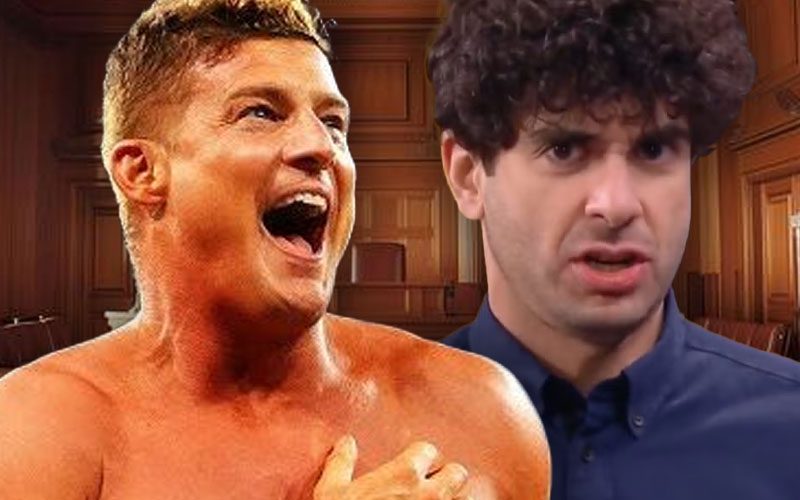
Ryan Nemeth wrestled 41 matches in AEW between 2021 and 2023, and exactly 36 of those matches—or 87.8 percent—took place on YouTube programs like AEW Dark and AEW Dark: Elevation. For a performer whose in-ring contribution was largely relegated to the digital margins, his subsequent legal footprint has been remarkably deep. Today, a battle over the secrecy of his talent agreements is exposing the financial and structural mechanics of how modern wrestling promotions manage their labor force.
On July 7, 2026, Magistrate Judge Patricia Barksdale delivered a major procedural blow to All Elite Wrestling in the federal court for the Middle District of Florida. The court denied AEW’s motion to completely seal three of Nemeth's talent contracts from public view. Instead, the company must now decide whether to refile redacted versions of the documents or withdraw them entirely from the record, directly weakening their attempt to force the dispute into private arbitration.
The legal fight stems from a lawsuit Nemeth filed in February 2025 against AEW, Tony Khan, and CM Punk. The dispute alleges breach of contract and intentional interference following a physical altercation in 2023. While the parties previously agreed to move the case to private arbitration, they are now locked in a jurisdictional battle over where that process will take place.
AEW has pushed to compel arbitration in Florida, asserting that Duval County is the contractually mandated venue. To prove this, they submitted Nemeth’s actual contracts as exhibits, hoping to keep them hidden. The ruling has disrupted this strategy, forcing the company to balance its legal arguments against the risk of exposing sensitive business practices.
The Legal Arithmetic of the 111-Day Clock
The procedural timeline in the Middle District of Florida reveals a highly structured legal chess match. AEW filed its initial petition to compel arbitration on June 5, 2026. Under federal rules, the company is operating under a strict 111-day clock to complete service and resolve preliminary motions. This deadline lands exactly on September 24, 2026, if Nemeth fails to make a formal appearance in the Florida court.
Should Nemeth file a response before that date, the timeline accelerates dramatically. The judge has ruled that AEW will have exactly 21 days from the date of Nemeth’s first filing to submit a renewed motion to seal. Along with this motion, they must present the redacted contracts, detailing exactly which business terms must remain private.
This leaves the promotion with a difficult choice. If they choose to redact key clauses, they must legally justify why details like downside guarantees, payment structures, and intellectual property terms warrant protection. According to WrestleNomics reporting, Brandon Thurston formally opposed the initial seal, asserting that public access to court records is essential for industry accountability.
If AEW decides the risk of public exposure is too high, they can withdraw the contracts as exhibits. However, doing so would leave the court without the primary evidence needed to evaluate the motion to compel arbitration. Without the written agreements on the docket, the judge cannot verify if the parties actually agreed to Florida jurisdiction.
This legal roadblock highlights the high stakes of contract transparency in professional wrestling. Historically, promotions have kept talent agreements strictly confidential to prevent performers from comparing salaries. By forcing AEW to put portions of these documents on the public docket, the court is cracking open a door that Tony Khan has spent years trying to keep closed.
The Star Power Disparity: Punk vs. Nemeth by the Numbers
Comparing the Win-Loss Records
The sheer financial investment AEW is making to defend this case appears highly disproportionate to Nemeth's actual card position. During his two-year run with the promotion, Nemeth’s role was defined by his utility as an undercard performer. He finished his AEW tenure with a win-loss record of 13-28, translating to a modest 31.7 percent win rate.
He was rarely trusted with televised minutes, working only 5 matches on national television. The remaining 36 matches were recorded before empty or half-filled arenas for YouTube distribution. In these matches, his primary function was to lose to established stars like PAC or Orange Cassidy.
In contrast, the man at the center of the 2023 altercation, CM Punk, occupied the absolute peak of the card. Punk wrestled 33 matches in AEW, securing 28 victories against just 5 defeats. This represents an elite 84.8 percent win rate, with 100 percent of his matches broadcast on national television or premium pay-per-view events.
The financial disparity between the two performers is equally stark. Industry estimates place Punk’s annual downside guarantee during his AEW run between $3 million and $5 million. A tier-level performer like Nemeth, who began on a per-appearance deal before signing standard talent agreements, likely earned under $100,000 annually.
Yet, the legal fallout from their brief locker room collision has outlasted Punk’s actual tenure in the company. Punk’s highly turbulent AEW career lasted exactly 743 days, from his debut at The First Dance in August 2021 to his termination for cause in September 2023. The subsequent litigation is now entering its third year, with no clear resolution in sight.
Why Wrestler Contracts Must Not Be Hidden
The decision to deny a full seal on these documents is a victory for labor transparency in an industry historically defined by secrecy. For decades, major promotions have relied on the independent contractor classification to limit wrestler benefits. By keeping contracts hidden, companies prevent talent from understanding the average market value of their labor.
The legal arguments in Florida show that AEW is fighting hard to maintain this information asymmetry. The company has argued that revealing the structure of their agreements would cause severe competitive harm. They claim that rival promotions could exploit details of their pay structures and travel policies to target AEW talent.
However, this defense ignores the fact that wrestler compensation has remained a black box for far too long. In professional sports leagues like the NFL or NBA, player contracts are publicly documented down to the last dollar. This transparency allows agents to negotiate fair market value and empowers players to make informed career decisions.
Wrestling promotions have fought public disclosure precisely because it threatens their bargaining power. If mid-card performers discover the exact premium paid to top-tier talent, the salary structure could quickly destabilize. For a promotion that built its brand on offering a progressive alternative to the Stamford system, this legal fight is revealing.
Despite promising to treat talent differently, AEW's legal strategy matches the traditional corporate playbook. The company is attempting to use Florida's employer-friendly legal framework to bypass California's stronger labor protections. By seeking to compel arbitration in Duval County, they hope to resolve the dispute in a private forum away from public scrutiny.
But the ruling by Judge Barksdale has disrupted this plan. As Ringside News reported, the court is demanding a level of openness that AEW did not anticipate. If the contracts remain on the docket in redacted form, they will still offer unprecedented insight into how Tony Khan structures his roster.
Ultimately, this legal battle exposes the limits of corporate sentimentality in pro wrestling. When disputes arise, the spreadsheets and legal teams take over, treating performers as liabilities to be minimized. The numbers show that AEW is willing to spend massive resources to protect the secrecy of its contract structure, even when the dispute involves an undercard performer who spent most of his career on YouTube.